
- 1 million: Target number of new Black voters to be registered through the initiative.
- 20 million: Estimated reach of the coalition's networks, including critical states like North Carolina and Virginia.
- 2026 and beyond: Multi-year commitment to sustained civic engagement and political power-building.
Experts would likely conclude that this initiative represents a strategic and necessary response to systemic voter suppression and underrepresentation, leveraging the proven organizing power of Black women to strengthen political influence and secure long-term community benefits.
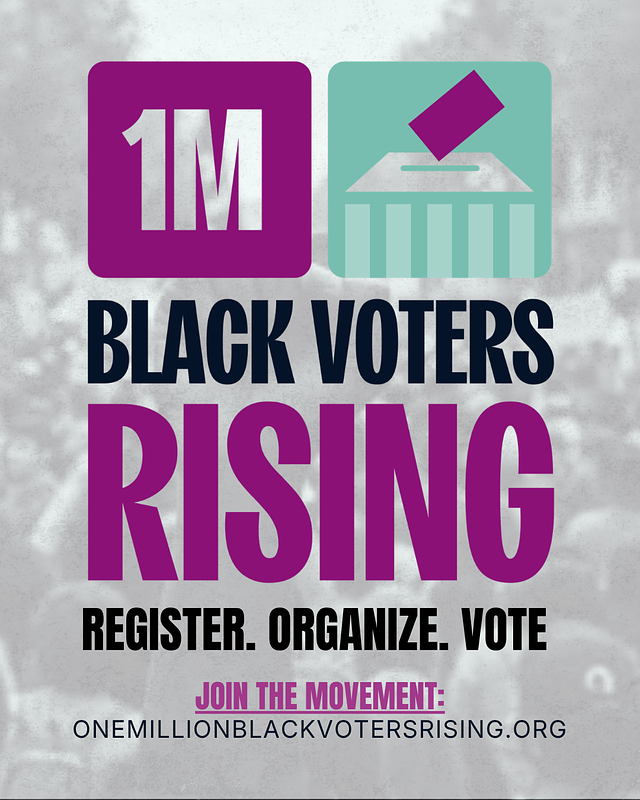
Black Women Launch Bid to Reshape Electorate with Million-Voter Drive
WASHINGTON, April 16, 2026 – A powerful coalition of Black women leaders has announced a monumental effort to reshape the American political landscape. The Black Women's Leadership Collective (BWLC), in concert with 12 partner organizations, today launched "One Million Black Voters Rising" (1MBVR), a bold, multi-year initiative aimed at registering one million new Black voters and fostering sustained civic engagement across the nation.
Rooted in the formidable organizing power of Black women—long recognized as one of the most active and reliable voting blocs in the country—the campaign seeks to translate demographic potential into tangible political influence. The initiative launches with an estimated reach of over 20 million people through the collective's extensive networks, which include chapters in the critical states of North Carolina and Virginia.
In its announcement, the BWLC framed the initiative as a direct response to a political climate where Black political power has been systematically overlooked. "This effort is grounded in a simple truth: Black political power has not peaked—it has been undercounted, underestimated, and undervalued," the organization stated. The movement's call to action, "Join the Movement to One Million Stronger," underscores a belief that increased participation is the key to securing community resources, accountable leadership, and a more just future.
The Unmatched Power of a Coalition
At the heart of the 1MBVR initiative is a strategic reliance on the unique influence and trusted networks of Black women. The BWLC itself serves as an intergenerational and intersectional hub, bringing together some of the most prominent and historically significant Black women-led organizations in the United States. Its partners include revered sororities like Alpha Kappa Alpha Sorority, Inc., Delta Sigma Theta Sorority, Inc., Zeta Phi Beta Sorority, Inc., and Sigma Gamma Rho Sorority, Inc., alongside powerhouse advocacy groups such as the National Council of Negro Women (NCNW), Black Women's Roundtable, and Higher Heights For America.
This coalition represents a deep well of community trust and organizing experience, built over decades of civil rights activism, community service, and political mobilization. Historically, Black women have been central figures in grassroots organizing, often working outside the formal political structure to drive social change. The 1MBVR campaign is designed to leverage this legacy, empowering women to activate their own networks in neighborhoods, on college campuses, in workplaces, and within congregations.
The strategy is intensely personal, focusing on person-to-person conversations and connections. By equipping community members with the tools and support to engage their peers directly, the initiative aims to build a movement grounded in trust and culturally competent outreach, addressing issues that resonate deeply within Black communities but are often ignored in traditional voter drives.
A Response to Systemic Undervaluation
The timing and urgency of the 1MBVR campaign are no accident. The initiative arises from a growing concern over trends that threaten to diminish Black voting power. While Black voter turnout reached a historic high in 2012, surpassing that of white voters, the years since have seen a troubling decline. This has widened the racial turnout gap to levels not seen since the mid-1990s, effectively silencing a significant portion of the electorate.
Organizers point to a confluence of factors contributing to this trend. The 2013 Supreme Court decision in Shelby County v. Holder, which dismantled key provisions of the Voting Rights Act of 1965, opened the floodgates for a wave of restrictive voting laws across the country. Practices such as strict voter ID requirements, the reduction of polling places in communities of color, and aggressive voter roll purges have created significant barriers to participation. These measures, coupled with felony disenfranchisement laws that disproportionately affect Black Americans, have systematically suppressed the vote.
Furthermore, the rise of sophisticated digital disinformation campaigns, often targeting Black voters with messages designed to foster cynicism and discourage participation, has added another layer to the challenge. The BWLC's assertion that Black political power is "undercounted" is a direct reference to these systemic hurdles. The 1MBVR initiative is positioned not just as a registration drive, but as a direct counter-offensive against these forces of disenfranchisement.
Beyond the Ballot Box: A Strategy for Sustained Engagement
Crucially, the leaders of "One Million Black Voters Rising" emphasize that their vision extends far beyond a single election cycle. The campaign is explicitly designed as a multi-year effort to build long-term, sustainable political power. The focus on engagement through 2026, 2028, and beyond signals a commitment to transforming the civic landscape permanently, rather than simply chasing short-term electoral victories.
The goal is to convert "untapped eligibility into real outcomes," as stated in the launch materials. This means connecting the act of voting to tangible improvements in daily life: more resources for schools, deeper investment in community infrastructure, greater economic opportunities for families, and the election of leaders who are genuinely accountable to the needs of Black voters.
To achieve this, the initiative will employ a hybrid model of engagement. Digital tools and mobile apps will be used to streamline the registration process and disseminate information, while on-the-ground organizing will build the personal relationships necessary for long-term commitment. This dual approach allows the campaign to reach a broad audience while maintaining the grassroots authenticity that has historically made Black women's organizing so effective.
By focusing on building a durable infrastructure for civic action, the BWLC and its partners are making a generational investment. The movement is not just about adding names to voter rolls; it is about cultivating a culture of continuous engagement and ensuring that the voices of Black communities are not just heard, but are a decisive force in shaping the nation's future.