
- Advertised vs. Actual Flight Time: 15-20 minutes claimed, 5-10 minutes reported by users
- Camera Resolution: Promised 4K, but users report upscaled 720p/1080p footage
- Gimbal Stabilization: Marketed as 3-axis, but many units lack mechanical stabilization
Experts warn that the Black Falcon Drone's aggressive marketing obscures significant performance gaps, urging consumers to prioritize verified specifications from reputable brands over unverified claims.
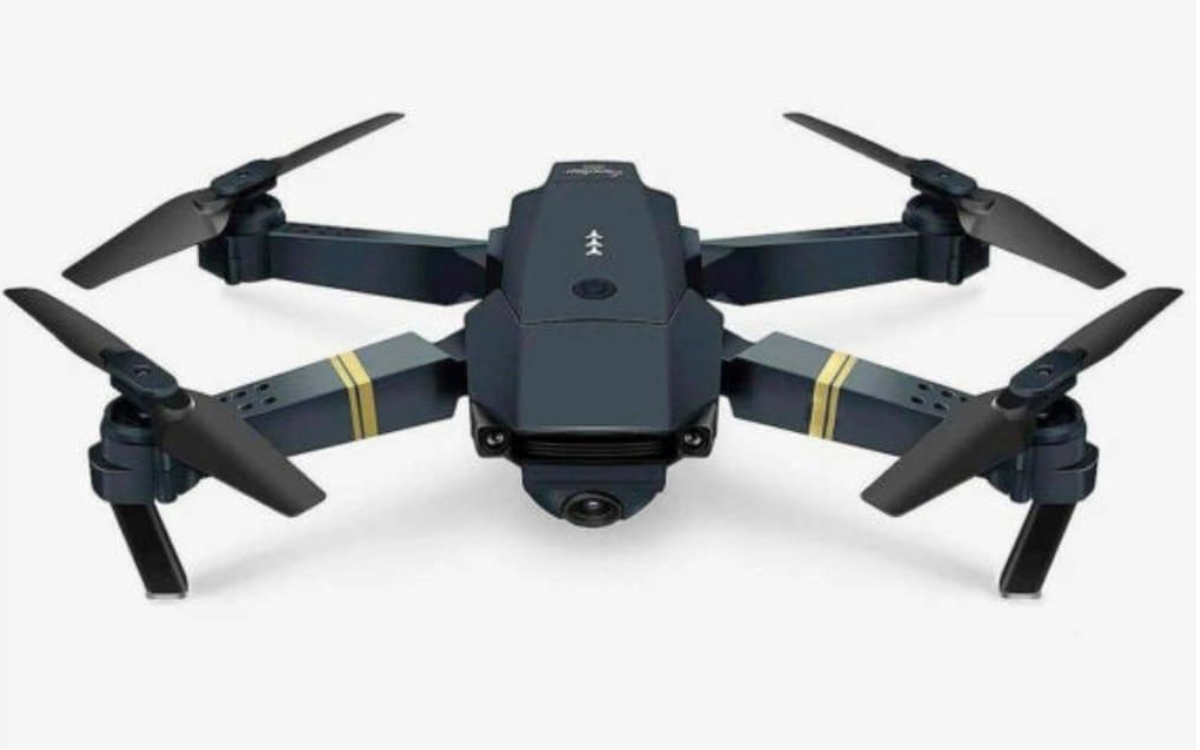
Black Falcon Drone: Innovation or a Cautionary Tale for the UAV Market?
NEW YORK, NY – November 27, 2025 – In a market saturated with promises of cinematic excellence, the launch of a new Unmanned Aerial Vehicle (UAV) dubbed the Black Falcon Drone has generated significant online buzz. Positioned as a "next-generation quadcopter," it arrives with a compelling narrative: to democratize professional-level aerial filming by packing advanced features like a 4K camera, 3-axis gimbal stabilization, and intelligent flight modes into a portable, affordable package. The official announcement paints a picture of a revolutionary device poised to empower a new wave of creators, from travel enthusiasts to aspiring videographers.
The proposition is undeniably attractive. For years, a clear divide has existed between high-end, professional drones costing thousands of dollars and entry-level models with limited capabilities. The Black Falcon Drone purports to bridge this gap, offering a feature set that, on paper, rivals far more expensive competitors. However, a deeper analysis into the product's real-world performance and the ecosystem surrounding its marketing reveals a more complex and cautionary story—one that serves as a critical case study for navigating the modern consumer technology landscape, where aggressive marketing can often obscure a less impressive reality.
The Allure of Accessible Cinematography
The appeal of the Black Falcon Drone is rooted in its impressive list of advertised features. The centerpiece is its native 4K Ultra HD camera, a specification that promises the kind of crisp, detailed footage essential for high-quality content creation. According to promotional materials, this imaging capability is supported by a 3-axis gimbal stabilizer, a crucial piece of technology that mechanically counteracts shake and motion to produce smooth, cinematic video, even during aggressive flight maneuvers or in windy conditions. For any serious videographer, gimbal stabilization is non-negotiable, and its inclusion at a consumer price point is a major selling point.
Beyond the camera system, the drone is marketed with a suite of intelligent flight modes designed to simplify complex shots. Features like "Follow-Me," where the drone autonomously tracks a moving subject, and "Gesture Control," which allows for hands-free photo and video capture, are highlighted as tools that empower solo creators. Safety and ease of use are also emphasized through GPS-assisted navigation, which enables stable hovering, precise flight paths, and a critical "Return-to-Home" function that automatically brings the drone back to its takeoff point if the signal is lost or the battery runs low.
Combined with a foldable, lightweight design for portability, a claimed flight time of 15-20 minutes per battery, and simple one-touch takeoff and landing controls, the Black Falcon Drone presents itself as the complete package. It promises to eliminate the traditional barriers to entry for aerial cinematography: high cost, technical complexity, and the need for bulky equipment. This narrative has resonated powerfully online, creating a perception of a disruptive product delivering unprecedented value.
Deconstructing the Performance Claims
While the marketing paints a compelling picture, a closer examination reveals significant discrepancies between the advertised specifications and the product users report receiving. The performance gap calls into question the fundamental value proposition of the device and highlights the challenges consumers face in verifying claims made through aggressive online campaigns.
The most significant point of contention is the camera and stabilization system. The promise of "native 4K" video is a powerful lure, but widespread user reports and independent reviews suggest the actual video quality is far lower. Footage often appears to be 720p or 1080p resolution that has been digitally upscaled to 4K, resulting in a lack of detail and clarity that is immediately apparent to anyone with an eye for video quality. Furthermore, the critical 3-axis gimbal appears to be absent in many of the products shipped. Instead of a mechanical stabilizer, the drone may feature rudimentary electronic image stabilization (EIS) or, in some cases, no stabilization at all. One technical analysis noted that the camera could be moved manually, a clear indicator that a true automated gimbal is not present. This omission transforms the promise of "buttery smooth" cinematic footage into the reality of shaky, often unusable video.
Flight time is another area where claims diverge from reality. While the press release cites a respectable 15-20 minutes of flight per battery, users consistently report flight times in the range of 5 to 10 minutes. This drastic reduction fundamentally changes the drone's utility, turning a potential creative session into a frustratingly short flight followed by a 60-70 minute recharge. Similarly, the advertised "smart" features, particularly those dependent on GPS, appear to be unreliable or entirely missing. Without a functioning GPS module, features like precise position hold, accurate subject tracking, and a reliable Return-to-Home function are impossible. Reports of drones flying away uncontrollably or failing to respond to commands are common, suggesting a lack of the sophisticated navigational intelligence promised in marketing materials.
A Market of Mirrors: The Phantom Manufacturer
Perhaps the most concerning aspect of the Black Falcon Drone phenomenon is the ambiguity surrounding its origin. Extensive research fails to identify a single, reputable parent company. Instead, the name "Black Falcon Drone" appears to be a generic brand applied to various low-cost, mass-produced drones, many of which bear a striking resemblance to older models like the Eachine E58. This practice of rebranding creates a confusing and often deceptive marketplace.
The sales strategy relies on a network of promotional websites disguised as impartial reviews, often employing high-pressure tactics like countdown timers and claims of limited stock. These sites funnel consumers to purchase pages, but the entity behind them remains opaque. Users have reported being charged unexpected foreign transaction fees, and customer support is frequently described as non-existent or unhelpful, with refund requests being ignored or denied based on dubious restocking fees.
This model represents a disruptive force in the consumer market, but not through innovation. Instead, it disrupts by eroding consumer trust. It leverages the language of high-end technology to sell a product that falls into the "toy-grade" category, creating a false equivalence that can mislead aspiring creators into believing they are purchasing a capable tool. The strategy preys on the desire for an affordable entry point into a popular hobby, but ultimately delivers a product that fails to live up to its core promises, leaving many customers frustrated and out of pocket.
Navigating the Hype: Due Diligence in the Drone Age
The case of the Black Falcon Drone serves as a powerful reminder of the importance of critical evaluation in the consumer technology sector. While the dream of an affordable, professional-grade drone is compelling, the reality is that genuine technological performance still comes at a cost. Key features like a true 4K sensor, mechanical gimbal stabilization, and reliable GPS-based flight systems are the result of significant research and development investment by established manufacturers.
For consumers looking to enter the world of aerial photography, it is crucial to look beyond slick marketing and focus on verifiable performance from reputable brands. Companies like DJI, Autel Robotics, and Holy Stone offer a range of products at different price points, but even their entry-level models, such as the DJI Mini 2 SE, provide transparent specifications and a proven track record of reliability, including 2.7K video, a 3-axis gimbal, and a flight time that consistently exceeds 25 minutes. While these options may cost more than a heavily discounted "Black Falcon," they represent a genuine investment in a capable tool rather than a gamble on an unverified product.
Ultimately, the proliferation of such aggressively marketed, low-quality products poses a challenge not only to consumers but to the health of the entire UAV market. It muddies the waters, making it harder for genuine innovation to stand out and forcing legitimate companies to compete against phantom competitors with impossible claims. As technology continues to advance, the ability to distinguish between substantive progress and sophisticated illusion will become an increasingly vital skill for every consumer.