
- 13,000 bicycles: BIXI's fleet will expand to over 13,000 bikes by the end of 2026, with 25% being electric-assist models.
- 80% satisfaction: Winter bike-sharing service achieved an 80% user satisfaction rate between November 2025 and March 2026.
- 19 municipalities: The network will serve 19 municipalities, more than doubling its reach in two years.
Experts agree that BIXI's expansion and year-round service success demonstrate a fundamental shift in Montreal's commuting habits, proving bike-sharing as a viable and essential part of the city's public transit ecosystem.
BIXI's Big Bet: Montreal's Bike Share Goes All-In on Year-Round Riding
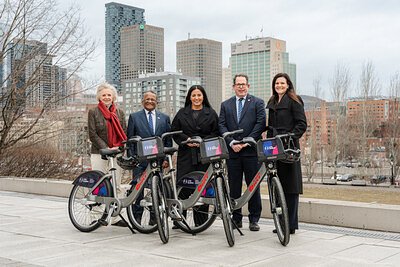
MONTRÉAL, QC – April 07, 2026 – As the last remnants of an early winter melt away, Montréal is embracing a cycling season that has arrived sooner and stronger than ever before. BIXI Montréal, the city's ubiquitous bike-sharing service, officially launched its 2026 season today, a full two weeks ahead of schedule. The early start is more than just a nod to warmer weather; it's a bold declaration of growth, fueled by a wildly successful year-round service and an ambitious expansion that will see the network spread to six new cities.
At a launch event attended by city officials, BIXI leadership, and key partners, the message was clear: the demand for active, sustainable transport is booming. "We all recognize the success of BIXI, which is now available across all the island of Montreal, in the metropolitan area, and is internationally recognized," said Montreal Mayor Soraya Martinez Ferrada. "We are proud to have a service like this to make getting around easier and to promote Montreal worldwide."
This year's expansion is monumental. By the end of 2026, the network will serve 19 municipalities, more than doubling its reach in just two years. The fleet will swell to over 13,000 bicycles, a quarter of which are electric-assist models, docked at more than 1,100 stations across the Greater Montreal area.
A Winter Revolution Paves the Way
The confidence behind this early launch stems directly from the success of BIXI's year-round service. Once considered a niche activity for the most hardened cyclists, winter biking has been democratized. Now in its third winter, the service has proven to be not just viable, but essential. Between November 2025 and March 2026, user satisfaction hit a record 80%, with 85% of winter riders recommending it to others.
This isn't just a trend; it's a fundamental shift in how Montrealers commute. Research from previous winter seasons revealed that 65% of users were trying winter cycling for the first time, and a staggering 81% planned to continue. For many, the primary motivation is practicality. A reported 63% of year-round users leverage the service to save time on their daily commutes to work and school. BIXI's winter-adapted bikes—equipped with studded tires and non-slip pedals—and a dedicated maintenance team that handles the corrosive effects of salt and slush, remove the significant barriers of personal bike ownership in a harsh climate.
"The results from the winter season show that bike-sharing meets a real need for year-round mobility," said Christian Vermette, General Manager of BIXI. This growth, he noted, "confirms users' enthusiasm and BIXI's growing role in the public transit ecosystem."
The Blueprint for Growth: Strategy and Partnerships
BIXI's rapid expansion is not accidental; it is the result of a carefully crafted strategy built on a non-profit model and robust public-private partnerships. Established by the City of Montreal in 2014, the organization prioritizes public service and sustainable mobility over profit maximization. While it has faced financial hurdles in its history, requiring city support to get on its feet, it has since reported operational surpluses, allowing it to reinvest in the network.
Central to this stability is the long-standing support from its partners. Loto-Québec, the presenting partner, recently renewed its commitment through March 2029, a major vote of confidence that underpins the year-round service. "Every year, BIXI helps more and more Quebecers adopt a sustainable mode of transportation," said Marie-Claudel Lalonde, Vice President of Corporate Social Responsibility and Marketing at Loto-Québec. "We are therefore delighted to continue this partnership for the next three years."
This collaborative model allows BIXI to scale effectively. The expansion into new municipalities like Sherbrooke, Saint-Eustache, and Deux-Montagnes, alongside six more this year, transforms BIXI from a city-centric service into a true regional transit solution. "Montreal is a vibrant and attractive city for both its residents and visitors," stated Sylvia Morin, Chair of the BIXI Board of Directors. "BIXI has enhanced the city's appeal by offering users and cities an affordable, flexible, and enjoyable urban mobility service."
Building a Greener, More Connected Metropolis
The expansion is a significant win for Montreal's environmental and urban development goals. By integrating seamlessly with other forms of public transit, BIXI facilitates multimodal journeys, encouraging people to leave their cars at home. This directly contributes to reducing traffic congestion and carbon emissions.
The growing fleet of electric-assist bikes is a key part of this strategy. Making up 25% of the total fleet, these e-bikes lower the barrier to entry for cycling, making it accessible to people of varying fitness levels and for longer commutes or hillier terrains. This makes BIXI a more viable option for a broader demographic. The introduction of BIXI trailers further enhances its utility, allowing users to transport groceries or other goods, chipping away at car dependency for everyday errands.
City officials see this as integral to creating a more livable urban environment. "Our goal is to provide a safe, efficient cycling network that's tailored to the realities of our neighbourhoods," added Alan DeSousa, the City of Montreal's councillor responsible for mobility and infrastructure. "Whether for residents or tourists, BIXI lets people discover the city in a different way, in a new light."
Navigating the Road Ahead: Infrastructure and Safety
This unprecedented growth, however, is not without challenges. The safety of a rapidly increasing number of cyclists, particularly in a dense urban environment and during winter, is a paramount concern. The success of the BIXI network is intrinsically linked to the quality of the city's cycling infrastructure.
The City of Montreal and its partners play a critical role by maintaining a network of snow-cleared bike paths, which are essential for the viability of winter cycling. However, the need for more protected, physically separated bike lanes remains a constant topic of discussion among advocacy groups. Data from 2018-2019 showed that a significant portion of the 1,389 collisions involving cyclists occurred on roads shared with vehicle traffic.
Furthermore, incidents like "dooring"—where a cyclist is hit by a car door opening unexpectedly—remain a persistent danger, with 309 such cases recorded between 2019 and 2022. While police run awareness campaigns, the ultimate solution lies in infrastructure that physically separates cyclists from parked and moving vehicles. As BIXI expands into suburban municipalities, planning for safe, connected cycling routes will be crucial to ensure the program's success and the safety of its users. For now, BIXI continues to do its part by providing well-maintained equipment and encouraging riders to plan their routes via its mobile app, which provides real-time updates on the ever-expanding network.