
- 325 patients enrolled across 60 sites worldwide in the BIO-LivIQ pivotal study
- LivIQ uses advanced electrical far-field sensing to restore atrioventricular (AV) synchrony
- First successful implantations performed in Japan
Experts view Biotronik's LivIQ as a promising advancement in leadless pacing, offering a novel single-device solution for AV synchrony that could improve patient outcomes and reduce surgical risks compared to traditional pacemakers.
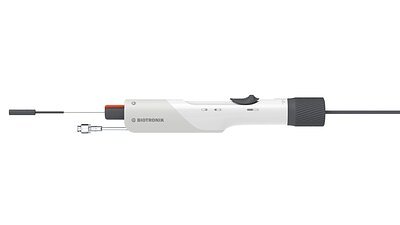
Biotronik's LivIQ Aims to Redefine Leadless Heart Pacing
BERLIN, GERMANY – March 24, 2026 – German medical technology firm Biotronik has initiated a major global study for its next-generation LivIQ leadless pacemaker, a device poised to challenge established players by offering a novel approach to restoring a natural heart rhythm. The announcement signals a significant step forward in a rapidly evolving market, promising to synchronize the heart's upper and lower chambers using a single, tiny implant.
The international BIO-LivIQ pivotal study, which has already seen its first successful implantations in Japan, will enroll 325 patients across 60 sites worldwide. Its goal is to generate the clinical evidence needed to bring this innovative technology to patients globally, potentially setting a new standard for leadless pacing performance and ease of use.
The Next Frontier in Pacemaker Technology
For decades, patients with slow or irregular heartbeats have relied on traditional pacemakers, which involve a surgical incision in the chest to create a "pocket" for the device and wires, or "leads," that are threaded through veins into the heart. While life-saving, this approach carries risks of infection at the surgical site and potential long-term complications from lead failure.
Leadless pacemakers represent a paradigm shift. These miniaturized, capsule-sized devices are implanted directly into the heart's right ventricle via a catheter inserted through a leg vein, eliminating the need for a chest incision and transvenous leads. However, the first generation of these devices was limited to pacing only the ventricle, which could not replicate the heart's natural, synchronized rhythm between the atria (upper chambers) and ventricles (lower chambers). This lack of atrioventricular (AV) synchrony can lead to a condition known as "pacemaker syndrome," causing symptoms like fatigue, dizziness, and shortness of breath.
Biotronik's LivIQ system is designed to solve this problem with a unique, single-device solution. It employs advanced electrical far-field sensing to detect the natural electrical signals of the atria from its position in the ventricle. This allows the single device to coordinate its pacing with the atrial contractions, restoring AV synchrony and providing more physiologic heart function.
This approach differentiates LivIQ from its main competitors. Medtronic’s Micra AV, another single-device leadless pacemaker, uses an internal accelerometer to sense the mechanical motion of the heart to infer atrial activity. Abbott’s Aveir DR system achieves AV synchrony by implanting two separate leadless devices—one in the atrium and one in the ventricle—that communicate wirelessly. Biotronik is betting that its electrical far-field sensing will provide a more direct and reliable method for synchronizing the heart's chambers within a single, streamlined implant.
"We are one step closer to providing clinicians with a more intuitive and capable single‑device solution in leadless pacing," said Dr. Andreas Hecker, Chief Technology Officer at Biotronik. "LivIQ brings together two key advances that address distinct clinical needs. It combines an easy‑to‑handle catheter design that simplifies implantation, and a novel sensing concept that enhances therapy performance across more scenarios."
A Better Beat for Patients and Physicians
The ultimate goal of this technological leap is to improve patient outcomes and quality of life. By restoring AV synchrony, the LivIQ system aims to provide the benefits of traditional dual-chamber pacing without the associated surgical and lead-related risks. For patients, this could mean better exercise tolerance, fewer symptoms of pacemaker syndrome, and a faster, less invasive recovery.
The initial procedures in Japan have already garnered positive feedback from physicians on the front lines. The system's design focuses not only on advanced therapy but also on the implantation experience for the cardiologist.
"The BIOTRONIK leadless pacemaker system was remarkably straightforward to implant," commented Dr. Kenji Ando of the Kokura Memorial Hospital in Kitakyushu, one of the first sites to perform the procedure. "Catheter navigation and deployment were intuitive, helping us to achieve excellent device positioning and initial results."
This emphasis on a "highly maneuverable catheter" designed for "precise control and predictable placement" is a critical feature. A smoother, more efficient implantation procedure can reduce procedure times, minimize potential complications, and increase physician confidence in adopting the new technology.
Dr. Kengo Kusano, the study's Principal Investigator at the National Cerebral and Cardiovascular Center in Osaka, echoed this optimism. "I am pleased to see a highly compelling option emerging for a single device leadless pacemaker, promised to deliver strong AV-synchrony and long-term device performance," he stated.
A Strategic Move in a High-Stakes Market
Biotronik's launch of the BIO-LivIQ study is a calculated and strategic move in the competitive cardiac rhythm management (CRM) market. The leadless pacemaker segment is projected to grow into a multi-billion dollar industry, and Biotronik is positioning LivIQ to capture a significant share by addressing the core clinical need for AV synchrony in a novel way.
The global pivotal study is the essential pathway to commercialization. By evaluating device safety, pacing performance, AV-synchrony behavior, and quality-of-life outcomes in a diverse patient population, Biotronik aims to build a robust data package for regulatory bodies like the U.S. Food and Drug Administration (FDA) and its counterparts in Europe and Asia. The inclusion of sites in Japan from the outset underscores the company's global ambitions.
While the journey from pivotal trial to market approval is lengthy, typically taking several years, this milestone marks Biotronik’s official entry into the race for next-generation leadless pacing. For over 60 years, the Berlin-based company has been a steady force of innovation, from developing Germany's first pacemaker in 1963 to pioneering remote monitoring technologies. The LivIQ system represents the latest chapter in this legacy, continuing the company's long-standing commitment to developing therapies that harmonize technology with the human body and improve the lives of millions affected by heart disease.