
- $44 billion: Projected global automotive smart cockpit market by 2032, up from $16.7 billion in 2023.
- 12.5% CAGR: Forecasted growth rate for automotive display cover glass market.
- 8.5 million units annually: Expected EV sales in ASEAN-6 markets by 2035.
Experts view Biel Crystal’s Vietnam plant as a strategic move to vertically integrate the automotive supply chain, capitalizing on the booming smart EV cockpit market while enhancing efficiency, cost savings, and quality control.
Biel Crystal’s Vietnam Plant: A Bet on the Future of the Smart Car
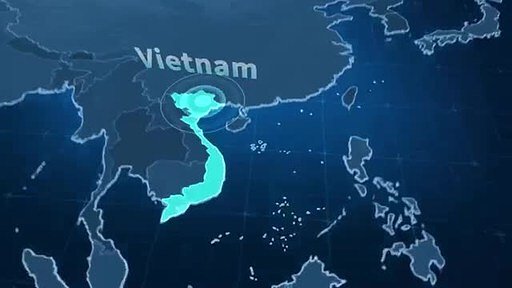
HAIPHONG, VIETNAM – November 27, 2025 – In a move that signals a tectonic shift in the high-tech automotive supply chain, Biel Crystal has announced plans to build a pioneering integrated production facility in Haiphong, Vietnam. The new plant, slated to begin operations in 2026, will be the first of its kind in Southeast Asia, capable of manufacturing both automotive Cover Glass (CG) and fully assembled Smart Cockpit Display Modules under a single roof. While press releases often announce new factories, this is far more than a simple expansion. It’s a calculated, high-stakes move to vertically integrate a critical segment of the automotive value chain, positioning the company to capitalize on the explosive growth of electric vehicles and their increasingly sophisticated digital interiors.
For investors and industry observers, Biel Crystal's announcement warrants a closer look. It’s a story unfolding at the intersection of supply chain strategy, technological innovation, and the powerful consumer-driven demand for smarter, more connected vehicles. The company, a long-time but often unseen giant in the world of smartphone glass for industry leaders like Apple and Samsung, is leveraging decades of expertise to capture a new, lucrative frontier.
Vietnam’s Ascent in High-Tech Manufacturing
Biel Crystal’s choice of Haiphong is a powerful endorsement of Vietnam's emergence as a global hub for advanced manufacturing. For years, the country has been a beneficiary of the “China plus one” strategy, where companies diversify their supply chains to mitigate geopolitical and operational risks. However, this move represents a new phase, shifting beyond basic assembly to complex, high-value production.
Vietnam has been aggressively courting foreign direct investment (FDI) in high-tech sectors, with the processing and manufacturing industry consistently attracting the lion's share of capital. The government has rolled out a suite of incentives, including corporate income tax exemptions and reduced import duties for machinery, with specific support policies for the automotive sector extended through 2027. This supportive regulatory environment, combined with a large, youthful labor force and competitive operational costs, creates a compelling business case.
Haiphong, with its strategic port infrastructure, provides a logistical gateway to major export markets. This is critical, as Biel Crystal has already secured project nominations from leading automotive clients in Europe, the US, Japan, and Korea. The decision reflects a deep confidence in Vietnam's ability to support a high-tech ecosystem, despite challenges like a persistent shortage of highly skilled engineers. By building an advanced, integrated facility, Biel is not just leveraging Vietnam's existing strengths but also helping to cultivate the very high-tech capabilities the country seeks to grow.
The 'CG-to-Module' Competitive Edge
The true innovation behind the Haiphong facility lies in its operational model: a seamless “CG-to-Module” production line. Traditionally, the manufacturing of a smart cockpit display is a fragmented process. A specialized company produces the high-purity cover glass, which is then shipped to another facility—often run by a different company in another country—to be bonded and assembled into the final display module. This multi-stage process introduces logistical complexity, added costs, potential delays, and multiple points of potential quality control failure.
Biel Crystal aims to collapse this entire sequence into a single, vertically integrated operation. By producing the precision cover glass and assembling the complete display module in one location, the company can achieve significant advantages. This integration promises to:
- Enhance Efficiency: Streamlining the process reduces lead times, minimizes handling, and simplifies inventory management.
- Reduce Costs: Eliminating the costs of transportation, packaging, and intermediate logistics between separate glass and assembly plants can yield substantial savings.
- Improve Quality Control: A unified production line allows for tighter, end-to-end quality oversight. The synergy between the glass-making and module-assembly teams can lead to faster problem-solving and a more consistent final product, a non-negotiable for the automotive industry's stringent quality standards.
- Boost Supply Chain Resilience: In an era defined by supply chain disruptions, this model reduces dependence on a chain of external suppliers, creating a more robust and predictable output for automotive OEMs.
While major Tier 1 suppliers like Bosch and Continental are dominant forces in the digital cockpit space, Biel Crystal’s under-one-roof approach in Southeast Asia is a strategic differentiator. It offers a simplified, de-risked partnership for automakers who are racing to integrate larger, more complex screens into their vehicles.
Riding the Smart EV Cockpit Boom
This entire strategy is anchored in the undeniable, parabolic growth of the electric vehicle and smart cockpit markets. The sterile, analog dashboards of the past are being replaced by immersive digital experiences, often dominated by vast, pillar-to-pillar screens. This trend is a primary driver of vehicle choice for a new generation of consumers, and automakers are responding in kind.
The numbers tell the story. The global automotive smart cockpit market is projected to skyrocket from roughly $16.7 billion in 2023 to over $44 billion by 2032. The market for the specialized automotive display cover glass is forecast to grow at an even faster clip, with a projected CAGR of 12.5%. This demand is supercharged by the global EV transition. In Southeast Asia alone, EV sales are expected to grow exponentially, potentially reaching 8.5 million units annually by 2035 across the ASEAN-6 markets.
Biel Crystal's investment is timed to intersect perfectly with this wave of demand. The company is not just building a factory; it is building a critical piece of infrastructure for the next generation of mobility. The pre-secured contracts from major global automakers confirm that this is not a speculative venture but a direct response to a clear and present market need. By establishing this capability in Vietnam, Biel Crystal is positioning itself as a pivotal enabler for global automotive brands looking to build their next-generation EVs for both Asian and global markets. For Biel Crystal, the Haiphong facility is not just a factory; it is a declaration that the future of the automotive supply chain is integrated, intelligent, and being built today.