
- 30-60% savings: ShopADoc claims its platform can generate savings of 30-60% below typical market rates for dental procedures.
- 7 years in development: The platform was developed over seven years before its national launch in September 2025.
- No membership fees: Dentists can currently register on the platform without paying annual membership fees.
Experts view ShopADoc’s reverse-auction model as a disruptive yet potentially effective solution for improving dental care affordability and transparency, though concerns remain about its long-term impact on professional standards and patient trust.
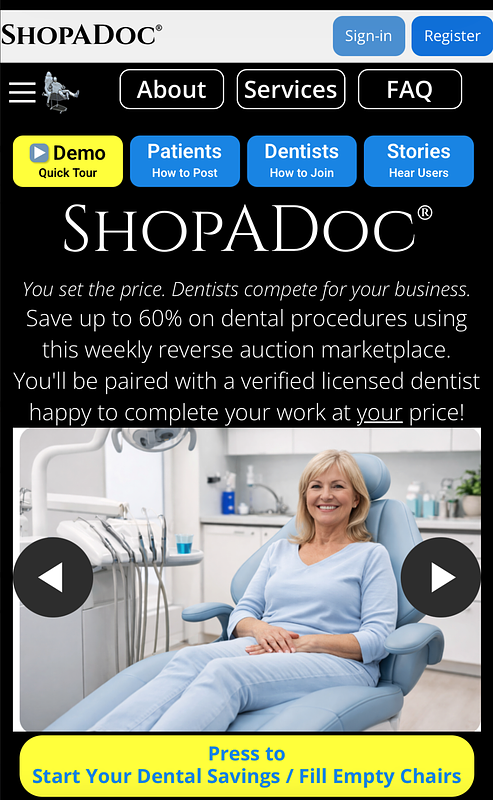
Bidding for a Better Bite: Can a Reverse Auction Fix Dental Care?
ORLANDO, FL – June 15, 2026 – The price of a dental crown can feel as opaque as it is expensive. For millions of Americans, navigating the intersection of necessary treatment, confusing insurance plans, and daunting out-of-pocket costs has become a source of profound financial stress. It’s a systemic problem that has left many delaying or forgoing essential care. Now, a Florida-based dentist is betting that a dose of marketplace dynamics, powered by a reverse-auction platform, can bring much-needed transparency and affordability to the industry.
Dr. Jeffrey A. Molloy, a practicing dentist with over three decades of experience, is the founder of ShopADoc.com, a digital marketplace that launched nationally in September 2025. After more than seven years in development, the platform aims to directly confront the economic friction that defines modern dentistry. Later this month, Dr. Molloy will bring his disruptive model to the Florida State Dental Meeting, hoping to spark a national conversation about the very structure of how dental care is priced and accessed.
The Anatomy of a Dental Auction
At its core, ShopADoc operates on a simple yet radical premise: what if patients could set their price for a procedure and have dentists compete for their business? The platform employs a double-blind, reverse-auction format. A patient, who must first obtain a formal treatment plan from a licensed dentist, posts their required procedure - say, a specific type of filling on a particular tooth - along with supporting X-rays and a desired fee.
Participating dentists, who can currently register without annual membership fees, can then view these anonymized requests within their geographic area. As dentists submit qualifying bids, the platform's automated reverse-auction mechanism automatically adjusts the displayed treatment fee, eliminating direct fee negotiations between parties. Upon the auction's close, the platform facilitates the pairing process. Only then are contact details exchanged so the parties can schedule directly. The model is designed to remove the face-to-face haggling that makes both patients and office staff uncomfortable.
“After more than 30 years practicing dentistry, I've observed that many patients are no longer simply navigating treatment decisions - they're navigating financial stress, insurance restrictions, uncertainty, and difficult affordability decisions,” Dr. Molloy stated in a recent announcement. His platform is built to address this head-on, creating a space where cost is the primary driver of the initial connection. For dentists, the value proposition is the ability to efficiently fill empty chair time, turning potential downtime into revenue, even at a reduced rate.
A Market-Driven Cure for Industry Ailments?
ShopADoc’s arrival comes at a critical moment for U.S. healthcare. While debates over medical insurance dominate headlines, dental care often operates in a parallel system with its own unique dysfunctions. Many employer-sponsored medical plans offer little to no dental coverage, and private dental insurance is frequently characterized by low annual maximums, extensive exclusions, and significant co-payments that leave patients bearing the brunt of high-cost procedures.
“I believe many Americans underestimate how financially complicated accessing dental care has become for both patients and providers,” Dr. Molloy noted. His platform is a direct response to this complexity, offering a potential solution for the uninsured, the underinsured, and even fully insured patients facing substantial out-of-pocket expenses. By facilitating a direct, market-based transaction, the model sidesteps the administrative bloat and restrictions of the traditional insurance system. Notably, ShopADoc operates strictly as a fee-for-service marketplace; insurance claim submissions, billing, and reimbursements are strictly prohibited through the platform.
According to the company, the platform can generate savings of 30-60% below typical market rates. This approach positions ShopADoc as a potential “mid-tier” alternative, sitting between comprehensive but costly insurance plans and simple discount cards that offer limited savings. It empowers consumers with real-time pricing data, revealing what people are willing to pay and what providers are willing to accept - a level of transparency that has been historically absent from the field.
The Dentist's Dilemma: Opportunity or Race to the Bottom?
While patients may see immediate appeal in lower prices, the platform presents a more complex picture for dental professionals. For many independent practitioners, ShopADoc offers a modern tool for patient acquisition in an increasingly competitive market. The ability to fill schedules on demand is a powerful incentive, and some early adopters have praised the concept. Testimonials from dentists suggest a readiness for change, with one practitioner noting, “This is exactly what our industry needs.”
However, the introduction of a reverse-auction model into a professional medical service raises significant questions. Critics of similar models in other sectors often warn of a potential “race to the bottom,” where intense price competition could inadvertently incentivize providers to cut corners, perhaps by using cheaper materials or rushing procedures. The dentist-patient relationship, traditionally built on long-term trust and continuity of care, risks becoming more transactional. In response, supporters of the concept argue the platform facilitates vital affordability conversations that might otherwise never occur. ShopADoc maintains that the platform is intended to increase access without altering professional standards, ethical responsibilities, or clinical decision-making, ensuring all treatment decisions remain strictly between the licensed dentist and the patient.
ShopADoc’s own terms acknowledge this potential friction. The platform’s FAQ clarifies that while a dentist is expected to honor the bid, the initial agreement is non-binding, and the “clinical presentation may warrant alternative or additional services.” This could lead to the very same difficult financial conversations the platform aims to avoid, especially if a patient arrives for a procedure booked at a low price only to be told more extensive, costly work is needed.
Navigating the Regulatory and Ethical Landscape
Operating a healthcare marketplace requires careful navigation of a dense regulatory environment. ShopADoc appears to have structured itself deliberately to mitigate these challenges. The company is adamant that it is not a healthcare provider; it does not offer medical advice and explicitly states that it “does not create a doctor-patient relationship.” Its role is strictly that of a facilitator, an intermediary connecting two interested parties.
To build trust, the platform verifies the credentials of all participating dentists against the National Provider Identifier (NPI) registry and confirms they hold an active, unrestricted license. The system is also designed to be HIPAA-compliant to protect patient privacy. This legal positioning is critical to avoiding classification as a medical provider and the host of regulations that would entail, including potential issues with state-level professional conduct rules and federal anti-kickback statutes.
Nonetheless, the model pushes the boundaries of how healthcare services are marketed and sold. By commoditizing individual procedures, it challenges the foundational belief that healthcare decisions should be insulated from pure market forces. The ultimate question is whether the efficiency and affordability gained by the auction model outweigh the potential erosion of the trust-based, holistic approach to patient care that the industry has long upheld as its standard. As Dr. Molloy prepares to engage his colleagues in Orlando, he is not just showcasing a piece of software; he is presenting a fundamentally different vision for the future of dental economics.
Editor's Note: An earlier version of this article contained inaccuracies regarding ShopADoc's operational mechanics. The text has been updated to clarify that participating dentists do not currently pay an annual membership fee, the platform utilizes an automated matching process rather than allowing patients to manually select from bids, and the service operates strictly on a fee-for-service basis with insurance involvement prohibited. Additional context regarding the company's stance on maintaining standards of care has also been added.