
- 44% of City Colleges of Chicago students experienced food insecurity in the prior month (2019 survey).
- 54% faced housing insecurity (2019 survey).
- 15% had experienced homelessness in the previous year (2019 survey).
Experts agree that addressing student survival crises—such as food insecurity, housing instability, and mental health—is essential for academic success and educational equity.
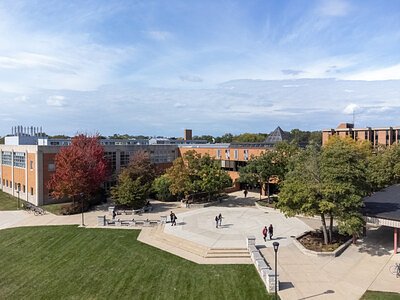
Beyond Tuition: Mayor Johnson & NEIU Confront Student Survival Crisis
CHICAGO, IL – February 27, 2026 – In a frank discussion that moved far beyond traditional academic concerns, Chicago Mayor Brandon Johnson joined students and faculty at Northeastern Illinois University (NEIU) this week for a "Lakeside Chat" that put the stark realities of student survival—food insecurity, housing instability, and mental health—at the center of the conversation on higher education.
The event, held on NEIU's Northwest Side campus, signaled a deepening partnership between the city's leadership and its public universities, framing student success not just as a matter of grades and graduation rates, but as a direct outcome of addressing fundamental human needs.
A Crisis of Basic Needs
The dialogue at NEIU, part of the university's human rights-themed semester, "Staying the Course for Human Rights: From Awareness to Action," brought to light the pressing, often invisible, barriers that threaten to derail students' educational journeys. Panelists bluntly discussed the challenges of affording rent, finding the next meal, and accessing mental health resources, issues that resonate deeply across Chicago's student population.
These are not isolated anecdotes. A 2019 survey by The Hope Center involving City Colleges of Chicago students revealed a staggering level of need: 44% of respondents had experienced food insecurity within the prior month, and 54% faced housing insecurity. More alarmingly, 15% had experienced homelessness in the previous year. These figures paint a grim picture of students forced to choose between buying textbooks and buying groceries, or between studying for exams and working extra shifts to cover rent.
"At Northeastern Illinois University, expanding opportunity means meeting students where they are and removing the barriers that stand in the way of their success," said NEIU President Katrina E. Bell-Jordan. She emphasized that the conversation reflected a "shared commitment with the City of Chicago to strengthen our communities through education, workforce development, and student-centered support."
This holistic approach is becoming a cornerstone of policy for both the university and the city. NEIU, a designated Minority-Serving and Hispanic-Serving Institution, has institutionalized this support through programs like its Student Pantry, which partners with the Greater Chicago Food Depository, and the ESHI Student Basic Needs Assistance Fund, which provides emergency grants for rent, utilities, and other essentials. These initiatives are not just supplemental aid; they are viewed as essential infrastructure for educational equity.
A Blueprint for City-University Collaboration
Mayor Johnson’s presence underscored a broader strategy: leveraging the city's academic institutions as core partners in tackling Chicago's most complex social and economic challenges. The NEIU event is a key example of a growing trend where City Hall actively collaborates with universities to create a more resilient and equitable city.
"I look forward to continued partnership with NEIU to build career pathways, expand opportunities, and ensure Chicago is thriving," Mayor Johnson stated, framing the university as a vital engine for community development.
This model is not unique to NEIU. The University of Chicago's Office of Civic Engagement connects thousands of students with community organizations, while its research labs work directly with city agencies on issues like public safety and economic inclusion. Similarly, the University of Illinois Chicago's (UIC) School of Public Health has initiatives designed to build public health capacity at the neighborhood level.
For Mayor Johnson, a former public school teacher and union organizer, these partnerships are a natural extension of his administration's focus on youth and community investment. His agenda has included a significant expansion of the "One Summer Chicago" youth employment program, which provided over 30,000 jobs in 2025, and micro-grants for community-based youth programming. By engaging directly with students and administrators at NEIU, the mayor is aligning city resources with the on-the-ground needs identified by the institutions that serve Chicago's future workforce.
Empowering the Leaders of the Present
A defining feature of the Lakeside Chat was the prominent role of student voices. The panel was not a top-down lecture from officials but an interactive dialogue featuring undergraduate Winter Terry and graduate student Leslie Lozada. They shared their lived experiences and advocated for their peers alongside faculty experts like Dr. Zada Johnson and Dr. DeWitt Scott, Director of the Angelina Pedroso Center for Diversity and Intercultural Affairs.
Terry, a Political Science major and a Senator in NEIU's Student Government Association, and Lozada, editor of the student newspaper and a graduate student in media studies, provided unfiltered perspectives on everything from campus safety to the specific needs of DACA recipients and LGBTQ+ students. Their participation transformed the event from a symbolic visit into a substantive policy discussion.
This focus on youth empowerment is a recurring theme for the mayor. "My administration is committed to meeting young people where they are and centering youth voices in our efforts to build safer, more affordable communities for all," Johnson said. He pointedly added, "Today's conversation is a reminder that young people are not just the leaders of tomorrow, they are leading in our present."
This philosophy is crucial at an institution like NEIU, which serves a large population of first-generation students, working professionals, and adult learners. For these students, who often juggle school with jobs and family responsibilities, having a direct line to the city's chief executive represents a powerful validation of their struggles and their potential. The dialogue provided a platform for students to directly inform the policies that will shape their ability to persist and succeed.
The collaboration between the City of Chicago and Northeastern Illinois University represents a vital shift in how urban communities approach higher education. By acknowledging that success in the classroom is impossible without stability outside of it, leaders are building a new framework for student support grounded in dignity and human rights. As the partnership continues to evolve, it offers a promising model for how cities and universities can work together not only to produce graduates, but to cultivate thriving, equitable communities for everyone.
Topics & Related
Restructuring
Related Company Pulse