
- 43.5 million: Estimated illegal school bus passing incidents annually in the U.S. (NASDPTS)
- 89% to 95% reduction: Decrease in violations in districts using LED-illuminated stop-arm extensions
- 33% average reduction: Effectiveness of automated stop-arm camera systems in changing driver behavior
Experts agree that a multi-layered approach combining proactive visibility enhancements, enforcement technologies, and driver education is essential to significantly reduce illegal school bus passing incidents.
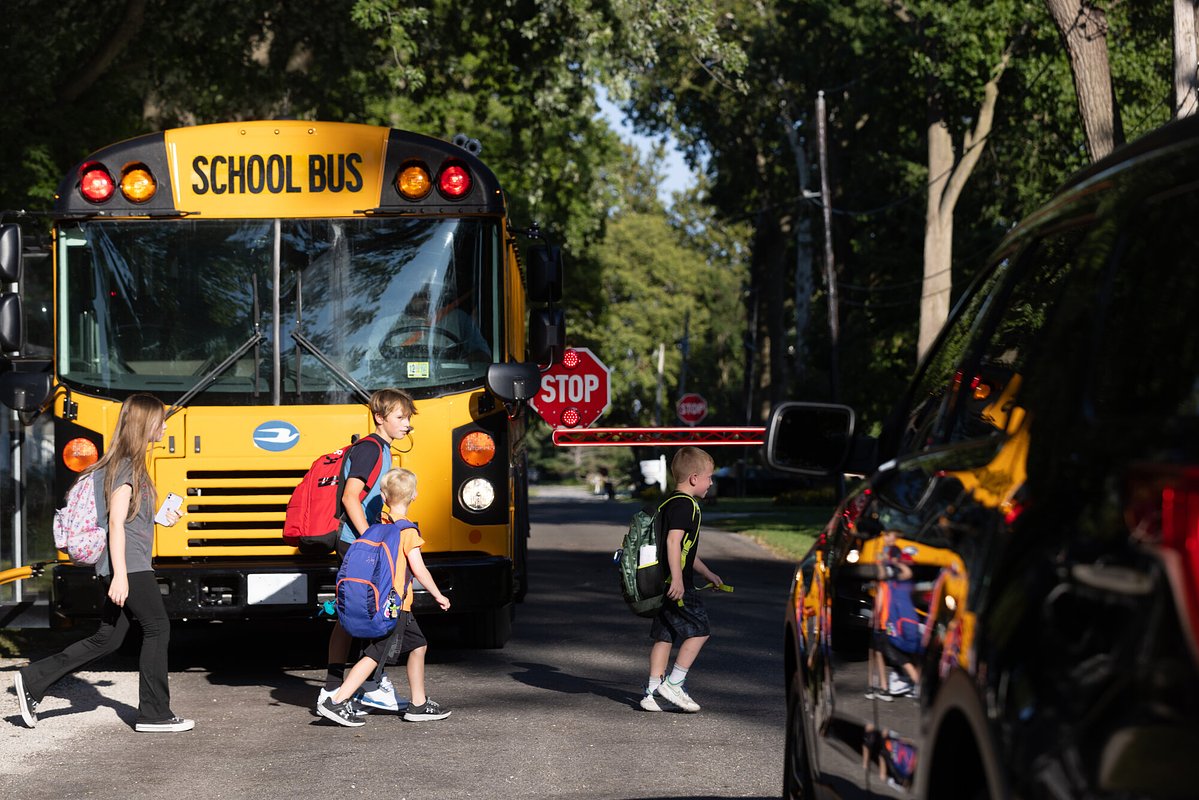
Beyond the Stop Sign: Can Tech End the School Bus Passing Epidemic?
SPRINGFIELD, IL – April 06, 2026 – Every school day, millions of children in the United States rely on the iconic yellow school bus for safe passage to and from school. Yet, the most dangerous part of their journey is often the few steps they take when getting on or off that bus. A staggering, silent epidemic of illegal school bus passings continues to put students in harm's way, a problem that safety advocates and technology companies are tackling with renewed urgency during this year's Distracted Driving Awareness Month.
The scale of the issue is immense. According to data compiled by the National Association of State Directors of Pupil Transportation Services (NASDPTS), an estimated 43.5 million illegal passing incidents occur each school year. While more recent projections for the 2024-2025 school year suggest a slight decrease to 39.3 million violations, the daily risk remains alarmingly high. On a single day in 2025, bus drivers across 36 states recorded over 67,000 such violations.
For the drivers who witness these near-misses daily, the statistics are a frustrating reality. "It’s been a huge issue," said Cindy Morris, a veteran bus driver for the Ball-Chatham school district in Illinois, in a statement released as part of a new safety campaign. "I’ve literally had people just watch me drop off [students] and still go by."
A Proactive Push for Visibility
In response to this persistent danger, companies are moving beyond reactive measures and focusing on proactive prevention. One such firm, BusGates®, is using Distracted Driving Awareness Month to advocate for technology that physically and visually enhances a bus's command to stop. Their solution is an LED-illuminated stop-arm extension that retrofits onto existing signs.
"In today’s environment of constant distraction, we need safety measures that make school buses impossible to miss," said Jeff Stauffer, Co-Founder at BusGates®. The device extends nearly five feet from the side of the bus when the stop arm is deployed, creating a more prominent visual and physical barrier in the adjacent lane of traffic. The goal is simple: to grab the attention of distracted or impatient drivers before they make a life-altering mistake.
The results from districts that have adopted these extensions are compelling. In Virginia, Albemarle County Public Schools reported an 89% reduction in illegal passing incidents after implementation. Even more dramatically, the transportation manager for Alvarado Public Schools in Texas noted a 95% drop in violations since installing the extensions. One superintendent in Illinois called the decision a "no brainer" after the Ashton-Franklin Center School District saw violations plummet from a frequent occurrence to just a single incident in three years.
“It’s time to move beyond reactive tools after a child has already been put at risk,” stated Dan Thompson, the company's other co-founder. “Real solutions exist today that proactively reduce illegal passing and protect children in the moment.”
The Broader Arsenal of Safety Technology
Extended stop arms are part of a growing ecosystem of technologies designed to fortify the "danger zone" around school buses. The most widespread alternative is the automated stop-arm camera system, offered by companies like BusPatrol and American Traffic Systems (ATS). These systems capture high-resolution images and video of vehicles that illegally pass a stopped bus, providing law enforcement with the evidence needed to issue citations.
Proponents of camera systems point to their effectiveness in changing driver behavior. BusPatrol reports an average 33% reduction in violations in the communities it serves, with over 90% of ticketed drivers not re-offending. Similarly, an analysis by ATS found that fewer than 1% of drivers who received a ticket for illegally passing a bus got a second one.
However, experts note that cameras are primarily an enforcement tool—they document a violation that has already occurred. Some safety advocates argue for a multi-layered approach, combining enforcement cameras with visibility enhancements like LED lighting and extended stop arms to both deter and penalize illegal passing. Emerging technologies are even more proactive. Predictive stop arms use radar to detect approaching vehicles and can issue an audible warning to students, telling them to wait if the system predicts a car is not going to stop. In the long term, Vehicle-to-Everything (V2X) communication could allow buses to broadcast warnings directly to the dashboards of nearby cars.
The High Cost of Safety and Funding Hurdles
Despite the proven efficacy of these technologies, widespread adoption is often hindered by a significant obstacle: cost. School districts, frequently operating under tight budgets, must weigh the price of new safety equipment against other pressing needs.
However, a complex web of funding opportunities is available. Federal programs, such as the EPA's Clean School Bus Program and Title IV-A grants for student support, can be leveraged for safety upgrades. At the state level, governments are also stepping in. Ohio, for example, recently established a $10 million School Bus Safety Grant Program to help districts purchase equipment like external cameras and crossing arms.
The business models for these technologies also vary. While hardware like stop-arm extensions typically involves an upfront purchase and installation cost, many stop-arm camera providers have pioneered "violator-funded" programs. These programs are often implemented at no direct cost to the school district or taxpayers, with the program's expenses covered by a portion of the revenue generated from the fines issued to offending drivers. This model has made camera enforcement an attractive option for cash-strapped municipalities, but it is not without its own set of challenges.
Beyond Technology: Laws, Attitudes, and Implementation
The path to safer bus stops is not paved with technology alone. A significant barrier remains in state legislatures. Currently, less than half of U.S. states have laws on the books that explicitly permit the use of automated stop-arm cameras for issuing citations, leaving districts in many states without access to this enforcement tool.
Furthermore, the reliance on fines has sparked debate about equity, with concerns that heavy penalties can disproportionately affect low-income drivers. Some city officials have hesitated to implement camera programs, questioning their fairness or prioritizing other traffic safety issues. In New York City, for instance, the mayor reportedly opted against a program, arguing that injuries from this specific type of violation were not as prevalent as other traffic dangers.
Perhaps the most challenging hurdle is driver attitude. A recent NHTSA survey delivered a sobering insight: more than 30% of drivers admitted they "don't care" about school bus passing laws, while others cited being "in a rush." This highlights a deep-seated cultural problem that technology can influence but not entirely solve. It underscores the continued importance of public awareness campaigns, driver education, and a renewed sense of personal responsibility behind the wheel. As technology makes the yellow bus and its red flashing lights harder than ever to ignore, the ultimate responsibility still rests with the driver to see the sign, stop for the child, and prevent a potential tragedy.