
- $2.7 billion: The global holographic display market in 2024, projected to surge to $15 billion by 2033.
- 40%: The increase in conversions attributed to holographic retail displays.
- 100 languages: The number of languages in which the AI-driven holograms can engage in real-time conversations.
Experts view this partnership as a strategic leap in consumer engagement, leveraging AI and holography to create immersive, memorable brand experiences that drive loyalty and sales.
Beyond the Screen: AI Holograms Are Marketing’s Next Brand Experience
BOSTON, MA – December 01, 2025 – For years, the pinnacle of influencer marketing has been a perfectly framed photo or a viral video clip, contained within the glowing rectangles of our phones and laptops. Now, two Boston-based innovators are shattering that frame. VizSense, an AI-powered influencer agency, and Geminai, a holographic storytelling firm, have announced a partnership poised to bring digital personalities into the physical world as interactive, AI-driven holograms. This isn't science fiction; it's the next strategic play in the high-stakes game of consumer engagement.
The collaboration merges VizSense’s decade of experience in data-driven influencer intelligence with Geminai’s expertise in deploying lifelike holographic content. The vision is to move brand activations beyond the screen, allowing influencers, celebrity spokespeople, and even product demonstrations to appear as tangible, three-dimensional apparitions in retail stores, at live events, and in pop-up shops. It’s a move that aims to transform passive viewing into active participation, creating the kind of “stop and stare” moments that are increasingly rare in a saturated media landscape.
The Holographic Leap in Engagement
At the heart of this venture is technology from Proto Inc., which has developed patented, self-contained holographic display units. These are not the fleeting projections of popular imagination that require special glasses or headsets. Instead, Proto’s “holoportation” devices are plug-and-play cabinets that create a convincing illusion of a person or object standing inside. This technology allows for a shared, public immersive experience, a crucial differentiator from solitary AR and VR encounters. The global holographic display market, valued at $2.7 billion in 2024, is projected to surge to over $15 billion by 2033, signaling a massive industry bet on its mainstream adoption.
What elevates this partnership beyond a mere visual gimmick is the integration of artificial intelligence. The holograms aren’t just static recordings; they are interactive entities. Powered by sophisticated natural language processing, they can engage in real-time conversations, answer questions, and provide personalized recommendations in over 100 languages. Integrated touchscreens and QR codes can bridge the gap between interaction and transaction, allowing a consumer to chat with a holographic stylist and then instantly purchase a recommended product.
“Brands want moments that make people stop and stare,” said Kristen Standish, CEO of VizSense, in the announcement. “Holographic influencers deliver emotional, unforgettable interactions.” This statement cuts to the core of the strategy: in an economy driven by experiences, the ability to create a truly memorable and personal connection is the new currency of brand loyalty.
The Business Case for Immersive Influence
For brand managers and chief marketing officers, the question is always one of ROI. While the initial investment in holographic campaigns may exceed that of a standard digital campaign, the potential returns are compelling. The market for immersive marketing is exploding, projected to grow from $9.61 billion in 2025 to nearly $29 billion by 2029. This reflects a clear market demand for the very experiences VizSense and Geminai are proposing. Data shows that 85% of consumers are more likely to purchase after participating in a brand activation, and holographic retail displays have been shown to increase foot traffic by up to 24% and boost conversions by over 40%.
The value extends beyond direct sales. A holographic influencer appearing in a flagship store is an inherently shareable event, destined to be captured and broadcast across social media by captivated shoppers. This creates a powerful engine for user-generated content and organic buzz, amplifying the campaign’s reach far beyond its physical footprint. Furthermore, brands that adopt such cutting-edge technology are immediately perceived as innovative leaders, enhancing their overall brand equity.
This partnership provides a new tool for leveraging the power of influencers. Instead of just sending products to creators, brands can now “beam” them into dozens of retail locations simultaneously, creating a scalable yet personal presence that was previously impossible. It represents a strategic shift from paying for reach to investing in genuine, jaw-dropping engagement.
From Spokespups to Strategic Partnerships
To prove the concept is more than just a theory, the companies are holding an exclusive launch event for content creators this week at the Mandarin Oriental in Boston. The showcase will feature a novel application: the world’s first AI-generated, human-speaking “spokespup.” The hologram, based on a Boykin Spaniel named Shelby, will introduce Soul Dog Wines, a new personalized wine subscription service.
This isn't merely a cute stunt. It’s a demonstration of how AI can create entirely new brand mascots and personalities, powered by generative AI and capable of holding complex conversations. The “spokespup” represents the fusion of emotional storytelling (the founder’s beloved dog) with sophisticated technology. By unveiling this to a room full of influencers, VizSense and Geminai are executing a savvy meta-strategy: empowering the very people who will popularize the technology to understand and amplify its potential.
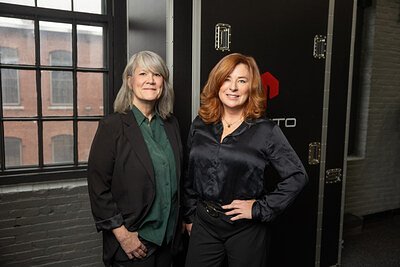
The partnership itself is a strategic masterstroke, combining two complementary forces. VizSense, a women-led and veteran-owned small business, has been a pioneer in applying AI to influencer marketing since 2015, long before it became a buzzword. Geminai, co-founded by the mother-daughter team of Joanne Stanway and Jaye Younkin, provides the creative and logistical expertise to bring holographic stories to life.
“VizSense has been ahead of the AI curve for a decade,” noted Joanne Stanway, CEO of Geminai. “Together, we're turning data-driven influence into game-changing immersive human connections.” This synergy—between data intelligence and human-centric creativity—is what gives the venture its strategic weight. It’s a recognition that the future of marketing isn’t just about better algorithms or flashier tech, but about using those tools to forge deeper, more authentic relationships between brands and people. As these holographic influencers begin to step out of the screen and into our world, they are not just changing how we see brands; they are fundamentally redefining what it means to experience them.