
- $1.2 million invested since 2024 by Novartis Canada's Health Equity Initiative
- 3 organizations funded in 2025, addressing systemic barriers in mental health, cancer care, and social supports
- Black women face higher breast cancer mortality rates due to systemic inequities
Experts would likely conclude that corporate investments in health equity initiatives are a strategic and necessary step toward addressing systemic barriers in Canada's healthcare system, though they acknowledge that sustained public-private collaboration is essential for long-term impact.
Beyond the Pill: Corporate Funds Target Canada's Health Inequities
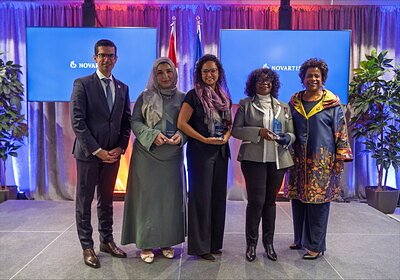
MONTREAL, QC – November 27, 2025 – In a ceremony attended by Federal Health Minister Marjorie Michel, Novartis Canada announced the recipients of its second annual Health Equity Initiative, directing over $560,000 to three organizations tackling some of the nation's most entrenched health disparities. The event, held at the company's Montreal headquarters, moves beyond typical corporate philanthropy, signaling a strategic investment in the social and systemic factors that dictate health outcomes for millions of Canadians.
Since its launch in 2024, the initiative has now channeled over $1.2 million into community-led projects, a significant sum that underscores a growing trend in the pharmaceutical sector: looking beyond the pill to address the root causes of illness. This year's winners—Moms Against Racism Canada, The Olive Branch of Hope, and Hamilton Health Sciences—are on the front lines of battles against systemic barriers in mental health, cancer care, and access to social supports.
"This program reflects our shared commitment to breaking down barriers and ensuring that every person in Canada has equitable access to the care they need," stated Minister Michel at the event, lending federal weight to a private-sector initiative. Her presence highlights a crucial convergence of public policy goals and corporate social responsibility, a partnership that may prove essential in addressing Canada's complex health equity challenges.
Targeting Critical Gaps in Care
The three funded projects address specific, well-documented crises within Canada’s healthcare landscape. Each initiative is designed not as a temporary fix, but as a sustainable, community-driven model for change.
Moms Against Racism Canada is receiving support for its NeuroEquity Project, a program designed to dismantle the unique barriers faced by neurodivergent youth in Black, Indigenous, and People of Colour (BIPOC) communities. These individuals often experience a compounding of systemic hurdles, navigating both racial discrimination and a healthcare system ill-equipped to provide culturally appropriate mental health support. "This funding affirms that culturally safe, trauma-informed and community-led mental health care is essential and possible," said Kerry Cavers, the organization's Founder & Project Director. The project aims to create a scalable, people-first solution that provides affirming care to youth and families long excluded from existing systems.
The Olive Branch of Hope, Canada's only Black breast cancer survivor-led organization, will use its funding to directly combat alarming mortality rates among Black women. Research confirms that Black women are often diagnosed with more aggressive forms of breast cancer at younger ages and face higher mortality rates than their white counterparts, a disparity linked to delayed diagnoses and systemic inequities. The organization will host community events providing free mammograms and culturally tailored workshops on prevention and self-advocacy. "Too many Black women across Canada do not have access to critical breast cancer screening and care," explained Patricia Russell, Lead Ambassador. "This support from Novartis Canada will enable us to expand our reach, offer more screenings and help women take charge of their health."
Hamilton Health Sciences (HHS) will expand its innovative social prescribing program. This model acknowledges that health is profoundly influenced by social determinants like housing, food security, and employment. Physicians and healthcare providers at HHS can "prescribe" connections to community resources to address these non-medical needs. The funding will help scale this program to better serve newcomers, Indigenous Peoples, Black and racialized communities, and other equity-deserving groups. "By embedding social prescribing into our Electronic Medical Records system, building partnerships and creating a dedicated fund, we aim to deliver care that addresses both medical and social needs," said Rochelle Reid, Senior Lead and Strategic Advisor for Equity, Diversity and Inclusion at HHS. This initiative represents a practical application of a holistic health model, moving from treating symptoms to addressing their underlying social causes.
A Strategic Shift in Corporate Responsibility
Novartis's initiative is emblematic of a broader evolution in how major pharmaceutical companies view their role in the public health ecosystem. Rather than focusing CSR efforts solely on patient assistance programs or disease awareness campaigns tied to their products, the Health Equity Initiative invests in the foundational pillars of community well-being. This represents a long-term strategy aligned with the company's Environmental, Social, and Governance (ESG) commitments.
"Listening to patients guides the decisions that we make," said Rosa D'Acunti, Country Communications and Patient Advocacy Head for Novartis Canada. "The same attentive approach that helps us understand their needs inspires us to listen to the voices of communities across the country." This philosophy is reflected in the initiative's selection process, which has consistently favoured grassroots organizations with deep community trust and innovative, locally-developed solutions. The inaugural 2024 winners included projects to establish health coordinators in the remote Fort Severn First Nation and to create the first national database of Black physicians, demonstrating a sustained focus on systemic change.
This approach, investing in the social determinants of health, is not just altruistic; it is strategic. A healthier, more equitable society is one with a reduced burden of chronic disease and fewer crisis-driven interventions, ultimately creating a more sustainable healthcare system for all stakeholders, including pharmaceutical companies. By funding programs that improve health literacy, access to screenings, and mental wellness, the company is investing in prevention and community resilience, a domain traditionally left to public health agencies and non-profits.
A Collaborative Front for a National Challenge
The presence of the Federal Minister of Health at a corporate awards ceremony is more than symbolic. It represents a tacit endorsement of a public-private partnership model to tackle a problem that the government cannot solve alone. Despite its universal healthcare system, Canada consistently ranks poorly on measures of health equity. Among nine peer countries, it has been ranked third-to-last regarding equity in healthcare access and patient experience, a stark reminder of the persistent gaps in care.
Minister Michel's statement about building a "stronger, more inclusive health system for all" aligns perfectly with the objectives of the funded projects. The government recognizes that federal and provincial health systems are often too large and bureaucratic to effectively address the hyperlocal, culturally specific needs of diverse communities. Initiatives like Novartis's can act as a crucial catalyst, providing the flexibility and resources for community organizations to pilot and scale programs that can later inform broader public policy.
The Hamilton Health Sciences social prescribing project, for example, directly addresses the federal priority of tackling social determinants of health. Similarly, the work of Moms Against Racism and The Olive Branch of Hope contributes to the goal of delivering culturally safe care. This synergy suggests a potential roadmap for a more integrated approach, where corporate funding can de-risk innovation in public health, allowing government bodies to support and scale proven models.
While corporate initiatives alone cannot dismantle decades of systemic inequity, they represent a powerful and growing force for change. By placing significant financial resources directly into the hands of community leaders, the Novartis Health Equity Initiative fosters tangible progress on the ground while modeling a new paradigm for corporate citizenship in the healthcare space. These efforts highlight a growing recognition that building a healthier nation requires investing not just in medicine, but in the communities themselves.