
- $5.8 million: Fairtrade Premium generated since 2006, directly funding community development.
- 195% growth: Equifruit's explosive expansion in 2025, ranking #174 on Canada’s Top Growing Companies list.
- 91.1 B Impact Score: Exceeding the median of 50.9, demonstrating strong social and environmental performance.
Experts would likely conclude that Equifruit’s Fairtrade model successfully demonstrates how ethical sourcing can drive both social impact and business growth, challenging conventional trade practices in the banana industry.
Beyond the Peel: How Fairtrade Bananas Are Building a Better System
MONTREAL, QC – June 09, 2026 – For decades, the banana has been a symbol of global trade’s relentless efficiency—and its human cost. As a loss-leader in grocery stores, its perpetually low price has masked a system of wage pressure and environmental strain in the communities that grow North America’s favorite fruit. But one company is proving that a different system is not only possible, but profitable.
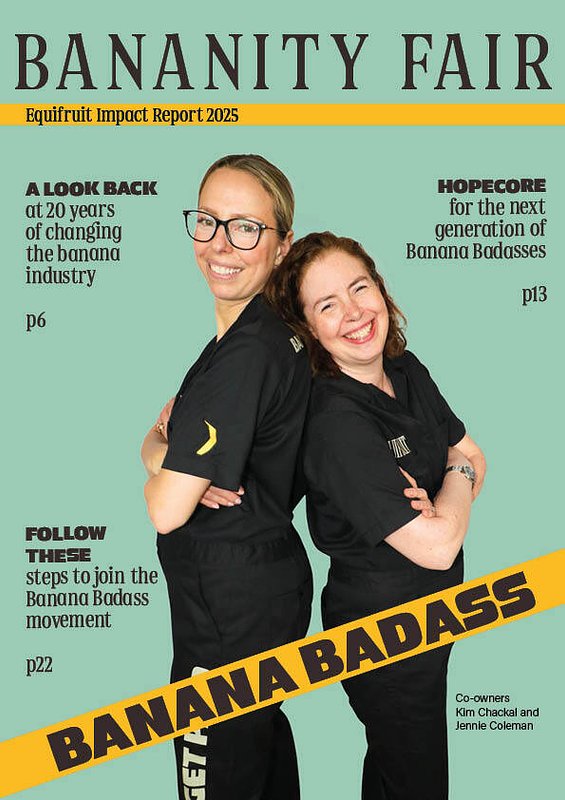
Equifruit, North America’s leading importer of Fairtrade-certified bananas, has released its first-ever Impact Report, marking two decades of operations. The headline figure is compelling: since 2006, the company has generated over US$5.8 million in Fairtrade Premium, a separate fund paid directly to banana farming communities. But beyond the number lies a blueprint for systemic change, challenging the very foundations of how we produce, sell, and consume a global staple.
“When Equifruit was founded, no one imagined what it would become,” said Jennie Coleman, President and Co-owner of Equifruit. “This report tells the story of our growth, and how we became the company that we are today. A banana supply chain built on relentless price pressure is a fragile one. Fairtrade helps us build a stronger system and after twenty years, the results speak for themselves.”
The True Value of a Fair Price
The core of Equifruit's model is its unwavering commitment to Fairtrade standards. This isn't just a label; it’s a parallel economic structure. For every case of bananas, Equifruit pays an additional $1 USD into a Fairtrade Premium fund. This money is controlled not by the company, but by the farmers and workers themselves through democratically elected committees in their local cooperatives.
These funds become powerful tools for community-led development, addressing needs that a volatile commodity market ignores. In Ecuador, the Asoguabo cooperative, an Equifruit partner, used its premium to upgrade classrooms and learning spaces for nearly 5,000 students. Elsewhere, these funds have built community health clinics, financed soil health and climate resilience programs, and provided low-interest loans to producers. Fairtrade standards also ensure a minimum price for bananas, acting as a crucial safety net when market prices plummet, which they often do.
This model directly confronts the fragility of the conventional system. By empowering producers to invest according to their own priorities, it builds resilience from the ground up. It reframes the banana not as a cheap commodity, but as the product of a complex ecosystem that requires investment in human dignity and environmental health.
A 'Triple Threat' Disrupting a Man's World
What makes Equifruit a particularly compelling case study is its unique corporate identity. In the traditionally male-dominated world of global produce, the company stands out as a “triple threat”: it is 100% Fairtrade, a certified B Corporation, and a certified Women-Owned business led by co-owners Jennie Coleman and Kim Chackal.
This identity is not just for marketing. It informs a deeper commitment to tackling the industry's entrenched social problems. Equifruit is a founding signatory of the “Silence Does Not Protect” campaign, a Latin American-led initiative to combat gender-based violence and sexual harassment on farms. The company has backed this advocacy with a formal internal policy, a significant step in an industry where the safety of female workers has often been an afterthought. As a women-led organization, its leadership believes it has a unique responsibility to challenge the culture of silence.
Furthermore, its B Corp certification is a testament to its holistic approach. With an independently verified B Impact Score of 91.1—far exceeding the median of 50.9 for typical businesses—the company meets high standards of social and environmental performance, accountability, and transparency. This combination of certifications creates a powerful flywheel: its ethical sourcing model is validated by B Lab, while its women-led status brings a critical lens to social justice issues often overlooked in corporate supply chains.
The Business Case for Ethical Sourcing
For many, the story of an ethical business is often one of niche markets and limited scale. Equifruit’s trajectory shatters that perception. The company’s Impact Report coincides with a period of explosive growth. In 2025, it was ranked #174 on the Globe and Mail's list of Canada’s Top Growing Companies, marking its fourth consecutive year on the list with 195% growth. This isn't a small-scale experiment; it's a thriving enterprise.
This success is fueled by a strategic expansion of its retail footprint. In 2025, Equifruit achieved coast-to-coast distribution in Canada, with its bananas now available in major retailers like Walmart Canada and two-thirds of Canadian Costco warehouses. This follows long-standing partnerships with grocers like Longo's, which became the first conventional retailer in North America to commit to sourcing 100% Fairtrade bananas.
The company's success demonstrates a powerful business case: consumers and retailers are increasingly seeking out brands that offer transparency and align with their values. Retailers report a “halo effect,” where stocking a responsibly sourced product boosts customer satisfaction and employee pride. By proving that an ethical model can also drive significant growth, Equifruit challenges the long-held assumption that profitability must come at the expense of people and the planet.
Building a Movement of 'Banana Badasses'
Central to Equifruit’s strategy is its bold, unapologetic marketing, which aims to be “impossible to ignore.” The company has dubbed this its “Year of the Banana Badass,” a campaign celebrating the entire community—from farmers to shoppers—who choose to reject exploitative practices. Using humor, pop culture references, and vibrant social media campaigns, Equifruit is making ethical consumption feel less like a sacrifice and more like a savvy, powerful choice.
This approach is about more than just selling bananas; it’s about education. The company actively works to reframe the conversation around price. It educates consumers that the few extra cents per pound for Fairtrade bananas amount to a modest annual cost—perhaps the price of a single coffee—for a vastly more equitable system. QR codes on banana stickers link directly to this story, turning a simple grocery item into a gateway for learning about global supply chains.
As its report states, “The banana industry doesn’t change by accident. It changes when people decide to say enough is enough to bad banana business practices.” After twenty years, Equifruit has not only said “enough,” but has built a successful, growing, and replicable model that shows a better way is possible.