
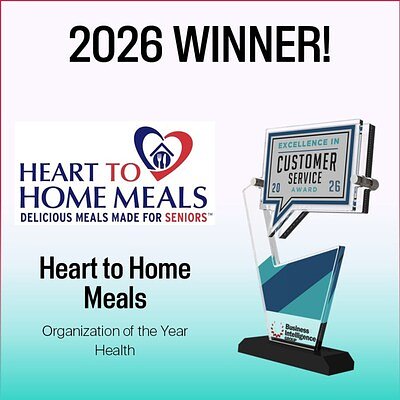
- 2026 Excellence in Customer Service Award from the Business Intelligence Group in the Health category
- 2019 launch of Heart to Home Meals USA as a franchise model
- Built-in wellness checks by drivers as a core service feature
Experts agree that Heart to Home Meals' success demonstrates the strategic value of empathy in senior care, proving that human connection can be a key differentiator in service industries.
Beyond the Meal: How Empathy Won a Top Business Award for Senior Care
MARLBOROUGH, Mass. – April 23, 2026 – A senior-focused meal delivery service has earned a prestigious business award not just for what it delivers, but how. Heart to Home Meals USA was named a winner of the 2026 Excellence in Customer Service Awards by the Business Intelligence Group (BIG), a recognition that spotlights a growing trend in the service industry: the strategic value of genuine human connection.
The award, presented in the competitive Health category, validates the company’s "people-first" approach, which intentionally combines nutritious meals with meaningful personal interaction. This model is challenging the conventional, efficiency-driven logistics of food delivery, proving that in the senior care sector, empathy can be the ultimate differentiator.
A Culture of Care, Not a Script
The Business Intelligence Group, an independent body that evaluates companies based on measurable performance, singled out Heart to Home Meals for an ethos that goes far beyond standard training protocols. The story that captured the judges' attention was not one of logistical perfection, but of profound humanity.
"Heart to Home Meals submitted the story that reminded the entire judging panel why customer service exists in the first place," said Russ Fordyce, Chief Recognition Officer at the Business Intelligence Group. "A driver pausing his route to sit with a customer anxious about surgery is not a training outcome - it is a culture outcome. That is what this organization has built, and it is exactly the kind of work these awards exist to honor."
This incident highlights a core philosophy the company espouses: customer care should be intentional, not incidental. While many service industries focus on minimizing interaction time to maximize efficiency, Heart to Home Meals appears to have built a system that allows for the opposite. The company has integrated consistent driver relationships and in-home delivery with what it calls "built-in wellness checks," embedding care and safety into its daily operations. This approach suggests a deliberate effort to cultivate an environment where employees are empowered to act with compassion, a stark contrast to the scripted, impersonal service that often defines modern customer interactions.
Redefining Service in the Senior Care Market
The senior meal delivery landscape is crowded, with services ranging from community-based nonprofits like Meals on Wheels to national for-profit companies like Mom's Meals, which focuses heavily on medically tailored nutrition. Meals on Wheels has long been the standard-bearer for the "more than a meal" concept, using its vast network of volunteers to provide social contact and safety checks. Heart to Home Meals, a franchise model that launched in the U.S. in 2019, has carved out a unique space by blending the nutritional precision of a commercial service with the high-touch, personal approach of a community program.
This hybrid model seems to be a powerful strategy in what some analysts call the "empathy economy," where consumers increasingly seek out brands that demonstrate authentic care and social responsibility. By focusing on the holistic well-being of its clients, Heart to Home Meals is doing more than just delivering food; it's providing a vital link in the support chain that allows older adults to maintain their independence.
Public feedback largely supports the company's award-winning reputation. Customers frequently praise the friendliness and helpfulness of delivery personnel. However, the model is not without its challenges. As with any service balancing quality with scale, isolated customer critiques point to occasional inconsistencies in food quality or difficulties with website usability, highlighting the operational hurdles of maintaining a personal touch during rapid growth.
The Anatomy of an Award-Winning Model
Building a "culture outcome" requires more than good intentions; it demands a specific operational framework. Heart to Home Meals' success hinges on a few key pillars, starting with its hiring philosophy.
"This recognition reflects the heart of what we do every single day: showing up not just with meals, but with genuine care for the people we serve," stated Richard Peroe, Senior Director of Franchise Development at Heart to Home Meals. "Our team is deeply committed to building trust with every customer, and that starts with hiring people who truly want to make a difference."
This focus on recruiting for empathy is reportedly supported by structured driver training designed to equip staff with the skills to do more than drop off a box. The goal is to build meaningful, consistent relationships. By assigning the same drivers to the same routes where possible, the company fosters familiarity and trust, turning the delivery driver into a welcome and reliable visitor. This consistency is crucial for seniors, particularly those with cognitive decline or anxiety.
From an internal perspective, employees have noted that the ability to connect with lonely seniors is one of the most rewarding aspects of the job, describing their work as purposeful. This sense of mission is a powerful driver of employee engagement and is central to delivering the kind of unscripted, compassionate service that won the company its recent accolade. Even as the business scales, Peroe noted a continued focus on "preserving those personal connections that help seniors feel supported, safe, and independent in their own homes."
A Lifeline for Independent Living
For millions of older adults, the ability to "age in place"—to live in their own homes for as long as possible—is a primary goal. This desire is often challenged by difficulties with meal preparation, social isolation, and the risk of unnoticed health emergencies. Services that address these challenges become more than a convenience; they become a lifeline.
The "built-in wellness checks" performed by Heart to Home Meals' drivers are a critical component of this support system. While the company is not a healthcare provider, its drivers serve as regular points of contact, often being the only person a homebound senior might see all day. They are trained to observe the client's well-being and living conditions, providing a crucial, informal safety net. This regular, friendly interaction directly combats the pervasive issue of social isolation, which studies have linked to a host of negative health outcomes in older adults.
By integrating this human element directly into its business model, Heart to Home Meals is demonstrating that commerce and compassion are not mutually exclusive. The recognition from the Business Intelligence Group affirms that investing in human-centered service is not just good ethics—it is good business. In an increasingly automated world, this award-winning approach serves as a compelling reminder that for vulnerable populations, the most valuable delivery of all is often a moment of genuine human care.