
- €60/MWh: Average electricity prices in many European markets in 2025, reflecting persistent volatility.
- 16% rise: Increase in Germany's average base load electricity price in 2025 due to geopolitical factors.
- 55%: Share of gross electricity consumption from renewables in Germany in 2024, highlighting the need for storage solutions.
Experts agree that advanced battery-based infrastructure is crucial for stabilizing Europe's volatile energy landscape, enabling cost control, grid flexibility, and accelerated EV adoption while supporting renewable integration.
Beyond the Grid: How Batteries Are Taming Energy Volatility
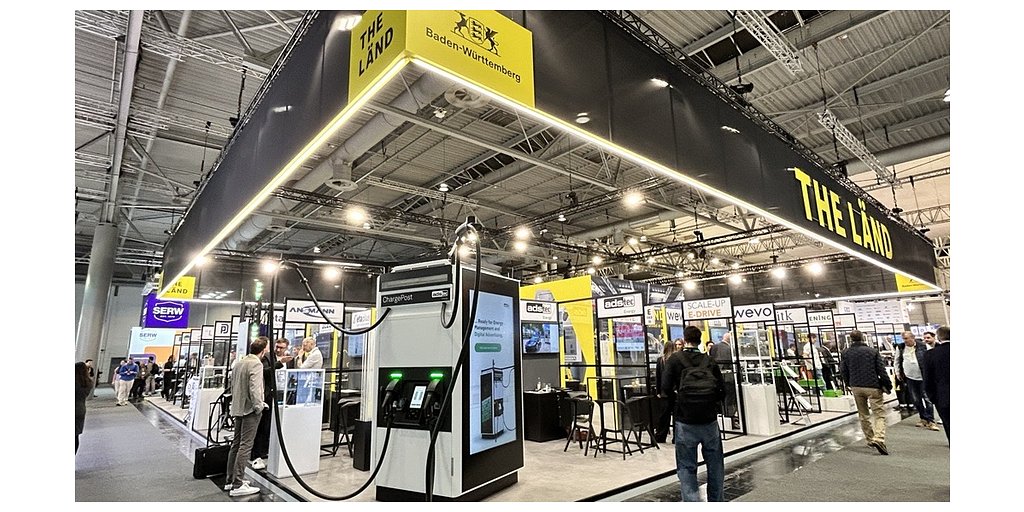
HANNOVER, Germany – April 20, 2026 – As industrial leaders gather at Hannover Messe 2026, a central, unavoidable theme dominates the conversation: Europe's precarious energy situation. With prices remaining stubbornly high and supply chains vulnerable to geopolitical shocks, energy has transformed from a predictable operational cost into a critical strategic risk. Amid this uncertainty, German technology firm ADS-TEC Energy is demonstrating a tangible path forward, arguing that the key to resilience lies not just in expanding the grid, but in making it smarter and more flexible through advanced battery-based infrastructure.
Navigating a Volatile Energy Landscape
The challenges are stark. Across Europe, electricity prices, while stabilizing from their most extreme peaks, remain elevated, with annual averages in many markets holding above €60/MWh in 2025. This volatility is deeply entwined with the continent's dependence on natural gas. Despite a dramatic pivot away from Russian pipelines, Europe's reliance on global Liquefied Natural Gas (LNG) markets means that geopolitical tensions in the Middle East or demand spikes in Asia can send a shockwave through the TTF benchmark gas price, directly inflating electricity costs. In Germany, this dynamic contributed to a 16% rise in the average base load electricity price in 2025.
This new reality forces businesses to actively manage what was once a stable cost block. “Made in Germany is not a label of origin for us, but a promise of quality and security,” said Thomas Speidel, CEO of ADS-TEC Energy, at the company's exhibit. “In critical infrastructure, it is about data sovereignty, operational reliability, and the ability to control and develop systems over the long term.”
Speidel’s comments tap into a deeper anxiety about resilience. Companies, he argued, must reduce their exposure to external dependencies. This is where decentralized battery storage systems become a strategic asset. By enabling companies to store energy when it is cheap and abundant—for instance, during periods of high wind or solar generation—and use it during expensive peak hours, these systems offer a powerful tool for cost control and predictability. This capability moves businesses from being passive consumers to active participants in energy management, insulating their operations from the market's wild swings.
The Charging Revolution: Unlocking Power Without Grid Strain
A prime example of this technology in action is ADS-TEC Energy's ChargePost, a battery-buffered fast-charging station prominently displayed at the trade fair. The sleek unit addresses one of the biggest bottlenecks in the electric vehicle transition: grid limitations. While the demand for ultra-fast EV charging is surging, deploying conventional high-power chargers often requires expensive and time-consuming grid upgrades, a process that can take months or even years.
The ChargePost elegantly sidesteps this problem. By integrating a powerful battery system, it can draw a slow, steady charge from even a weak grid connection over time. When a vehicle plugs in, the station unleashes the stored energy, delivering up to 300 kW of power—enough to add hundreds of kilometers of range in minutes. This effectively decouples the charging speed from the grid's immediate capacity.
The implications are profound. It makes high-power charging economically and logistically viable in locations previously considered impossible, from rural service stations and retail parking lots to dense urban centers and fleet depots. With hundreds of units already deployed internationally, the technology has a proven track record. By avoiding the need for new transformers and high-voltage lines, battery-buffered solutions can dramatically lower the upfront capital expenditure and accelerate the rollout of essential charging infrastructure, helping nations meet their ambitious EV adoption targets.
The 'Made in Germany' Advantage in a High-Stakes World
When ADS-TEC Energy emphasizes its 'Made in Germany' promise, it's about more than just engineering quality. It is a direct appeal to the growing need for security and trust in critical infrastructure. In an era of cyber threats and supply chain vulnerabilities, the origin and control of essential technology matter more than ever. This is particularly true in Germany, which has a robust legal framework for protecting its critical infrastructure, known as KRITIS.
Recent legislation, including the NIS 2 Implementation Act passed in 2024, has strengthened these protections, extending stringent cybersecurity and reporting requirements to a wider range of companies in the energy sector. By developing and manufacturing its systems in Germany, ADS-TEC Energy positions itself as a partner that understands and adheres to these high standards. This ensures data sovereignty, a crucial concern as energy systems become increasingly digitized and interconnected. It also provides a degree of supply chain security, reducing reliance on components from regions that could pose a geopolitical risk.
For automotive manufacturers, energy providers, and charging operators, this translates into long-term operational reliability. Owning and operating critical energy assets requires confidence that the systems can be maintained, updated, and secured over their entire lifecycle without dependence on potentially unreliable foreign entities. In this context, the German commitment to quality becomes a strategic advantage for both the company and its customers.
A Blueprint for the Future Grid
The technologies showcased at Hannover Messe point toward a fundamental shift in how we conceive of our energy systems. The future grid will not be a monolithic, top-down structure, but a flexible, decentralized network. Battery-based systems are the key enablers of this transformation.
Beyond facilitating EV charging, they are essential for integrating the growing share of intermittent renewable energy sources. In Germany, where renewables accounted for 55% of gross electricity consumption in 2024, managing the fluctuating output of wind and solar is a primary challenge. Battery storage can absorb surplus energy when the sun is shining and the wind is blowing, then release it when demand is high or generation lulls, ensuring grid stability and maximizing the use of clean power.
This creates a more resilient and efficient system, reducing the need for fossil fuel-fired peaker plants and smoothing the path to climate neutrality. By deploying flexible, scalable solutions like the ChargePost, ADS-TEC Energy and its peers are not just selling products; they are providing the building blocks for a more secure, sustainable, and economically stable energy future.