
- Global ceramic tile market projected to surpass $330 billion by 2031
- Spanish ceramic tiles engineered for a lifespan exceeding 60 years
- Tile offers lower environmental impact in categories like global warming potential compared to plastic-based alternatives
Experts agree that Spanish ceramic tile is transforming from a functional material into a versatile, expressive, and sustainable design element, redefining modern interiors with its durability, authenticity, and aesthetic versatility.
Beyond the Floor: How Spanish Tile is Redefining Interior Design
By Jennifer Anderson
MIAMI, FL – March 20, 2026 – The humble ceramic tile, long relegated to the functional roles of flooring and backsplashes, is undergoing a radical transformation. Driven by a convergence of technological innovation, a yearning for authenticity, and a growing demand for sustainability, Spanish ceramic manufacturers are repositioning tile as a central, defining element in contemporary architecture and interior design. A new report from Tile of Spain, the brand representing 100 of the country's top producers, outlines six macro trends that are not just shaping the future of surfaces, but are fundamentally altering how we conceive of and interact with our built environments.
These trends signal a decisive move away from tile as a mere background material. Instead, it is emerging as a versatile, expressive, and high-performance medium capable of creating sculptural furniture, fostering serene living spaces, and providing a durable foundation for design that is built to last for generations.
The New Architectural Canvas
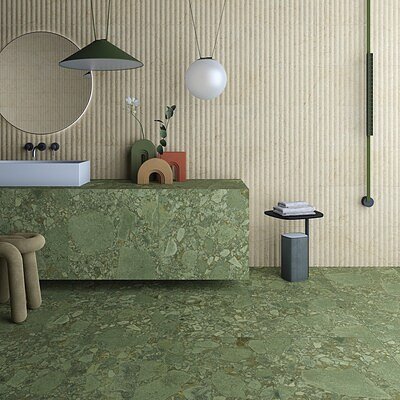
Perhaps the most dramatic shift is the move toward 'Furniture-Scale Applications.' Once confined by size and weight, advancements in manufacturing have unleashed large-format porcelain slabs that are now being used to create integrated architectural furnishings. Spanish manufacturers are transforming these panels into clad kitchen islands, tiled sideboards, seamless bench seating, and monolithic fireplace surrounds that serve as sculptural focal points within a room.
This trend extends beyond simple application; it represents a new way of thinking about material continuity. Coordinated trim systems allow designers to wrap volumes seamlessly, blurring the lines between surface, structure, and furniture. This approach is validated by broader industry observations, with major international expos like Coverings highlighting a move toward tile as a medium for “storytelling, spatial atmosphere and sensory engagement at every scale.” The market is responding in kind, with global projections for ceramic tiles expected to surpass $330 billion by 2031, fueled in large part by the versatility and premium appeal of porcelain.
A Return to Earth and Authenticity
This evolution in form is mirrored by a profound change in feeling, as designers and consumers alike seek refuge from the digital deluge in 'Analog Havens.' These spaces prioritize quiet connection and creativity, defined by tactile finishes and artisan-influenced forms. The new ceramic collections cater to this desire with a 'Foundational Earth Palette' grounded in mineral authenticity. Umbers, terracottas, and chestnut browns anchor design schemes, while rich accents of saffron ochre and verdigris turquoise add depth and character.
This is not about chasing fleeting color fads, but about reconnecting with natural pigments and historical dyes. The trend is corroborated by a global shift toward warmer, nature-connected hues, echoed by color authorities and competing Italian manufacturers who are also emphasizing earthy tones. This movement is coupled with a renewed appreciation for 'Material Honesty,' which celebrates the elemental origins of clay. Rather than masking the material, manufacturers are highlighting kiln-fired textures, mineral-based glazes, and subtle surface variations. According to one leading design consultant, the demand is no longer just for decoration, “but for authenticity, for something that feels both traditional and modern.” This embrace of “haptic experiences,” where textures invite touch, reintroduces a sense of imperfection and relief that makes a space feel alive and connected to a human presence.
Built to Last: The Rise of 'Slow Design'
Beyond aesthetics, a powerful undercurrent of pragmatism is driving tile's resurgence. In an era increasingly wary of disposable goods and short-lived renovations, the concept of 'Slow Design Durability' is gaining significant traction. Ceramic and porcelain tile, with a potential lifespan exceeding 60 years, align perfectly with this philosophy. They represent a foundational investment in a home, not a temporary finish.
The durability claims are robust and well-documented. Spanish-made ceramics are engineered to resist UV exposure, fire, moisture, bacteria, and the wear and tear of daily life. This longevity offers a compelling sustainable advantage. Industry-wide Environmental Product Declarations (EPDs) provide a comprehensive analysis of ceramic tile's life cycle, demonstrating a lower overall environmental impact in categories like global warming potential when compared to plastic-based alternatives such as Luxury Vinyl Tile (LVT). Specifying ceramic tile can help projects achieve credits in leading green building programs like LEED and BREEAM, making it a preferred choice for environmentally conscious architects and designers.
Weaving Past and Present
Even as the industry innovates, it maintains a deep respect for its rich history. The 'Modern Heritage Surfaces' trend showcases how Spanish manufacturers are blending historical motifs with advanced digital decoration to reinterpret antique tile aesthetics for contemporary interiors. This is not about creating simple reproductions. Instead, advanced technologies capture the authentic patina, subtle wear, and dimensional glaze effects associated with heritage craftsmanship, all while maintaining modern precision and performance.
This approach allows for deeply layered and personal interiors that can comfortably combine vintage furnishings, heirloom pieces, and modern design. It reflects a broader industry trend toward 'Tailored Craft,' where retro motifs and classic patterns are reimagined with refined elegance. It taps into a desire for spaces that tell a story, where materials feel emotionally rich and personalized. By leveraging technology to honor, rather than erase, the imperfections and character of the past, these surfaces provide a bridge between historical resonance and contemporary living.
As these interconnected trends take hold, it is clear that ceramic tile is being fundamentally reimagined. It is moving from a passive background material to an active participant in design, offering a unique combination of aesthetic versatility, authentic character, and unparalleled long-term performance. In a world seeking both beauty and permanence, Spanish tile is proving to be not just a surface, but a foundational element in the future of thoughtful, enduring design.