
- 70% of security buyers are moving toward integrated, outcome-driven solutions (Security Industry Association).
- Security systems now contribute to operational efficiency and financial returns, shifting from a cost center to a strategic asset.
- Access control logs are leveraged to optimize building management, reducing energy costs by up to 30% in some cases.
Experts agree that security technology has evolved from a reactive cost center to a proactive business enabler, delivering measurable ROI through data-driven insights and operational efficiencies.
Beyond the Badge: Security Tech's New Role in Business Strategy
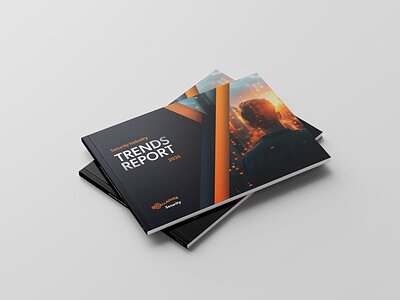
HAMILTON, New Zealand – January 14, 2026 – The role of security technology in the modern enterprise is undergoing a profound and largely silent transformation. Systems once installed with the singular purpose of protecting people and property are now being leveraged as powerful engines for business intelligence, operational efficiency, and measurable financial returns. This evolution from a necessary cost center to a strategic asset is the central finding of Gallagher Security's newly released 2026 Security Industry Trends Report, which suggests that the most impactful security work is now happening far from the front gate, influencing decisions made in the boardroom.
The report, drawing on global industry insights, argues that security infrastructure has become a form of 'invisible infrastructure'—a quiet force shaping how organizations operate, optimize space, and make data-driven decisions. This shift is not merely conceptual; it reflects a growing trend corroborated by industry analysts who see a move toward outcome-driven solutions that deliver tangible business value beyond traditional risk mitigation.
From Guard Dog to Business Oracle
For decades, the value of a security system was measured by the incidents it prevented. Today, its value is increasingly found in the data it generates. According to Gallagher's report, organizations are beginning to harness their existing security platforms to understand the intricate patterns of daily operations. Access control logs, for example, are no longer just a record of entry and exit; they are a rich source of data for optimizing building management systems, such as adjusting HVAC and lighting based on real-time occupancy to reduce energy costs and advance sustainability goals.
This concept of security as an 'invisible infrastructure' is central to the new paradigm. "What's striking is how invisible this shift has been," notes Mark Junge, Chief Executive of Gallagher Security, in the report's announcement. "Security sits quietly in the background of daily work life, yet it's increasingly helping organizations reduce friction and make better-informed decisions." This background function allows leaders to understand how employees interact with physical spaces, identify workflow bottlenecks, and reconfigure layouts for better collaboration and productivity, often without employees even noticing the data collection.
Industry-wide analyses support this evolution. The convergence of the Internet of Things (IoT) with security systems has enabled a vast network of sensors to provide a constant stream of operational data. Advanced analytics platforms, often employing privacy-preserving techniques, can then parse this information to reveal patterns in foot traffic or space utilization. This allows businesses to make evidence-based decisions about real estate needs, resource allocation, and even meeting room scheduling, turning a protective measure into a tool for business optimization.
The New Mandate: Proving Return on Investment
A key signal of security's changing role is the intense focus on return on investment (ROI). The conversation has decisively shifted from viewing security as a sunk cost to demanding a clear articulation of its value proposition. According to the research, business leaders are increasingly cautious about adopting new technologies that don't offer practical, measurable outcomes. Security managers are now tasked not only with preventing loss but with demonstrating how their systems contribute to profitability, efficiency, and resilience.
This financial scrutiny is driving a preference for integrated security platforms. Standalone systems for video surveillance, access control, and incident management are being replaced by unified platforms that provide a single, comprehensive view of an organization's security posture and operational health. The Security Industry Association (SIA) notes in its own trend analysis that a majority of security buyers are moving away from traditional models toward agile, outcome-driven solutions. Integration is a primary factor influencing these long-term investment decisions, as it allows organizations to maximize the value of their existing technology and unlock new efficiencies.
By connecting disparate systems, businesses can automate workflows, reduce manual oversight, and gain deeper insights. For instance, an alert from a video analytic system can automatically trigger an access control lockdown and generate an incident report, streamlining the response process and saving valuable time. These measurable improvements in efficiency, compliance reporting, and operational smoothness are becoming the new metrics for a successful security program, providing the concrete ROI that executive leadership now demands.
A Seat at the Table: Security Enters the C-Suite
Perhaps the most significant indicator of security's elevated status is its migration into the executive suite. Security strategy is no longer the exclusive domain of a specialized department; it has become a critical component of high-level corporate governance. Gallagher’s report highlights that decisions are now being shaped by a diverse group of stakeholders, including IT, finance, facilities, human resources, and executive leadership.
This expansion reflects a growing recognition that security data has far-reaching implications for the entire organization. When security systems provide insights that impact financial planning, workforce management, and operational strategy, the leaders of those departments naturally become part of the conversation. This trend mirrors the evolution of cybersecurity, which has become a permanent fixture on the boardroom agenda due to its profound impact on business risk and continuity.
As a result, communication has emerged as a crucial skill for security leaders, who must now translate technical requirements into the language of business outcomes. They must be prepared to answer questions about how a security investment aligns with broader corporate priorities, supports flexible working models, or contributes to sustainability targets. This cross-functional collaboration ensures that security is not an afterthought but is woven into the very fabric of the business strategy.
"The conversation has moved beyond preventing problems," Junge adds. "Security is now about enabling businesses by providing the data, confidence, and flexibility needed to adapt and perform." This sentiment captures the essence of the industry's transformation, where the ultimate goal is no longer just to secure the enterprise, but to help it thrive.