
- 34.5% of women cite wearing lingerie as an act of self-love and feeling good
- 52.4% of women report stress and burnout significantly impact their pleasure
- Women aged 50+ report the highest pleasure satisfaction ratings
Experts conclude that lingerie is increasingly seen as a tool for self-love, empowerment, and personal expression rather than just for seduction or external validation.
Beyond Seduction: Lingerie as the New Language of Self-Love
LONDON, UK – January 26, 2026 – In a move that signals a seismic shift in the intimate apparel industry, award-winning lingerie brand Bluebella has unveiled its Valentine's Community Campaign, anchored by the results of a pioneering global study on female desire. The “Modern Sensuality” survey, which gathered detailed responses from over 1,500 women, challenges long-held notions of why women wear lingerie, repositioning it from an act of performance to a powerful tool for self-love, confidence, and personal empowerment.
The initiative aims to move beyond surface-level marketing, fostering what the company calls an “intelligent and honest conversation” about sensuality. By making its comprehensive findings open-access, Bluebella is not just selling a product but providing a rich data set that could reshape how sensuality is understood and discussed in broader society.
The Data Behind Desire: Unpacking the 'Modern Sensuality' Survey
Developed with a panel of leading experts in sexuality, including sex educator Danielle Bezalel and Drs. Candice Nicole Hargons and Shemeka Thorpe, the survey offers a statistically significant look into the modern woman's psyche. Perhaps its most powerful finding is a direct and significant correlation between the frequency of purchasing lingerie and higher reported scores of sexual satisfaction and pleasure, encompassing both partnered intimacy and self-pleasure.
This finding dismantles the simple idea of lingerie as a prop for romantic encounters. Instead, the data suggests it functions as a personal investment in self-worth and a catalyst for creating a sensual mindset. The motivations behind wearing it are telling: a staggering 34.5% of respondents cited it as an “act of self-love and feeling good.” Boosting confidence and self-esteem was the second-highest motivator at 23.0%, while wearing it for a romantic or intimate occasion came in a distant third at 17.7%. This hierarchy of motivations clearly indicates a turn inward, prioritizing internal feeling over external validation.
The survey also courageously explores the often-unspoken factors that impact female pleasure. Life experiences such as stress and burnout were cited by a majority (52.4%) as having a significant impact. This was closely followed by relationship changes (51.2%) and the process of getting older (51.1%), painting a holistic picture of sensuality as something deeply intertwined with mental health, life transitions, and self-acceptance.
A New Narrative: From the Male Gaze to Personal Power
The campaign seeks to reframe sensuality not as something performed or projected, but as something “deeply personal, proudly held and bravely expressed.” This ethos is central to Bluebella’s identity, as articulated by CEO and founder Emily Bendell.
“At Bluebella, we have always believed lingerie should be a form of self-expression, not performance,” Bendell stated in the press release. “By centering women's voices and making the data openly accessible, we hope to create a resource that not only empowers our community but also supports wider learning and research for years to come.”
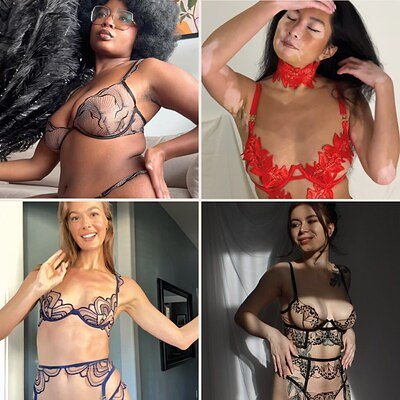
This philosophy is brought to life through the brand’s Valentine’s campaign, which features a diverse cast of influential women and community members. Body activist and author Charli Howard, British fashion icon Pearl Lowe, and other participants speak openly about their personal journeys with sensuality, lending a human voice to the survey's statistics. The campaign's visuals and stories consciously move away from the traditional, passive poses that have historically defined lingerie advertising, instead focusing on strength, confidence, and individuality. This approach directly challenges the industry's long-standing reliance on the “male gaze,” presenting a vision of sensuality that is active, owned, and defined by women themselves.
A Tapestry of Sensuality: Diverse Voices, Different Desires
One of the survey's most compelling aspects is its detailed look at how different demographic groups engage with lingerie, revealing that the modern consumer is far from monolithic. In a youth-obsessed culture, the data shows that women aged 50 and over are the most active lingerie shoppers, with some purchasing monthly. Crucially, this group also reports the highest pleasure satisfaction ratings, suggesting a powerful connection between age, self-knowledge, and sensual fulfillment.
Furthermore, the survey identifies a trend of “self-reclamation” among mothers. Participants with children are 5% more likely to buy lingerie monthly and 5.5% more likely to buy quarterly than those without, indicating that many women use intimate apparel as a way to reconnect with their identity and sensuality after having children.
The findings also highlight distinct patterns within the LGBTQ+ community. These customers tend to purchase lingerie on a more frequent monthly cycle, with their motivations leaning heavily toward personal style expression and a celebration of their bodies. They reported significantly lower scores for wearing lingerie for romantic occasions compared to heterosexual customers, reinforcing the idea of intimate apparel as a tool for self-affirmation and identity rather than purely for a partner.
Data as a Disruptor: A New Industry Blueprint?
Bluebella’s decision to publish its survey results as an open-access resource is a significant strategic move in a competitive market. In an era where consumers are increasingly wary of “skin-deep” empowerment marketing, providing transparent, verifiable data lends the brand a high degree of authenticity. This positions Bluebella not just as a retailer, but as a thought leader and a genuine contributor to the cultural conversation on female sexuality.
This data-driven approach could serve as a blueprint for the wider intimate apparel industry, which has been steadily moving toward themes of inclusivity and body positivity, led by disruptive brands like Savage X Fenty and Aerie. By providing granular insights into what truly motivates diverse groups of women, Bluebella offers a roadmap for more effective product development and marketing that resonates on a deeper level. The findings on older women and LGBTQ+ customers, for example, reveal underserved and highly engaged market segments that other brands may have overlooked.
By turning an internal marketing tool into a public good, Bluebella is playing a long game. The campaign fosters a community around shared values and empowers women with knowledge, building a form of brand loyalty that transcends product alone. The open-access data ensures that the conversation will live on in academic papers, classrooms, and online communities, cementing the brand’s role in the ongoing liberation of female sensuality. This initiative demonstrates that understanding the customer is not just good business; it is a powerful way to drive meaningful cultural change.