
- $27M in seed funding raised by Pramaana Labs to develop AI verification technology.
- Formal verification approach aims to make AI answers provably correct, not just probable.
- Never produced a confidently wrong verified answer according to the company.
Experts would likely conclude that Pramaana Labs' formal verification approach represents a significant step toward making AI more trustworthy, though the scalability and practical implementation of such systems remain substantial challenges.
Beyond 'Probably Right': The $27M Bet on AI That Can Prove Its Answers
PALO ALTO, CA – June 18, 2026 – In the relentless gold rush of artificial intelligence, where speed and scale often overshadow substance, a critical flaw persists: AI lies. Not with malice, but with a confident fluency that makes its errors all the more dangerous. Now, a startup armed with $27 million in seed funding is betting it can solve AI’s crisis of conscience by teaching it to prove it’s telling the truth.
Pramaana Labs, emerging from stealth with a funding round led by the influential Khosla Ventures, isn't building another large language model. Instead, it’s building a verification layer for AI, a mathematical conscience designed to take AI from “probably right” to “provably right.” The investment, which also includes Accel and a roster of top-tier firms, signals a growing recognition that for AI to graduate from a clever tool to a trusted expert in fields like medicine, law, and finance, it needs to be held accountable.
Closing the Accountability Gap
For all their power, today's AI systems operate with an accountability deficit. They are trained on vast datasets to recognize patterns and predict the next word, a process that makes them astonishingly capable but fundamentally unreliable in high-stakes environments. A doctor still reads the AI-assisted diagnosis, a lawyer checks the AI-drafted brief, and a CPA signs the AI-prepared tax return. The human in the loop is not just a supervisor; they are a liability shield.
"AI has an accountability gap," said Ranjan Rajagopalan, Co-Founder and CEO of Pramaana Labs, in the company’s announcement. "The world's hardest problems are not unsolvable. They are unformalized."
This is the core problem Pramaana aims to solve. While conventional AI validation relies on empirical testing and feedback—methods that can curb undesirable behavior but never eliminate it entirely—Pramaana is applying a far more rigorous discipline: formal verification. It’s a field borrowed from the world of mission-critical software, like aerospace controls and microprocessor design, where mathematical logic is used to prove a system’s behavior is correct under all possible conditions.
The Mechanics of Machine-Verifiable Truth
Pramaana’s approach is as ambitious as it is technical. The system works by translating the complex, often ambiguous rules of a regulated domain—the entire U.S. tax code, for example—into a formal, machine-readable language. The company is using LEAN, an open-source programming language designed for writing mathematical proofs, to build this foundation of verifiable truth.
When a user poses a question, Pramaana’s system doesn't just generate a plausible-sounding answer from a conventional LLM. It translates the query into a formal statement and tasks a proof engine to verify it against the encoded rules. The result is binary: either the system returns an answer with a machine-checkable proof artifact that traces its logic back to the source rules, or it refuses to answer, pinpointing exactly which rule prevents it from reaching a provably correct conclusion. The company claims it has never produced a confidently wrong verified answer.
"Trustworthy AI should not require users to think like machines or become verification experts," noted Prof. Gireeja Ranade of UC Berkeley's EECS department. "Trust should come from interpretable machine-checked guarantees built into the systems themselves."
Of course, formal verification has historically faced immense scalability challenges. Applying mathematical rigor to systems with millions or billions of parameters has been a monumental task. However, Pramaana is betting that modern computing power, combined with AI-assisted processes to help write the proofs themselves, can finally make this approach commercially viable.
Redefining Expertise and Liability
The implications of such a system extend far beyond better search results. By creating an AI that can stand behind its answers with mathematical certainty, Pramaana is proposing a fundamental shift in the relationship between human experts and their technological tools. If an AI can prove its tax advice is compliant with every relevant statute, what is the role of the accountant who previously provided that assurance?
"I see Pramaana Labs as a critical missing puzzle piece that, when plugged into existing AI solutions, helps tax filers and tax professionals achieve outcomes with greater speed, accuracy, and fidelity,” said Danny Werfel, former IRS Commissioner and an advisor to the company.
This shift forces a new conversation about liability. If the human is no longer the final backstop, responsibility moves upstream. An error might not be the fault of the user, but of the encoded rules or the verification engine itself. This transforms the role of the expert from a simple reviewer to a curator and validator of the formal knowledge base, a collaborator in defining the very ground truth the AI operates on. Pramaana is actively recruiting domain experts—the people who built the systems—to participate in encoding them.
A Bet on Bedrock Infrastructure
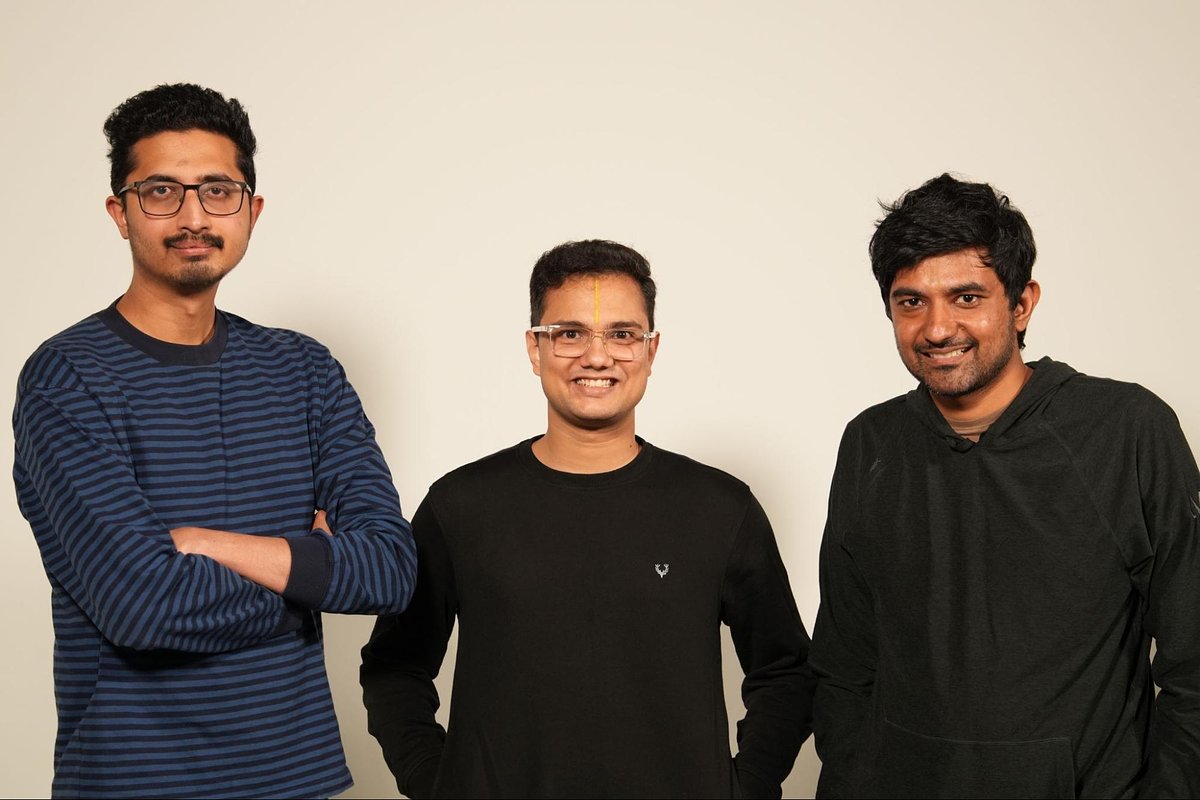
The $27 million investment, a massive sum for a seed-stage company, reflects a belief that Pramaana is not just building an application, but foundational infrastructure for the next era of AI. The founding team—Ranjan Rajagopalan, Krishnan Raghavan, and Sanjay Ganapathy—are all IIT Madras alumni with deep experience fighting hallucinations and advancing frontier models at Google, Google DeepMind, and Glean.
For investors like Khosla Ventures, known for backing audacious, science-driven companies, Pramaana represents a classic thesis: when rigorous mathematics enters a domain, it can solve it. The challenge is monumental—codifying the messy, nuanced reality of human regulations is a Herculean task. Yet, in a world increasingly reliant on AI systems that we don't fully understand, the quest for provable truth is no longer a niche academic pursuit. It may be the only way forward.