
- $14.6 billion: The North American natural hair care market value, projected to grow significantly. - 5,000 years: The historical foundation of Ayurvedic botanicals used in 'Clean Bio-Hacking'. - FDA-cleared: HairSmart's Low-Level Light Therapy (LLLT) technology for treating androgenetic alopecia.
Experts in holistic medicine and ethnobotany acknowledge growing validation for traditional remedies but emphasize the need for more large-scale clinical trials to confirm efficacy by modern standards.
Beyond Minoxidil: Is 'Clean Bio-Hacking' the Future of Haircare?
CLEVELAND, OH – March 26, 2026 – A quiet revolution is taking place in bathrooms across the country, one that extends the principles of clean beauty beyond the face and into the realm of hair restoration. Consumers, increasingly wary of synthetic chemicals and lifelong dependencies, are seeking alternatives to legacy treatments like Minoxidil. Tapping into this powerful cultural shift, a new trend dubbed "Clean Bio-Hacking" is emerging, promising a holistic, drug-free path to healthier hair by fusing ancient botanical wisdom with modern medical technology.
Leading this charge is HairSmart, a Cleveland-based company positioning its integrated system as the next generation of hair wellness. The approach directly challenges the decades-long dominance of pharmaceutical solutions, which were often repurposed for hair loss rather than designed for it. As consumers demand greater transparency and gentler efficacy, the industry is at a potential tipping point, moving from a model of chemical intervention to one of biological optimization.
The New Standard for Scalp Health
The movement away from chemical-first solutions is not a niche phenomenon but a mainstream market force. The North American natural hair care market, valued at $14.6 billion, is projected to grow substantially, reflecting a deep-seated change in consumer priorities. Today’s buyers scrutinize ingredient lists, research side effects, and demand products that work in harmony with their bodies.
Minoxidil, originally a blood pressure medication, became the default hair loss treatment due to its availability, not its holistic design. Its known drawbacks—scalp irritation, potential systemic absorption, and the dreaded “rebound shedding” upon discontinuation—were long considered acceptable trade-offs. Now, that compromise is being rejected.
"We were handed a legacy solution that asked us to accept harm as the price of healing," states Prerna Khemka, Founder and CEO of HairSmart, in a recent announcement. "That was never acceptable to me — and it's no longer acceptable to the millions of consumers who now rightfully demand smarter, safer results."
This sentiment reflects a broader recalibration in the wellness industry. The focus is shifting from merely treating symptoms to addressing root causes. For hair, this means considering the entire ecosystem: nutritional deficiencies, hormonal balance, stress levels, and cellular health. The demand is for solutions that are not only effective but also sustainable, hormone-safe, and free of harsh synthetics.
Fusing Ancient Botanicals with Modern Tech
The term "Clean Bio-Hacking" sounds futuristic, but its principles are rooted in optimizing the body’s innate systems rather than overriding them. HairSmart's strategy embodies this by combining two distinct but synergistic modalities: FDA-cleared light therapy and traditional Ayurvedic botanicals.
The first pillar is Low-Level Light Therapy (LLLT). This is not a new or unproven technology; the FDA first granted 510(k) clearance for LLLT devices for treating androgenetic alopecia (pattern hair loss) over a decade ago. The therapy uses specific wavelengths of red light to penetrate the scalp in a process called photobiomodulation. This is believed to stimulate cellular energy production (ATP) within the hair follicles, extend their growth phase (anagen), and awaken dormant ones. As a non-invasive, drug-free treatment, it carries no risk of systemic side effects or dependency.
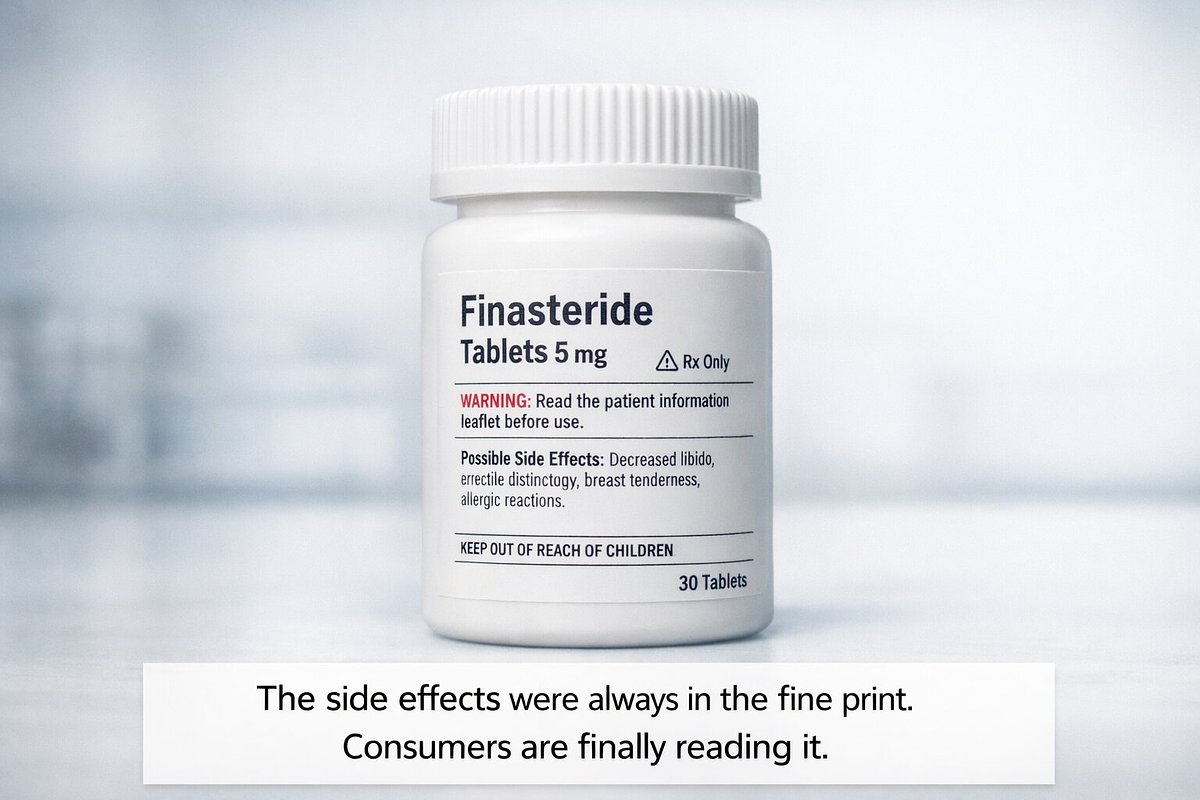
The second pillar draws from 5,000 years of Ayurvedic practice. HairSmart’s formulations lean on herbs historically revered for their effects on hair health. Key among them is Bhringraj (Eclipta alba), often called the "King of Hair." Modern science is beginning to validate its traditional use; a study in the Journal of Ethnopharmacology found that an extract of the herb performed comparably to a 2% minoxidil solution in animal studies, promoting faster and denser hair growth. Another key ingredient is Amla (Emblica officinalis), or Indian Gooseberry, a potent antioxidant rich in Vitamin C. Research suggests it may act as a natural inhibitor of 5-alpha reductase, the same enzyme targeted by the prescription drug finasteride.
Together, these two approaches aim to create a supportive environment for hair growth—LLLT provides the energetic spark at a cellular level, while the botanicals deliver the foundational nourishment and antioxidant protection.
A Crowded Market for Natural Solutions
HairSmart is entering a competitive and rapidly evolving market. The concept of using technology and natural ingredients for hair wellness is not exclusive to one company. The LLLT device space includes established players like Capillus and iRestore, which also offer FDA-cleared caps and helmets for home use. One board-certified dermatologist noted that while LLLT can offer a "modest benefit" for those with mild to moderate hair loss, results vary, and it is often recommended as a complementary therapy.
On the botanical front, the market is even more crowded. Brands like Nutrafol and Vegamour have built significant followings with their drug-free supplements and topicals that target hair thinning from the inside out. HairSmart appears to be positioning itself as a more integrated, all-in-one ecosystem that combines the device-based therapy with the botanical supplements and topicals, differentiating itself from competitors who typically focus on one or the other.
While the company's claims are bold, its market position is still developing. Industry data places the privately-held company as a mid-tier player among its active competitors. The success of its "Clean Bio-Hacking" platform will depend on its ability to deliver consistent results and effectively communicate the science behind its synergistic approach to a discerning audience already familiar with a host of natural alternatives.
Experts in holistic medicine and ethnobotany agree that there is growing validation for many traditional remedies, but often call for more large-scale, double-blind human trials to cement their efficacy by modern clinical standards. The appeal of these ancient ingredients, however, is undeniable for a consumer base seeking a return to nature.
What is clear is that the conversation around hair loss is changing. The narrative is no longer solely owned by pharmaceutical companies and their chemical formulations. The rise of clean, tech-infused, and holistic approaches signifies a fundamental shift in how we view the health of our hair—not as a problem to be chemically suppressed, but as a biological system to be understood and nourished. As Prerna Khemka puts it, this moment is a "long-overdue correction," one whose roots run as deep as the ancient traditions it champions.
Topics & Related
Biotechnology
AI & Machine Learning
Automation
Artificial Intelligence
Machine Learning
ESG
Private Placement
Revenue
EBITDA
Related Company Pulse