
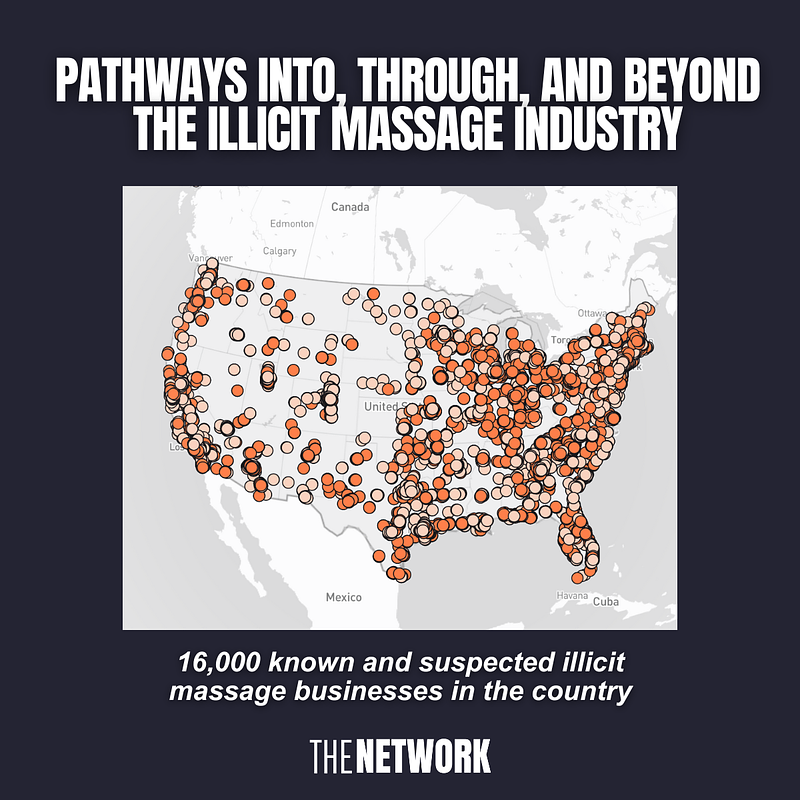
- 16,000 illicit massage businesses operate across the U.S., forming a vast criminal enterprise.
- 48 is the average age of women exploited in these businesses, with half entering within a year of migration.
- Nearly 40% of surveyed women experienced storefront shutdowns, often leading to re-trafficking.
Experts agree that enforcement-centric approaches often fail to dismantle trafficking networks and can push survivors deeper into exploitation, emphasizing the need for prevention and survivor-centered support.
Beyond Busts: Survivor Study Charts New Path to Fight Trafficking
ARLINGTON, Va. – January 08, 2026 – Operating in plain sight across American towns and cities, an estimated 16,000 illicit massage businesses (IMBs) form the public face of a vast criminal enterprise built on sexual exploitation. For years, the primary response has been law enforcement raids and storefront shutdowns. But a groundbreaking new report suggests this approach is failing, often pushing vulnerable women deeper into a cycle of exploitation.
Released today by The Network, a national nonprofit, Pathways Into, Through, and Beyond the Illicit Massage Industry shifts the focus from enforcement to prevention. Drawing on direct interviews with 67 women across five states, the first-of-its-kind study moves beyond stereotypes to create a data-driven portrait of the women inside these businesses and what they truly need to find safety and stability.
"Women in illicit massage businesses are frequently invisible in public conversations about trafficking," said Ian Hassell, CEO and co-founder of The Network. "This project exists because prevention efforts are stronger when they are grounded in lived experience rather than stereotypes. The women we heard from were clear about what they need - and those needs are both practical and addressable."
A Portrait of Exploitation: Beyond the Stereotypes
The study systematically dismantles common assumptions about who is being exploited in the illicit massage industry. The women who participated were not typically young or inexperienced; their average age was 48. Before entering the massage industry, they had built lives and careers in fields as diverse as manufacturing, healthcare, education, and small business ownership.
Their entry into exploitation often happened with alarming speed following migration to the United States. Half of the women surveyed began working in a massage business within a year of their arrival, driven by a potent combination of urgent financial need, limited English proficiency, and a scarcity of other viable job options. This paints a picture not of inherent criminality, but of systemic vulnerability.
"Too much of what we think we know about the illicit massage industry is based on assumptions," stated Beisi Huang, a co-author of the study. "This study draws directly from women's own accounts, offering a clearer, more grounded understanding of their experiences, decisions, and hopes in their own words."
The research highlights a critical window of vulnerability shortly after immigration, where traffickers exploit economic desperation and social isolation. The women's diverse professional backgrounds underscore a significant loss of human potential, as skilled individuals are funneled into exploitative situations due to structural barriers in their new country.
The Revolving Door of Enforcement
For decades, the image of a police raid on an illicit massage business has defined the public's understanding of anti-trafficking efforts. The study's findings, however, deliver a stark verdict on the effectiveness of this enforcement-centric model. Nearly four in ten women surveyed had experienced a storefront shutdown. But instead of leading to safety, these actions frequently triggered a new phase of exploitation.
Many women reported being re-trafficked into another massage business or pushed into other forms of exploitative work. This "revolving door" phenomenon is well-documented by anti-trafficking experts. Organizations like the Polaris Project have noted that IMBs often reopen within days or simply relocate, while the criminal networks behind them remain intact. Prosecutions for the severe crime of human trafficking are notoriously difficult, often resulting in lesser charges that fail to hold traffickers accountable or provide meaningful justice for survivors.
This reality suggests that raids, when conducted in isolation, do little to dismantle the underlying business model of trafficking. Without immediate access to comprehensive support services, a shutdown can simply sever a woman's source of income, however exploitative, leaving her even more vulnerable to the next predator. The report argues that enforcement must be paired with culturally competent outreach to be effective.
The Invisible Chains of Debt and Fear
Beyond the physical confines of the massage businesses, the study illuminates the powerful, invisible chains that bind women to their exploiters: immigration insecurity and fear. For many women, particularly those newer to the U.S., the constant threat of deportation is a primary tool of control used by traffickers. This fear silences them, preventing them from seeking help from law enforcement or service providers.
This finding underscores the critical importance of federal protections like the T visa (for trafficking victims) and U visa (for victims of certain crimes who assist law enforcement). These visas offer a pathway to legal status, allowing survivors to report crimes and access services without risking deportation. However, the application process is complex and lengthy, requiring specialized legal assistance that is not always readily available.
The report's data shows a direct correlation: women who were newer to the country were significantly more likely to report feeling unsafe. This highlights how traffickers weaponize a person's immigration status, creating a climate of pervasive fear that serves as the ultimate enforcement mechanism, ensuring compliance and silence far more effectively than any physical lock or guard. Addressing this requires not just legal remedies, but early, trust-based outreach that can connect women with support before their situations become even more precarious.
A Blueprint for Prevention and Stable Exits
Instead of focusing solely on shutting down businesses, the report offers a clear, survivor-informed blueprint for dismantling the industry by addressing the root causes of vulnerability. When asked what they needed to leave the industry safely and permanently, the women consistently identified four key pillars of support: English-language education, stability in their immigration status, skills training for new careers, and short-term financial assistance to bridge the transition.
These are not abstract ideals; they are practical needs being addressed by the very organizations that partnered on the study. In New York, Garden of Hope provides culturally specific services to the Chinese immigrant community. In Alabama, The WellHouse offers long-term residential care and job training. In Virginia, Reset180 provides case management and emergency aid. These groups demonstrate that providing holistic, trauma-informed support is possible.
The policy implications are clear. The findings call for a strategic shift in public funding and policy - away from a singular focus on enforcement and toward proactive investment in the solutions survivors themselves have identified. This includes expanding access to English classes and vocational programs, streamlining access to immigration legal aid, and creating flexible funding streams for direct financial assistance. Furthermore, proactive local ordinances that regulate massage businesses through rigorous licensing and background checks have proven effective in some cities at preventing IMBs from taking root in the first place.
By centering the voices of survivors, the report offers not just a critique of past failures, but a tangible roadmap toward a future where exploitation is prevented before it can begin.