
- 50,000 daily riders: The Crosslake Connection is projected to carry approximately 50,000 riders daily once fully operational.
- 8–12% premium: Properties within a 10-minute walk of a light rail station have seen sale price premiums of 8–12%.
- 200,000 fewer vehicle miles: The East Link Extension is expected to reduce vehicle miles traveled by 200,000 per day by 2030.
Experts view the Crosslake Connection as a transformative infrastructure project that enhances regional mobility, boosts economic development, and supports sustainability goals, setting a global benchmark for innovative transit solutions.
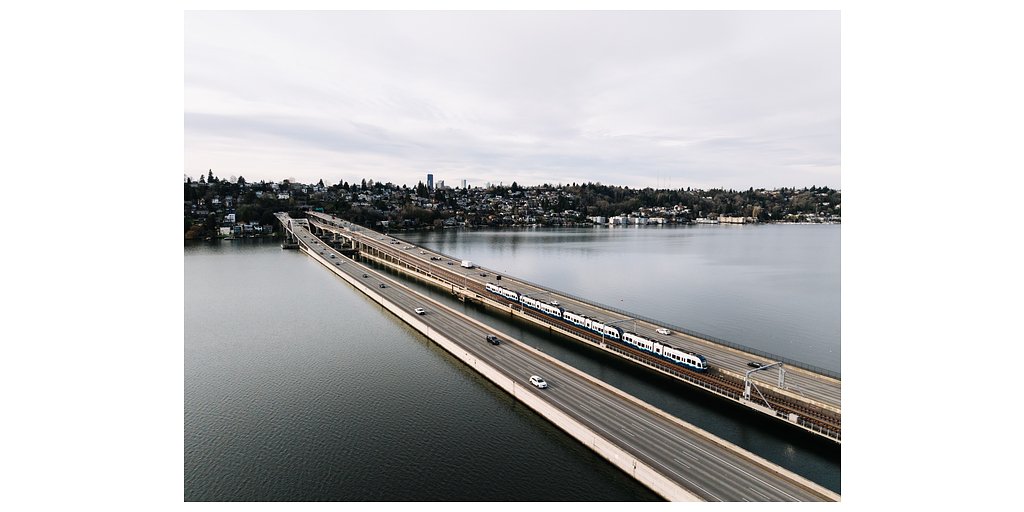
Bellevue's Floating Light Rail: A New Era for Puget Sound Travel
BELLEVUE, WA – March 30, 2026 – Thousands of riders, undeterred by spring rain, have continued to flock to Sound Transit’s new 2 Line this week, eager to experience a piece of history. The opening of the Crosslake Connection on March 28 marks not just the completion of a vital transit link between Seattle and the Eastside, but the dawn of a new era for regional mobility, all gliding across the water on the world's first light rail system to operate over a floating bridge.
The long-awaited connection creates a seamless, car-free artery from downtown Bellevue to Seattle, extending to Seattle-Tacoma International Airport and north to Lynnwood. For the first time, commuters, tourists, and residents can traverse Lake Washington with panoramic views, bypassing the notorious I-90 traffic. The initial reception has been one of celebration and awe, as passengers packed the new trains, many simply to witness the unprecedented journey.
An Engineering Marvel on Water
At the heart of the Crosslake Connection is a monumental engineering feat decades in the making. The concept of running rail across the I-90 floating bridge was envisioned when the Homer M. Hadley Memorial Bridge was constructed in 1989. Turning that vision into reality required solving a complex puzzle: how to keep steel rails perfectly aligned on a concrete structure that constantly moves with the wind, waves, and fluctuating lake levels.
After tens of thousands of hours of design and testing, Sound Transit's engineers developed a groundbreaking solution. The system relies on specialized “track bridges” that act like flexible joints. These structures use a series of bearings and plates to absorb the bridge's vertical and lateral movements, allowing the rail segments to bend and shift smoothly while the train glides over them at speeds up to 55 mph. This technology, adapted from seismic retrofitting techniques, ensures a comfortable and safe ride, a fact confirmed by extensive full-scale testing.
Engineers also had to mitigate the added weight of the rails and overhead electrical systems to protect the bridge's pontoons, using lightweight concrete and other materials. A sophisticated system was also designed to contain stray electrical currents, preventing corrosion of the bridge's steel structure. While the project faced delays, including the need to replace incorrectly installed concrete plinths on the bridge deck, the final result stands as a global benchmark in infrastructure innovation.
Reshaping Bellevue and the Regional Economy
The impact of the new line extends far beyond its engineering significance. For Bellevue, it represents a fundamental transformation, cementing its status as a central hub for the entire Pacific Northwest. Recently named 'Best Sustainable and Scenic City' by Good Housekeeping, Bellevue is leveraging the connection to position itself as the ideal “basecamp” for visitors.
“This is a game changer for how people access and experience Bellevue and our region,” said Brad Jones, Executive Director of Visit Bellevue. “Bellevue is now one of the region’s most convenient hubs, offering seamless, car-free connections to the airport, our sports stadiums, major attractions, and employment centers.”
This enhanced connectivity is particularly crucial as the region prepares to host matches for the FIFA World Cup 2026. Sound Transit anticipates serving over 750,000 visitors during the event, with the 2 Line providing a direct, stress-free route from Eastside hotels to Seattle's stadium district. The economic ripple effects are already being felt. Real estate analysts have noted that properties within a 10-minute walk of a light rail station have commanded sale price premiums of 8–12%. In neighborhoods like the Spring District and Bel-Red, the promise of transit has spurred a wave of transit-oriented development, transforming once-industrial corridors into vibrant, mixed-use communities. Major employers like Microsoft project the light rail will help create 30,000 new jobs in Bellevue alone.
A Greener Commute and Sustainable Future
The Crosslake Connection is a cornerstone of the region's broader strategy for sustainable growth. The 2011 environmental impact statement for the project projected that the East Link Extension would reduce vehicle miles traveled by 200,000 per day by 2030, a significant step toward curbing regional carbon emissions. The trains themselves, powered by electricity, offer what the agency calls a “carbon-free” ride, assuming a clean energy source.
This commitment to sustainability is echoed at the local level. In Bellevue, the light rail integrates with BellHop, the city’s complimentary, all-electric shuttle service. Since its 2023 launch, BellHop has already eliminated an estimated 59.46 metric tons of greenhouse gas emissions by replacing short car trips. Together, the two systems create a powerful end-to-end, car-free travel experience.
While some urban planning experts note that transit-fueled economic growth can lead to increased energy consumption from new construction, the regional consensus is that concentrating growth along high-capacity transit corridors is the most effective strategy for creating greener, more livable communities and achieving the region's long-term climate goals.
The Rider Experience and a Connected Community
For the daily commuter, the 2 Line offers a simple but profound promise: a fast, frequent, and reliable alternative to gridlock. Early ridership on the Eastside-only segment, which opened in 2024, surpassed projections, climbing to over 10,700 average weekday riders against an expected 6,000. This strong demand signaled a public eager for better transit options. Now, with the cross-lake link complete, Sound Transit projects the 2 Line will carry approximately 50,000 riders daily.
Commuters anticipate dramatic time savings, with travel from Bellevue to Seattle estimated at just 15 minutes. The new line also unlocks access to the region’s cultural and recreational assets, connecting residents on both sides of the lake to jobs, sporting events, concerts, and museums without the hassle of driving and parking.
As riders glide across Lake Washington, watching the skylines of Bellevue and Seattle draw closer, the Crosslake Connection feels like more than just a new train line. It is a physical and symbolic link, binding the disparate parts of the Puget Sound into a more cohesive and connected whole, and setting a course for the region's future for decades to come.