
- 10 business days: BDC Labs' rapid silicone model production time, compared to traditional 4-6 weeks or longer for custom models.
- High-speed imaging: New software upgrade for heart valve testing systems, enabling detailed visualization and automated Geometric Orifice Area (GOA) analysis.
- Class II/III devices: BDC Labs' solutions target high-risk medical devices subject to stringent FDA evaluation.
Experts agree that BDC Labs' new testing solutions address critical bottlenecks in medtech R&D by combining speed and precision, ultimately enhancing regulatory approval processes and patient safety.
BDC Labs Aims to Speed Medtech R&D with New Testing Solutions
WHEAT RIDGE, CO – January 27, 2026 – BDC Laboratories, a specialized firm in cardiovascular device evaluation, has announced two significant product advancements aimed at accelerating the development and improving the assessment of high-risk medical devices. The new offerings—a rapid-turnaround service for anatomical silicone models and a sophisticated imaging software kit for heart valve testing systems—are set to be unveiled at the upcoming MD&M West 2026 conference in Anaheim, California.
These innovations address a critical bottleneck in the medical technology industry: the intense pressure to shorten development cycles while simultaneously increasing the rigor of pre-clinical testing for regulatory approval. By providing tools that deliver both speed and precision, the company is positioning itself to help device manufacturers bring safer, more effective cardiovascular solutions to market faster.
Addressing the Need for Speed in Medtech R&D
For research and development teams working on next-generation cardiovascular devices, time is a resource as valuable as capital. The iterative process of designing, prototyping, and testing can stretch for months or even years. BDC Laboratories is directly targeting this challenge with its new rapid silicone production method for anatomical models.
The company promises to deliver high-fidelity, custom silicone anatomies derived from catalog designs or customer-provided geometries in fewer than 10 business days once a design is finalized. This represents a significant compression of timelines compared to industry standards, where traditional prototyping can often take four to six weeks, and fully custom models can require several months. While some rapid prototyping services offer even faster turnarounds, they often rely on 3D-printed silicones, which can introduce compromises.
"R&D teams are under constant pressure to iterate designs and generate data quickly," said Bill Carlson, Managing Director at BDC Laboratories, in a recent statement. "Rapid silicone production gives them a way to compress timelines for anatomical models without sacrificing durability or precision with 3D-printed silicones."
This distinction is crucial. BDC's process focuses on creating smooth, durable models free of the visible layer lines and imperfections that can plague some 3D-printing methods. For the purpose of testing cardiovascular devices like stents, catheters, and heart valves, the anatomical accuracy and surface integrity of the model are paramount. Imperfections can alter fluid dynamics or cause artificial wear on a device, leading to skewed test data and invalid conclusions. By maintaining the quality suitable for repeated, rigorous R&D use, the new service allows engineers to perform more design iterations in less time, ultimately leading to a more optimized and reliable final product.
A Clearer Picture of Device Performance
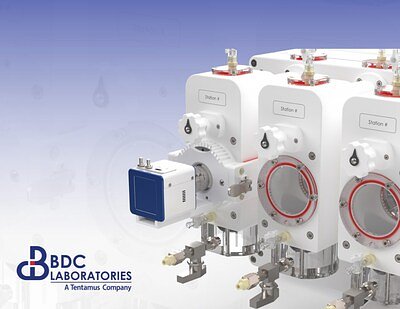
Beyond accelerating the physical prototyping process, BDC Laboratories is also enhancing the quality of data that can be gathered during testing. The company announced a major software upgrade for its Statys® VDT-3600i Heart Valve Durability System and RWT-4600i Heart Valve Real-Time Wear System. This optional kit is more than a simple software patch; it's a fully integrated imaging solution.
The upgrade incorporates a high-speed camera, dedicated lighting, and specialized mounting hardware directly into the testing systems. Crucially, it also includes software for Geometric Orifice Area (GOA) analysis. In heart valve testing, GOA is a critical measurement that quantifies the effective opening of a valve's leaflets as it cycles. Changes in this area over millions of cycles can indicate leaflet degradation, calcification, or other potential failure modes.
Previously, engineers might have relied on lower-frame-rate cameras or more manual methods to assess valve function, which could fail to capture the rapid, subtle dynamics of leaflet motion or provide precise, repeatable quantitative data. High-speed imaging allows for a much more detailed visualization of valve behavior during accelerated wear testing, revealing transient phenomena that could be missed otherwise. The integrated GOA analysis automates a key aspect of performance assessment, providing objective, data-driven insights into a valve's hemodynamic performance and long-term durability.
This enhancement provides engineers with a clearer, more complete picture of how a valve prosthesis will perform over its expected lifetime. By identifying potential issues with greater precision during in-vitro testing, manufacturers can refine their designs and build a more robust data package to support their device.
Navigating the Regulatory Gauntlet and Enhancing Patient Safety
The implications of these advancements extend far beyond the engineering lab, directly impacting the path to regulatory approval and, ultimately, patient safety. The products BDC Laboratories helps test—such as artificial heart valves, vascular grafts, and stents—are typically designated as Class II or Class III devices by the FDA, meaning they are high-risk and subject to the most stringent evaluation requirements.
To gain regulatory clearance, manufacturers must provide extensive evidence demonstrating that their device is safe and effective. This evidence is built upon comprehensive preclinical testing data. The enhanced VDT/RWT software kit allows companies to generate the kind of robust, detailed performance data that regulatory bodies demand. Clear visualization of valve mechanics and precise GOA measurements over time provide powerful evidence to support a device's durability claims, directly addressing key requirements outlined in standards like ISO 5840 for cardiac valve prostheses.
Similarly, the ability to rapidly produce high-fidelity anatomical models facilitates more thorough benchtop testing. Engineers can evaluate how a device navigates and deploys within complex and patient-specific anatomies, identifying potential risks before a device ever reaches clinical trials. By enabling more design-test-refine cycles, this rapid feedback loop helps de-risk the entire development process, reducing the chance of costly late-stage failures and ensuring a more robust final product.
Ultimately, more rigorous and efficient testing translates into safer medical devices. By catching potential failure modes earlier and enabling the optimization of device performance, these new tools contribute directly to better patient outcomes and greater confidence in life-sustaining cardiovascular technologies.
Strategic Positioning at MD&M West
The decision to launch these offerings at MD&M West 2026 is a strategic one. The event is one of the largest gatherings of medical device manufacturers, suppliers, and innovators in North America, with key themes consistently revolving around accelerating time-to-market, advanced manufacturing, and navigating the evolving regulatory landscape. BDC's announcements are perfectly aligned with these industry-wide priorities.
By showcasing these solutions, the company reinforces its position as a key partner in the cardiovascular device ecosystem, offering not just testing services but also the enabling technologies that drive innovation. While the market includes various players offering anatomical models or rapid prototyping, BDC is differentiating itself by bundling speed with the high-fidelity quality essential for regulatory-grade testing.
Attendees at the conference will have the opportunity to see the technology firsthand. BDC Laboratories plans to feature examples of anatomies created with its rapid manufacturing process and will run a full testing setup with live visualizations from the new software kit at its booth. This hands-on demonstration underscores the practical, immediate value these solutions offer to medical device engineers working on the front lines of innovation. The company will be available for demonstrations at Booth 1433 throughout the event.