
- 760 incidents in 2025, a 26.5% reduction since 2021
- 55% of damages in 2025 occurred without contacting BC 1 Call
- $255,000+ in fines for one contractor striking four gas lines in 13 months
Experts agree that BC's multi-faceted approach—combining public awareness, targeted industry training, and strict enforcement—has significantly reduced gas line damages, but persistent compliance gaps remain a critical challenge.
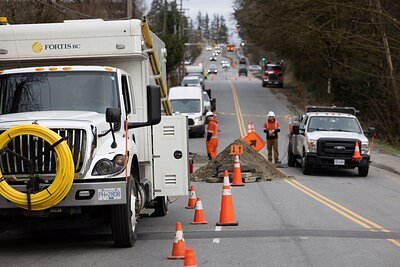
BC's Underground Battle: Gas Line Damage Drops Amidst Hefty Fines
SURREY, BC – April 14, 2026 – A quiet but significant victory is being won beneath the soil of British Columbia. For the fifth consecutive year, the number of accidental strikes on underground natural gas lines has decreased, with FortisBC reporting approximately 760 incidents in 2025. This marks a substantial 26.5 per cent reduction since 2021, a testament to a concerted effort to prevent dangerous and costly accidents.
As homeowners and contractors across the province gear up for the busy spring digging season, this positive trend is a welcome sign. However, regulators and the utility provider are stressing that vigilance is more critical than ever, as nearly all of these incidents are preventable. The progress highlights a successful strategy, but also throws a harsh light on the significant risks that remain.
A Blueprint for Prevention
The steady decline in gas line damage is not a matter of luck, but the result of a multi-faceted strategy built on collaboration, education, and data. Central to this effort is the partnership between FortisBC, the provincial safety authorities, and BC 1 Call, the free, centralized service that maps underground utilities for anyone planning to dig.
"As digging season begins, Safe Digging Month reinforces the one simple step that makes all the difference for safety and damage prevention in BC: completing your free BC 1 Call ticket before any ground disturbance," said Donna Grant, president of BC 1 Call. "It's quick, easy, and increases critical protection to people, property, the environment, and essential services we all rely on."
The data shows this message is gaining traction. In 2024, nearly 170,000 BC 1 Call tickets were processed, a clear indicator of heightened awareness. FortisBC directly correlates this increased usage with the drop in incidents. Yet, the utility isn't relying on public service announcements alone. In 2025, it held nearly 50 targeted training sessions for contractors and municipal crews—the groups responsible for the vast majority of excavation work.
"When proper planning happens upfront, including requesting and properly using BC 1 Call mapping information, damage incidents drop significantly," explained Ada Nadison, public safety program manager at FortisBC. "That is why we work closely with contractors year-round through training sessions, site visits and ongoing conversations to help ensure safe digging practices are clearly understood and consistently applied."
This hands-on approach is reinforced by industry partners. "Landscaping and home improvement projects often involve deeper digging than people realize," noted Coreen Rodger Berrisford, executive director of the BC Landscape & Nursery Association. "Contacting BC 1 Call should be the first step in any project."
The High Cost of a Single Mistake
While the trend is positive, the consequences of failure are severe. A single shovel or excavator bucket striking a gas line can lead to evacuations, fires, service disruptions to critical facilities like hospitals, and even fatalities. The financial repercussions are equally staggering, a reality that WorkSafeBC is enforcing with increasing rigor.
In May 2025, Bay Hill Contracting Ltd. was fined $98,695.31 after its excavator struck a gas line in Surrey. An investigation found the firm had not reviewed BC 1 Call documentation and failed to hand-dig to confirm the line's location, a violation deemed "repeated and high-risk." Just months later, in October, another contractor was hit with an $87,148 penalty for a similar repeat violation at a West Vancouver school site. One company, Complete Utility Contractors Ltd., has been fined over $255,000 for striking four separate gas lines in just 13 months.
These penalties underscore a zero-tolerance approach to negligence. "Identifying underground utilities before excavation work begins is a critical component of workplace safety," said Michael Paine, manager of prevention programs and services at WorkSafeBC. "Planning ahead helps prevent avoidable incidents."
Beyond regulatory fines, the costs include emergency response, complex repairs, and lost gas—a potent greenhouse gas that contributes to climate change when released. The simple act of calling before digging avoids these cascading financial, environmental, and safety disasters.
The Persistent Awareness Gap
Despite the clear benefits and severe penalties, a stubborn gap in awareness and compliance remains the primary obstacle. According to FortisBC's data, a staggering 55 per cent of damage incidents in 2025 occurred because no one contacted BC 1 Call beforehand. Of the incidents where a call was made, most involved a failure to follow through with safe practices, such as hand-digging to expose the marked line before using heavy machinery.
"You should never assume how deep a gas line is," warned Nadison. "Factors like landscaping, grading and erosion can change how close they are to the surface over time."
While homeowners were responsible for about 21 per cent of damages in 2025, professional contractors and workers accounted for the lion's share at 69 per cent. This points to a persistent challenge within the very industry that should be most aware of the risks. A 2021 survey commissioned by BC 1 Call revealed that only 28% of the general public could correctly identify the service, highlighting the scale of the public education challenge.
Interestingly, for those who do use the system, satisfaction is remarkably high. A 2023 user survey found that 94% of respondents rated their satisfaction 4 or 5 out of 5, and 96% would refer others to the service. This suggests the primary barrier isn't the system's quality, but a fundamental lack of awareness that it exists and is legally required.
A National Challenge, A Local Success
British Columbia's struggle is not unique. The Canadian Common Ground Alliance (CCGA) consistently identifies "No Notification Made to One-Call Centre" as the leading cause of underground utility damage nationwide. In Ontario, which sees over 4,200 damages annually, only 33% of homeowners are aware of the province's one-call service. Compared to these figures, BC's steady reduction in incidents, driven by a 26.5% drop in just five years, positions the province as a leader in damage prevention.
The strategy of combining public awareness campaigns, targeted industry training, and strict regulatory enforcement appears to be a formula for success. It's a shared responsibility, from the homeowner planting a new tree to the developer excavating a new foundation.
As the ground thaws and projects begin, the message from all agencies is unified and clear: the most important tool for any digging project is a phone or a computer. Making a free request to BC 1 Call is a simple, legally required step that protects lives, the environment, and the essential energy infrastructure that powers the province.
Topics & Related
Sustainability & Climate
Digital Transformation
Restructuring
Related Company Pulse