
- 80% snow retention rate: Resorts using Snow Secure's technology retain approximately 80% of stored snow after a full summer.
- 70% energy savings: Resorts can reduce snowmaking energy consumption by up to 70% by producing snow in deep winter.
- $160,000 pilot project cost: Initial investment for a pilot project to store enough snow for an early-season trail.
Experts view Snow Secure's snow storage technology as a transformative climate adaptation tool for the ski industry, offering a cost-effective and reliable solution to mitigate the financial risks of erratic winter weather.
Banking on Winter: The Tech Investment Securing Skiing's Future
SANTA FE, NM – December 11, 2025 – For the multi-billion dollar ski industry, the first snowfall is more than a meteorological event; it's the starting gun for a season's revenue. But as climate change shortens cold windows and makes early-season weather increasingly erratic, that starting gun has become dangerously unreliable. Now, a Finnish-American company is offering what was once unthinkable: a guaranteed winter.
Snow Secure, a firm recently lauded in TIME's Best Inventions 2025, is deploying a surprisingly simple yet technologically advanced solution that allows resorts to "bank" snow through the summer heat. By transforming snow from a weather-dependent variable into a predictable, manageable asset, the company is not just creating a climate adaptation tool; it's introducing a new strategic and financial paradigm for mountain operations across North America.
The Technology of a Guaranteed Season
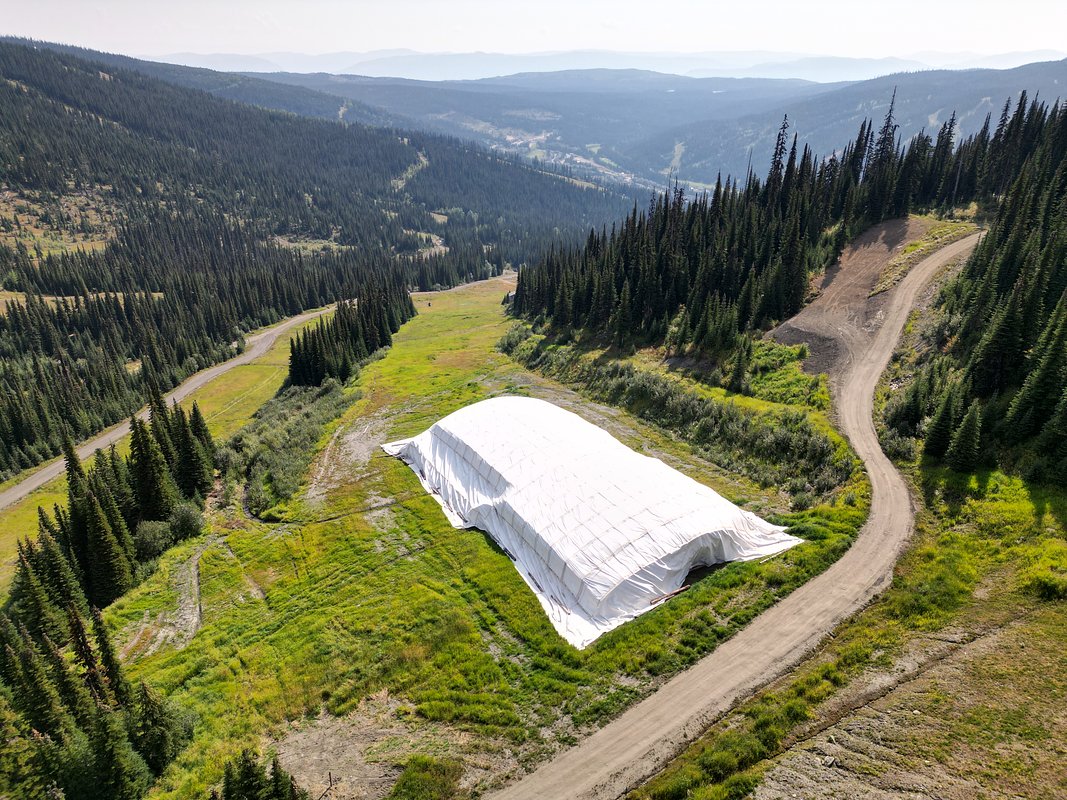
At its core, the concept of "snow farming" is straightforward: make massive quantities of snow during the most optimal, energy-efficient winter conditions, pile it high, and insulate it from the summer melt. While European resorts have experimented with insulating snow using materials like sawdust for years, Snow Secure has industrialized and perfected the process with a patented system of advanced insulation mats.
These are not simple tarps. The technology relies on white extruded polystyrene (XPS) mats, engineered to shield the snow from sun, heat, wind, and rain. The white surface reflects solar radiation, while the XPS material provides a formidable thermal barrier. Data from installations shows that even when ambient air temperatures reach 89°F and the mat surface hits 113°F, the temperature directly underneath remains just above freezing, between 34-36°F.
The results have been eye-opening for an industry accustomed to fighting a losing battle with mother nature. At both Sun Peaks Resort in British Columbia and Bogus Basin in Idaho, operators reported snow retention rates of approximately 80% after a full summer. "We were expecting to lose 25–30 percent of the stored snow, but we ended up losing only about 20 percent," noted Duncan Currie, Director of Operations at Sun Peaks. This level of efficiency means a massive snow pile - like the 40,000 cubic meter one at Sun Peaks - can emerge in November ready to be spread across trails, guaranteeing an opening day regardless of autumn temperatures.
De-Risking Winter: The Investment Case
For resort CFOs and private equity owners, this technology represents a powerful tool for de-risking operations. The financial uncertainty of a delayed opening can cascade through a local economy, affecting everything from hotel bookings to seasonal hiring. Snow Secure offers a fixed-cost solution to that variable risk.
A typical pilot project carries a price tag of around $160,000. This investment covers the planning, materials, and expertise to store enough snow to open a significant early-season trail, typically around 1,500 feet long and 120 feet wide with a two-foot base. The return on this investment is multi-faceted and, according to early adopters, rapid.
Nate Shake, Director of Operations at Bogus Basin, the first U.S. resort to deploy the system, admitted his initial skepticism. "I was far from sold that we could pull this off," he stated. But the financial and operational outcomes won him over. "We were also blown away by the price. Environmentally and economically, this is definitely the next major innovation for the North American skiing industry."
The economic benefits extend far beyond the gate receipts from an early opening. By producing snow in deep winter when temperatures are lowest, resorts can slash energy consumption for snowmaking - a major operational expense - by up to 70%. At Sun Peaks, the shift is projected to save 1.5 million gallons of water annually. With insulation mats designed for a lifespan of 10 to 20 years, the initial capital outlay is amortized over a long period, turning a volatile operational cost into a predictable capital expenditure.
From Novelty to Necessity
The journey from a niche European experiment to a core North American strategy is accelerating. The initial skepticism described by Shake is a common reaction to disruptive innovations, but the tangible success at pioneering resorts is quickly changing perceptions. What was once "Project X" at Bogus Basin is now a proven playbook.
Antti Lauslahti, CEO of Snow Secure, sees this adoption curve as inevitable. "Our solution provides a competitive edge for the early adopters, but in upcoming years it will become core infrastructure for ski resorts," he said. The company's project pipeline validates this view. Following successful implementations at Sun Peaks, Bogus Basin, and Tyrol Basin in Wisconsin, new projects are already confirmed for Spring 2026 at Ski Apache in New Mexico and the Olympic venue Soldier Hollow in Utah.
This momentum suggests a tipping point is near. The ability to guarantee an opening day, host early-season race training camps, and secure holiday bookings provides a formidable competitive advantage. As more resorts adopt the technology, pressure will mount on competitors to follow suit, shifting the industry standard from weather-contingent openings to date-certain operations.
This strategic shift is fundamentally altering how capital is allocated on the mountain. Instead of pouring millions into ever-larger snowmaking systems that are inefficient in marginal temperatures, resorts can now make a targeted investment in snow storage for a more reliable outcome. It's a move from brute-force manufacturing to strategic preservation - a hallmark of an industry maturing in the face of new economic and environmental realities. As this technology becomes more widespread, it will not only save individual ski seasons but may ultimately redefine the long-term viability and financial structure of winter tourism itself.