
- 16-year contract: Australia secures a long-term agreement with SES for uninterrupted military satellite communications.
- $180 million: Estimated value of a related earlier contract for 8 years, suggesting the full 16-year term represents a substantial financial commitment.
- 2042: The ADF ensures access to the IS-22 payload until at least this year, locking in a critical strategic advantage.
Experts would likely conclude that this agreement is a strategic imperative for Australia's defense, ensuring secure communications in a contested Indo-Pacific region while reducing reliance on allied networks and bolstering sovereign capabilities.
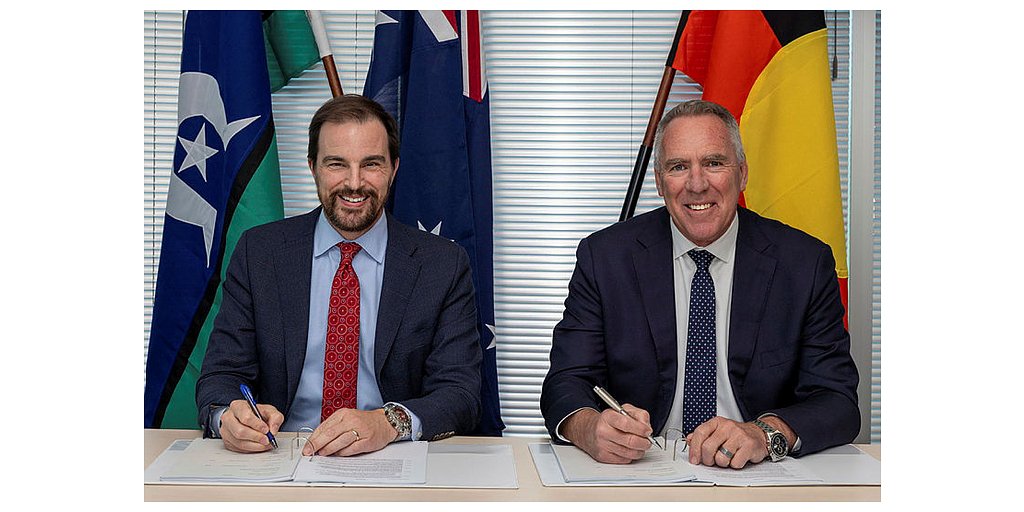
Australia Secures Critical Satellite Link for Indo-Pacific Defense
CANBERRA, Australia – January 12, 2026 – The Australian Defence Force (ADF) has solidified a crucial component of its long-term security strategy, securing a minimum 16-year contract with satellite communications provider SES for uninterrupted, secure military communications. The landmark agreement ensures Australia retains access to the highly coveted and scarce ultra-high frequency (UHF) military payload aboard the Intelsat 22 (IS-22) satellite, a capability deemed essential for operations across the vast and increasingly complex Indo-Pacific region.
The deal involves not only the extension of services but also a significant logistical undertaking: SES will reposition the IS-22 satellite to a new orbital slot specified by the ADF. Furthermore, the agreement includes the construction of a new, dedicated ground segment on Australian soil, including a purpose-built antenna facility. This move signals a major step towards bolstering Australia's sovereign communications infrastructure, reducing reliance on allies and ensuring operational certainty for decades to come.
A Strategic Imperative in a Contested Region
This long-term commitment to secure satellite communications (SATCOM) arrives at a critical juncture for Australia's defense posture. The nation's 2023 Defence Strategic Review and subsequent National Defence Strategy have pivoted towards a "strategy of denial," aimed at deterring aggression and protecting Australia's interests in a region marked by rising geopolitical tensions and military modernization. Central to this strategy is the ability to command and control a widely dispersed joint force across immense maritime and terrestrial domains.
The Indo-Pacific, a nexus of global trade and strategic competition, requires robust and resilient communication networks for effective military operations, intelligence sharing, and coalition interoperability. Australia's historical reliance on allied satellite networks, particularly those of the United States, has been identified as a potential vulnerability in a contested environment where adversaries are actively developing counter-space capabilities like jamming and cyberattacks.
The significance of the SES deal is amplified by the recent cancellation of Australia's ambitious JP9102 sovereign military satellite project, which left a looming capability gap. This 16-year agreement for the IS-22's payload provides a vital and immediate solution, ensuring continuity for a system that has been the cornerstone of the ADF's secure communications since 2012. It provides the ADF with a guaranteed line of communication for everything from coordinating naval patrols in the South China Sea to supporting ground troops on joint exercises.
The 'Irreplaceable' Value of UHF Technology
At the heart of the agreement is the IS-22's UHF payload. While higher-frequency bands like Ka-band offer greater bandwidth, military UHF is considered "virtually irreplaceable" for many tactical applications due to its unique physical properties. Operating in the 240-315 MHz range, UHF signals are exceptionally resilient, capable of penetrating dense foliage, urban environments, and adverse weather conditions far more effectively than higher frequencies.
This capability is paramount for the warfighter on the ground. It enables reliable communications using simple, rugged, and man-portable terminals, ensuring that dismounted soldiers, special forces, and vehicle convoys remain connected to the command network. The wide coverage footprint of a geostationary UHF satellite provides a persistent communication blanket over vast operational areas, crucial for a continent-sized nation with far-reaching maritime interests.
Global military demand for this specialized UHF capacity far outstrips the limited supply, making it a highly contested resource. By securing access to the IS-22 payload until at least 2042, the ADF has locked in a critical strategic advantage. This ensures not only its own operational effectiveness but also its ability to seamlessly integrate with key allies, most notably the United States, who also rely heavily on UHF for coalition operations.
A Landmark Deal in the Global SATCOM Market
From a commercial perspective, the agreement is a major victory for Luxembourg-based SES, significantly bolstering its government services portfolio. The deal, estimated to be worth hundreds of millions of dollars over its lifespan, provides a stable, long-term revenue stream and reinforces the company's position as a key partner to Western defense organizations. A related earlier contract was valued at $180 million for eight years, suggesting the full 16-year term represents a substantial financial commitment.
This contract is also one of the first major strategic wins announced since SES completed its acquisition of competitor Intelsat in mid-2025. The merger created a satellite behemoth with a combined fleet of over 100 satellites, better positioned to compete with emerging low-Earth orbit constellations like SpaceX's Starlink. Leveraging the legacy Intelsat 22 asset for a long-term, high-value government contract demonstrates the immediate strategic synergies of the acquisition.
“This agreement ensures critical communications capability for the ADF and its strategic partners across the Indo-Pacific,” said Philippe Glaesner, SVP of SES Global Government, in a statement. “At a time when secure, sovereign communications are more vital than ever, it provides operational certainty and supports Australia’s long-term resilience and leadership in defense.”
From Orbit to Australian Soil
The execution of the agreement involves significant technical challenges that underscore its complexity. Repositioning the IS-22 satellite, which has been in orbit for over a decade, requires a series of precise thruster burns to move it thousands of kilometers through space to a new geostationary slot. These maneuvers must be meticulously planned to conserve the satellite's limited onboard fuel, which dictates its remaining operational lifespan, while ensuring minimal disruption to ongoing services.
Perhaps more strategically significant for Australia is the commitment from SES to build and operate a dedicated ground station on Australian soil. This purpose-built facility, with construction expected to begin in 2026, will serve as the terrestrial anchor for the satellite's services. It directly addresses the national imperative for greater sovereign control over critical defense infrastructure.
By having the primary ground control and data uplink/downlink facilities within its own borders, Australia reduces its dependence on foreign-based infrastructure and enhances the security and resilience of its most sensitive military communications. The project is also expected to generate local jobs and foster growth in Australia's domestic space and defense industries, aligning with the government's broader strategic goals. This physical presence on the ground ensures that Australia's indispensable eye in the sky is firmly tethered to sovereign control.