
- 5 miles: Maximum group range for ASMAX's mesh network technology
- 112 mph (180 km/h): Top speed at which ASMAX's Environmental Noise Cancellation (ENC) ensures clear communication
- 2026: Expected release year for ASMAX's Smart Mesh Control (SMC) system
Experts view ASMAX's Smart Riding IoT Ecosystem as a strong contender in the powersports connectivity market, with its advanced mesh technology and competitive pricing, though interoperability with other brands remains a critical challenge for widespread adoption.
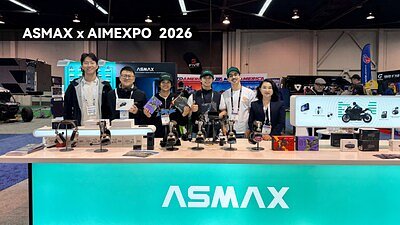
ASMAX Challenges Powersports Giants with New Smart Riding Ecosystem
ANAHEIM, CA – January 09, 2026 – Amid the buzz of new models and high-performance gear at AIMExpo 2026, global innovator ASMAX made a significant play for the future of powersports connectivity. The company showcased its comprehensive Smart Riding IoT Ecosystem, a suite of products designed to integrate communication, audio, and intelligent control into a single, seamless experience for motorcyclists. With the preview of its next-generation Smart Mesh Control (SMC) technology, ASMAX is signaling a direct challenge to established market leaders and betting on a future where the connected ride is not just a luxury, but a core component of safety and enjoyment.
A New Contender in a Crowded Field
While names like Sena and Cardo have long dominated the powersports communication landscape, ASMAX is emerging as a formidable new contender. A brand of Shenzhen Asmax Infinite Technology Co., Ltd., the company leverages over two decades of its parent's expertise in IoT and smart device R&D. After launching in China in 2023 and quickly becoming a top-growing brand in that market, ASMAX is now making its presence felt on the global stage.
Its strategy appears centered on delivering premium features at a competitive price point, a move resonating with riders. User reviews of existing products like the F1 Mesh and Z1 highlight the brand's ability to deliver on core promises. Riders praise the crystal-clear audio quality, which remains intelligible even at highway speeds thanks to advanced noise-cancellation algorithms. The mesh network technology, supporting up to 10 riders with stable connections over impressive distances, has also received positive feedback for its reliability during group rides.
However, the path to market dominance is fraught with challenges. The powersports communication sector is notorious for its "walled gardens," where proprietary protocols often prevent seamless communication between different brands. User forums contain discussions of riders struggling to pair ASMAX units with devices from other manufacturers, a significant hurdle for those who ride in groups with mixed equipment. This interoperability issue remains the single largest barrier for any new entrant, regardless of technological prowess.
Decoding the Technology: Smart Mesh and AI Control
At the heart of ASMAX's presentation at AIMExpo was its technology. The company offered a preview of its forthcoming Smart Mesh Control (SMC) system, set for release later in 2026. Unlike basic Bluetooth pairing, mesh networks create a dynamic, self-healing web where each rider acts as a node. If one rider drops out of range, the network automatically re-routes the signal through the remaining riders to maintain the group's connection. ASMAX claims its SMC technology enhances this by dynamically managing connections in real time, ensuring conversations remain stable as riders join, leave, or change position. Models like the Z1 already boast a group range of up to five miles, with a unit-to-unit range of 1.8 miles.
Equally critical for real-world riding is the ability to be heard over the roar of the engine and the rush of the wind. ASMAX is tackling this with its Environmental Noise Cancellation (ENC) technology. The company claims its system, which uses a neural network algorithm to distinguish the rider's voice from background noise, delivers clear communication at speeds up to 112 mph (180 km/h). This focus on fundamental performance addresses a primary pain point for riders who have struggled with garbled audio on older or less advanced systems.
Powering this hardware is a commitment to modern processing, with products built on Bluetooth 5.3 and octa-core chipsets. This robust foundation supports not only communication but also the integration of AI-driven features.
An Ecosystem Beyond the Intercom
ASMAX is positioning its lineup not merely as a collection of individual devices, but as a holistic "Smart Riding IoT Ecosystem." The vision extends beyond simple helmet-to-helmet chat. Central to this concept is the integration of AI voice commands and the ASMAX WORLD smartphone app. The goal is to minimize rider distraction, a critical factor in motorcycle safety. By allowing riders to manage intercom modes, adjust volume, control music playback, and access phone assistants like Siri or Google Assistant using only their voice, the system allows them to keep their hands on the handlebars and their focus on the road.
The emphasis on user experience also extends to audio fidelity. The company touts "Grammy-Level Team Tuning" for its sound profiles, developed in what it calls the "ASMAX Acoustic Lab." This highlights a growing trend where riders expect their helmet communicators to function as high-quality audio devices for music and navigation, not just as intercoms. The professionally tuned sound is engineered to provide balanced, clear output that cuts through ambient noise without being harsh, enhancing the enjoyment of long-distance tours and daily commutes alike.
Through the ASMAX WORLD App, riders can perform over-the-air (OTA) firmware updates, configure device settings, and manage group connections before a ride begins. While this level of control is powerful, it also represents a potential weakness. Some early adopters have noted that the app's user interface could benefit from further polish, citing minor usability issues. The success of the ecosystem will depend as much on the quality of its software and user interface as it does on the capability of its hardware.
Market Impact and the Road Ahead
ASMAX's aggressive push into the market, showcased at a major industry event like AIMExpo, has clear implications for dealers and the industry at large. For dealers, the brand offers an attractive proposition: a feature-rich product line with advanced mesh, robust noise-cancellation, and a durable, waterproof (IPX7 rated) build that can be positioned as a high-value alternative to more expensive legacy brands. This allows retailers to capture a segment of the market that desires cutting-edge technology without the top-tier price tag.
The primary challenge for dealers will be overcoming brand loyalty and addressing the crucial question of interoperability. A rider's choice of communicator is often dictated by what their friends use. Until a universal standard for mesh communication is adopted, ASMAX's biggest hurdle will be convincing entire riding groups to adopt its ecosystem.
The company's focus on an integrated IoT platform aligns with broader trends in the automotive and powersports industries. Just as cars have become rolling computers, motorcycles are increasingly expected to offer connected services for safety, navigation, and infotainment. ASMAX's showcase at AIMExpo 2026 demonstrates a clear and practical approach to this future. By focusing on real-world usability, rider comfort, and a scalable ecosystem, the company is not just selling a product; it is selling a vision for a smarter, safer, and more enjoyable ride. The industry will be watching closely to see if riders are ready to buy into it.