
- Contract Award: U.S. Army's XVIII Airborne Corps awards contract to Picogrid to unify battlefield systems.
- Integration Speed: Picogrid's Legion platform successfully integrated five different sensor products within weeks during a 1st Cavalry Division exercise.
- Deployment Focus: Technology aims to counter unmanned aerial systems (UAS) by enabling real-time data sharing across disparate sensors.
Experts agree that this initiative represents a critical shift in military modernization, emphasizing rapid integration of diverse systems over mere acquisition of new technology to enhance battlefield agility and decision-making.
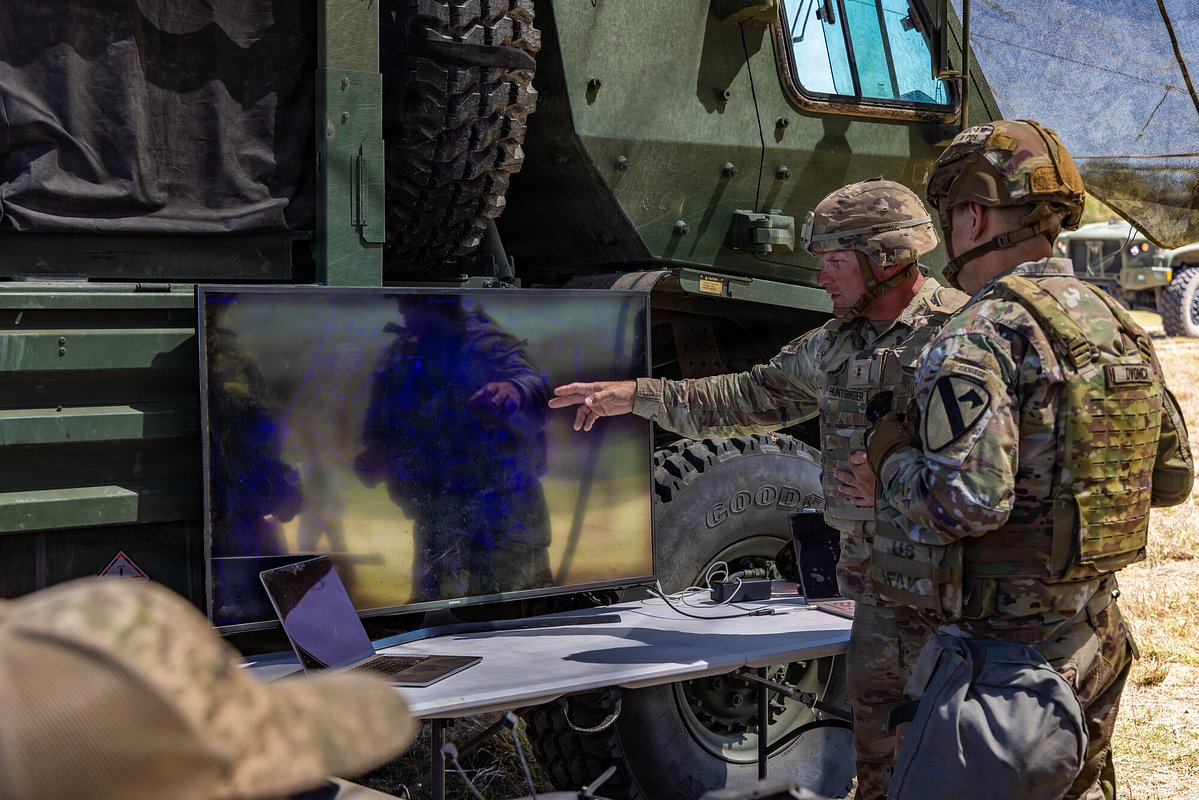
Army Taps Picogrid to Unify Disparate Battlefield Systems
FORT BRAGG, NC – April 16, 2026 – The U.S. Army's XVIII Airborne Corps has awarded a contract to technology firm Picogrid to address one of the most persistent challenges on the modern battlefield: making a vast array of disconnected systems work together. The initiative, centered at the home of the Army's global response force, aims to create a unified, agile network from a diverse collection of sensors, software, and autonomous platforms, with a significant focus on countering the growing threat of unmanned aerial systems (UAS).
This contract represents a critical step in the Army's broader modernization efforts, signaling a strategic pivot from simply acquiring new technology to ensuring it can be rapidly integrated and effectively employed by soldiers in the field. For a unit like the XVIII Airborne Corps, which must be ready to deploy anywhere in the world on a moment's notice, the speed of integration is as crucial as the capability of the technology itself.
The Challenge of a 'Stovepiped' Battlefield
For years, military modernization has resulted in a battlefield populated by highly advanced but siloed systems. A radar from one vendor, a camera from another, and a command-and-control (C2) interface from a third often cannot communicate directly. This lack of interoperability, often referred to as a "stovepiped" architecture, creates data bottlenecks and forces soldiers to manually bridge gaps between different screens and systems, slowing down decision-making at critical moments.
The proliferation of inexpensive, highly capable drones has magnified this challenge. As recent conflicts have demonstrated, the skies above a battlefield can be saturated with small, hard-to-detect unmanned aircraft used for both surveillance and attack. Effectively countering this threat requires a layered defense where different sensors—such as radar, radio frequency detectors, and electro-optical cameras—can instantly share data, cross-cue each other to confirm a target, and provide a single, coherent track for commanders to act upon. Without seamless integration, each sensor remains an island, providing only a fragment of the complete picture.
As the Army's designated crisis response force, the XVIII Airborne Corps operates under compressed timelines where lengthy, custom engineering to connect new equipment is not an option. The unit requires a 'plug-and-play' capability that allows soldiers to integrate the best available technology, regardless of the manufacturer, and make it operational within hours or days, not months.
A Software-Defined Solution
Under the new contract, Picogrid will deploy its Legion software platform and Expeditionary Command and Control Nodes to create a common integration layer for the Corps. This technology acts as a universal translator, enabling disparate systems to speak the same language in real-time. Legion, a middleware platform, normalizes data from various sensors and systems, converting proprietary data formats into a common standard that can be shared across different networks and C2 applications like the Android Team Awareness Kit (ATAK).
This software is deployed on ruggedized hardware known as Expeditionary Command and Control Nodes. These portable units provide the necessary power, connectivity, and computing at the tactical edge, allowing the system to function even in austere environments with limited or no access to cloud infrastructure. This capability is vital for airborne and expeditionary forces that cannot rely on permanent infrastructure.
Together, these solutions create a unified operational picture, fusing data from multiple sources into a single, intuitive interface. This allows for advanced workflows like automated sensor-to-sensor cueing, where an RF sensor detecting a drone's control signal can automatically direct a radar to scan that location and a camera to zoom in for visual identification, all without human intervention.
“What we need is a system our soldiers can learn quickly, use in the field, and rely on to pull together sensors, decision-making, and response options into one workflow,” said CW3 Jennings of the XVIII Airborne Corps in the initial announcement.
From Exercise to Execution: A New Model for Army Innovation
This contract is not the Army's first experience with Picogrid's technology. The award builds on successful demonstrations during recent Army exercises, including Scarlet Dragon at Fort Bragg. In these operational experiments, the company proved its ability to rapidly orchestrate multiple sensor systems, enabling detection, tracking, and data fusion in a complex environment. During a separate exercise with the 1st Cavalry Division, Picogrid's Legion platform successfully integrated five different sensor products from various vendors within weeks, feeding a correlated picture of UAS threats into the Army's Forward Area Air Defense Command and Control (FAAD-C2) system.
The effort is facilitated by the Army’s Joint Innovation Outpost (JIOP), an initiative designed to break the mold of traditional, slow-moving acquisition cycles. The JIOP embeds acquisition professionals and decision-making authority directly within the XVIII Airborne Corps, allowing the unit to identify urgent operational needs and rapidly partner with industry to field solutions. This agile model ensures that technology is developed and refined with direct feedback from the soldiers who will ultimately use it.
“As the Army fields more sensors, autonomous systems, and software, the bottleneck is no longer access to technology. It’s getting those systems to work together fast enough to matter,” said Jake Jeffries, Picogrid's Head of Deployments. “This effort is about giving units a common foundation they can use to bring new capabilities online in weeks, not months, while still working with the systems they already have.”
The Bigger Picture: Modernization Through Integration
The partnership between the XVIII Airborne Corps and Picogrid reflects a profound shift in defense strategy. The Pentagon is increasingly recognizing that in an era of software-defined warfare, the true measure of technological superiority lies not just in the quality of individual platforms, but in the strength of the network that connects them. By prioritizing a vendor-neutral, open-architecture approach, the Army is actively working to avoid vendor lock-in and foster a more competitive and innovative ecosystem.
This embrace of agile, commercially-driven innovation from Silicon Valley-style startups like Picogrid marks a departure from a sole reliance on traditional defense primes. It allows the military to tap into the fast-paced development cycles of the tech industry to solve urgent problems. The focus on creating a common data fabric ensures that as new technologies emerge, they can be added to the network without requiring a complete system overhaul.
As the character of warfare continues to evolve, the ability to rapidly integrate, understand, and employ a multitude of systems in concert will be the defining feature of a modern, effective fighting force. This contract is a clear investment in that future, providing the Army's premier response force with the digital backbone needed to maintain its edge in any environment.
Topics & Related
Software & SaaS
AI & Machine Learning
Venture Capital
Artificial Intelligence
Machine Learning
Cloud Migration
Partnership
Related Company Pulse