
- 100% reliance: The U.S. is entirely dependent on imports for gallium, with China controlling ~95% of global production.
- 150-200% grade increase: Metallurgical tests boosted gallium concentration by 150-200%, with recovery rates up to 70%.
- 97% silver, 82% gold recovery: Precious metals extracted as valuable by-products.
Experts view this discovery as a critical step toward reducing U.S. vulnerability in the gallium supply chain, though significant permitting and development hurdles remain before domestic production becomes a reality.
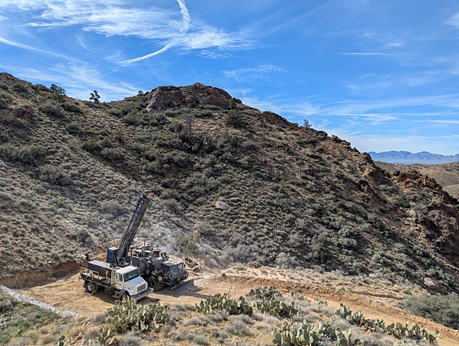
Arizona Gallium Find Aims to Fortify US Tech & Defense Supply Chain
TUCSON, AZ – April 08, 2026 – In the arid landscape of northwestern Arizona, an exploration company has announced results that could represent a significant step toward shoring up a critical vulnerability in America's high-tech and defense industries. G50 Corp Limited (ASX: G50; OTCQX: GFTYF) revealed today that metallurgical tests from its Golconda Project confirm the potential to economically produce gallium, a silvery metal indispensable for next-generation semiconductors, 5G communications, and advanced military hardware.
The announcement comes at a pivotal moment, as the United States grapples with its complete dependence on foreign nations for its gallium supply. The positive test results suggest a viable path to establishing a primary domestic source, a goal that has become a top priority for policymakers focused on national security and supply chain resilience.
A Strategic Breakthrough in the American Southwest
Gallium is not just another industrial metal; it is a linchpin of modern technology. As the core component in gallium arsenide (GaAs) and gallium nitride (GaN) semiconductors, it outperforms silicon in high-frequency and high-power applications. This makes it essential for everything from the power-efficient electronics in electric vehicles and 5G base stations to the sophisticated radar and electronic warfare systems that give the U.S. military its technological edge.
Currently, the U.S. is 100% reliant on imports for this critical material. The global supply chain is overwhelmingly dominated by China, which accounts for approximately 95% of the world's primary gallium production. This concentration of supply was thrown into sharp relief in 2023 when Beijing imposed export controls on gallium and germanium, causing immediate price spikes and sending shockwaves through defense and technology sectors worldwide. The move served as a stark reminder of the geopolitical leverage embedded in critical mineral supply chains.
It is within this high-stakes context that G50's announcement resonates. The company's work at the Golconda Project, a site with a history of mining in Mohave County, is one of the few active exploration efforts for primary gallium in the United States. The new metallurgical data transforms the project from a speculative prospect into a tangible possibility for a domestic production pipeline.
"These exceptional results support a staged, low-capital pathway targeting early development of saleable gallium concentrate with optional precious-metal by-products," said Mark Wallace, managing director and CEO of G50, in a statement. "These results significantly de-risk our Golconda Project and show that Golconda can potentially be a supplier of gallium for US domestic needs."
Unlocking Gallium from Desert Rock
The breakthrough hinges on both the unique geology of the Golconda site and the application of established, cost-effective processing technologies. The exploratory test work, conducted by the globally respected firm SGS Lakefield, demonstrated that gallium can be effectively concentrated from the site's ore.
A key finding, first announced last year, was that approximately 90% of the gallium at Golconda is hosted within sericite, a fine-grained form of mica. This is significant because it separates the gallium from other sulfide minerals, simplifying the extraction process. Rather than requiring complex and costly new technologies, G50's tests successfully used conventional screening and flotation methods—staples of the mining industry for decades.
The results were robust: gallium grades in the processed material were increased by 150% to 200%, with recovery rates reaching as high as 70%. For a preliminary metallurgical study, such figures are highly encouraging and point toward the economic feasibility of the operation. Further enhancing the project's potential value, the tests also yielded excellent recovery rates for precious metals contained in the ore, with up to 97% of silver and 82% of gold being captured. These could serve as valuable by-products, improving the overall economics of a future mine.
The use of proven, "off-the-shelf" technology is crucial. It sidesteps the technical and financial risks associated with developing novel extraction techniques, a common hurdle for critical mineral projects. This practical approach, as Wallace noted, creates a "low-capital pathway" that could make the project more attractive to investors and accelerate its development timeline.
Navigating the Path from Prospect to Production
While the metallurgical results are a major milestone, the journey from a promising drill core to a producing mine is long and fraught with challenges. G50 must now navigate Arizona's rigorous and multi-layered environmental permitting landscape. Any new mining operation faces intense scrutiny over its potential impact on water resources, air quality, and local ecosystems.
In an arid state like Arizona, water is a paramount concern. The project will need to secure water rights and demonstrate that its operational plans are sustainable and will not adversely affect local aquifers or communities. The permitting process will involve multiple state and federal agencies, including the Arizona Department of Environmental Quality (ADEQ) and likely the U.S. Bureau of Land Management (BLM), as much of the surrounding area is federally administered.
This process often involves years of detailed environmental impact assessments under the National Environmental Policy Act (NEPA), comprehensive reclamation plans, and extensive community and tribal consultation. While the Golconda site's history as a mining district may provide some existing infrastructure and local familiarity with the industry, a modern mining proposal will be held to a much higher standard of environmental stewardship and social responsibility than its historical predecessors.
A Blueprint for Critical Mineral Independence?
The challenges facing the Golconda Project are emblematic of a broader national dilemma: how to balance the urgent strategic need for domestic resources with stringent environmental protection and community interests. However, the project's progress also aligns perfectly with a major push from the U.S. government to resolve this very issue.
Initiatives like the Inflation Reduction Act (IRA) and the Infrastructure Investment and Jobs Act (IIJA) have allocated billions of dollars in grants, loans, and tax credits to incentivize the development of domestic critical mineral supply chains. The Department of Defense and the Department of Energy have both designated gallium as a strategic material and are actively seeking to foster North American production capabilities to reduce dependence on geopolitical rivals.
If G50 Corp can successfully advance the Golconda Project through permitting and financing, it could become a powerful case study. It would demonstrate that a junior mining company, using clever geology and conventional technology, can unlock a vital domestic resource. This could create a blueprint for other projects and attract a new wave of investment into the long-neglected U.S. critical minerals sector.
For now, the project remains a prospect, but it is one that carries the hopes of securing a vital link in America's technological future. The next steps will involve more detailed engineering studies, resource definition drilling, and the beginning of the complex permitting journey, all of which will be watched closely by stakeholders in Washington, the defense industry, and Silicon Valley.