
- £2.3 billion: Total trade in goods and services between the UK and Argentina in the year ending Q2 2025, an 11.6% increase from the previous year.
- 5% GDP growth: IMF forecast for Argentina in 2025, reflecting renewed confidence in its economic governance.
- 30-year stability guarantee: Tax, foreign exchange, and regulatory incentives offered under the Régimen de Incentivos para Grandes Inversiones (RIGI) program for foreign investments exceeding $200 million.
Experts would likely conclude that Argentina's new economic reforms under President Milei, particularly the 'Ley Bases' legislation, signal a significant shift toward deregulation and investment incentives, positioning the country for potential economic recovery and stronger international partnerships, including with the UK.
Argentina Pitches New Economic Era to UK Amidst Deepening Dialogue
By Patrick Griffin
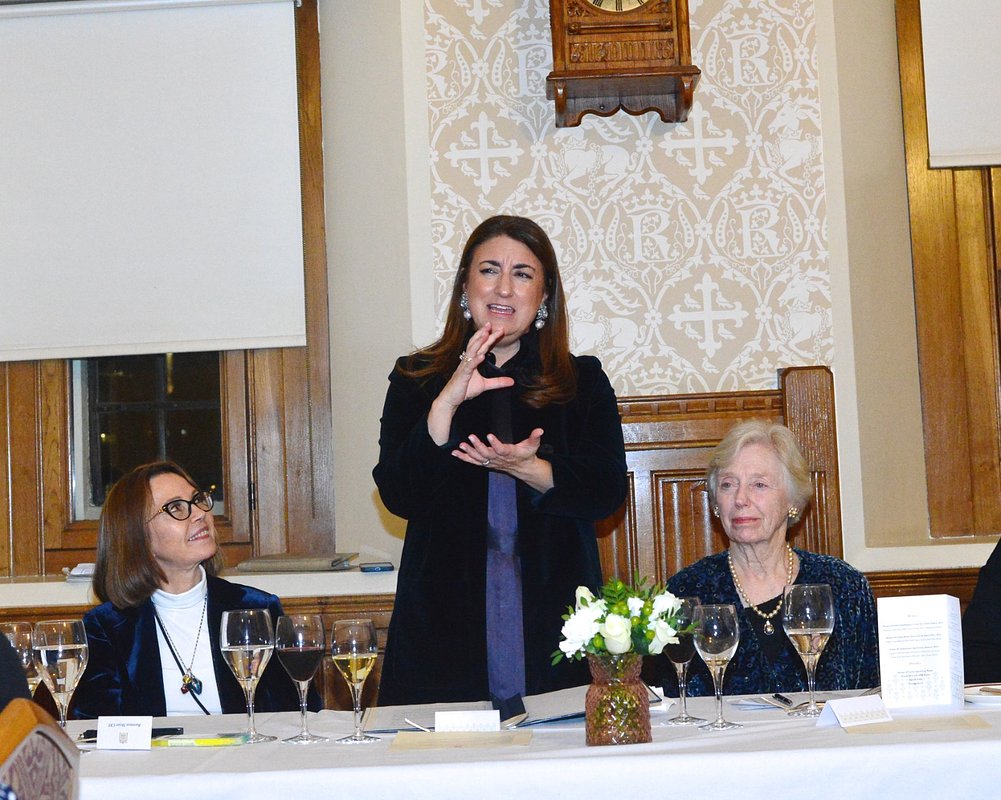
LONDON, UK – December 19, 2025 – In the historic Attlee Room of the House of Lords, a significant chapter in Anglo-Argentine relations unfolded as the Conservative Foreign and Commonwealth Council (CFCC) hosted Her Excellency Mariana Plaza, Argentina's Ambassador to the United Kingdom. The event, part of the Council's ongoing diplomatic engagement, provided a platform for a nuanced discussion that navigated a complex shared history while firmly focusing on a future defined by economic reform and renewed partnership.
Hosted under the chairmanship of Baroness Meyer, the dinner brought together key figures to hear directly from Ambassador Plaza, a senior career diplomat whose experience spans economic negotiations and high-level political affairs. Described by Baroness Hooper as "a breath of fresh air," the Ambassador's address underscored a forward-looking agenda, even as she acknowledged the historical ties and tensions that have long defined the bilateral relationship.
Weaving a Shared History
Ambassador Plaza framed her remarks within a deep historical context, noting that 2024 marked the bicentennial of the first bilateral agreement between the two nations. She painted a vivid picture of a relationship built over centuries through waves of immigration, trade, and cultural exchange. Specific mention was made of the early Scottish settlers who arrived on the ship Symmetry in 1825 and the Welsh communities who established Y Wladfa in Patagonia in the 1860s, creating a region where the Welsh language is still spoken today.
These historical connections were not merely cultural footnotes but the bedrock of profound economic integration. The Ambassador highlighted the UK's pivotal role in Argentina's development into a global food provider up to the 1930s. British immigrants and capital were instrumental in building the nation's banking, finance, communications, and shipping sectors. As a potent symbol of this golden era, Plaza reminded guests that Buenos Aires was once home to the only Harrods department store ever built outside of London - a grand Belle Époque landmark that stood as a testament to the city's prosperity and strong European ties until its closure in 1998.
While celebrating these historical bonds, the Ambassador did not shy away from the more contentious aspects of the relationship. She acknowledged the South Atlantic conflict of the 1980s, a defining moment of rupture. However, she emphasized that since the re-establishment of diplomatic relations in the 1990s, both countries have successfully maintained open channels for dialogue and communication, demonstrating a commitment to engagement despite holding differing national positions on the sovereignty issue.
Milei's 'Ley Bases': A Libertarian Pitch for Investment
The central thrust of the Ambassador's address was a detailed exposition of the new economic direction under President Javier Milei. She described Argentina as a country of immense potential, now going "from strength to strength" under a new administration that has captured the support of the nation's youth and instigated a profound shift in attitude. The key to this transformation, she explained, is the landmark legislation known as the "Ley Bases," or the "Law of Bases and Starting Points for the Freedom of Argentines."
Passed by the Argentine Congress and promulgated into law in July 2024, this omnibus bill serves as the framework for President Milei's libertarian agenda. Ambassador Plaza outlined its three core pillars: the sweeping deregulation of the state, the active promotion of large-scale investments, and a dramatic decrease in the state's weight in the economy. This legislation grants the executive branch powers to restructure public administration and privatize major state-owned enterprises, including the national airline Aerolíneas Argentinas and energy company ENARSA.
A crucial component of this pitch to the international community is the Régimen de Incentivos para Grandes Inversiones (RIGI) program. This scheme offers significant tax, foreign exchange, and regulatory incentives - including a 30-year stability guarantee - for foreign investments exceeding $200 million in key sectors like energy, mining, infrastructure, and technology. The message to the audience in London was clear: Argentina is aggressively reopening for business and sees the UK as a key partner.
The early results of these policies, as highlighted by the Ambassador, are already tangible. The Milei administration achieved the country's first fiscal surplus in over a decade in 2024, a critical step in taming hyperinflation and rebuilding economic credibility. This progress has been recognized by international financial institutions, with the IMF forecasting 5% GDP growth for 2025 and approving a substantial bailout package, signaling renewed confidence in Argentina's economic governance.
Recalibrating Relations Through Trade and Dialogue
The dinner at the House of Lords is emblematic of a broader, pragmatic recalibration of UK-Argentina relations. While the Falklands/Malvinas dispute remains an intractable political issue, both nations are increasingly focusing on areas of mutual benefit. Total trade in goods and services reached £2.3 billion in the year ending Q2 2025, an 11.6% increase from the previous year. The UK exports everything from vaccines to platinum, while importing key Argentine commodities like soybean meal, corn, and its world-renowned Malbec wine.
This quiet strengthening of ties is also reflected in recent policy shifts. In a significant move, the UK government initiated talks in December 2025 to potentially lift the arms export ban that has been in place since 1982, a gesture aimed at normalizing relations and fostering broader cooperation. With over 100 UK companies, including 20 from the FTSE 100, maintaining a presence in Argentina, the commercial incentives for a stable and predictable relationship are substantial.
Events like the CFCC dinner serve as a vital form of 'track-two diplomacy,' allowing for candid exchanges outside the rigid confines of formal state-to-state negotiations. By providing a forum for Ambassador Plaza to articulate her country's vision directly to UK political and business figures, organizations like the CFCC play a crucial role in building understanding and fostering the goodwill necessary for official policy to evolve.
In her closing remarks, Ambassador Plaza shared a personal reflection, noting that among the values she would take back from her time in the United Kingdom were its deep-rooted traditions, which she believes are a source of institutional stability and a bulwark for the rule of law - a poignant observation in the context of Argentina's own journey toward rebuilding its institutions.