
- $3.9 billion: Projected market size for AI in dentistry by 2035
- 40-50%: Time clinicians spend on documentation, contributing to burnout
- 50% or more: Reduction in note-writing time reported by early beta testers
Experts view Archy Scribe as a promising solution to reduce clinician burnout by automating documentation, though they caution that real-world adoption will depend on overcoming challenges like ambient noise and template flexibility.
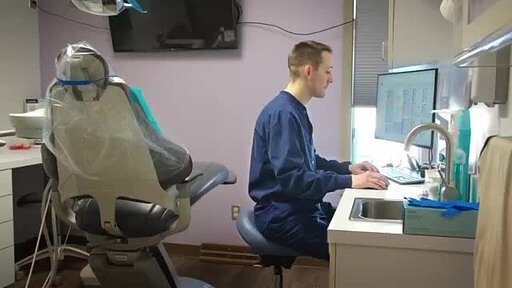
Archy's Native AI Scribe Aims to Redefine the Dental Workflow
SAN JOSE, CA – May 04, 2026 – Dental software provider Archy today announced the launch of Archy Scribe, an AI-powered clinical documentation tool that operates directly within its Practice Management System (PMS). The new feature listens to patient appointments, automatically generates clinical notes, and enables hands-free periodontal charting, aiming to tackle one of the most persistent burdens in modern dentistry: administrative paperwork.
The launch enters a rapidly growing AI in dentistry market, projected to exceed $3.9 billion by 2035. While numerous AI scribe solutions exist, Archy is betting on a key differentiator: native integration. Unlike standalone tools that require complex and often fragile integrations with a practice's core software, Archy Scribe is built from the ground up as part of the main platform, promising a more seamless and context-aware experience for clinicians.
The End of After-Hours Charting?
For countless dentists and hygienists, the day doesn't end when the last patient leaves. It ends hours later, after a long session of reconstructing appointments from memory to complete clinical notes. Industry data suggests clinicians can spend up to 40-50% of their time on documentation, a significant factor contributing to professional burnout.
Archy Scribe is designed to reclaim this time. By recording the visit in the background, the tool can produce a complete clinical note, formatted as a standard SOAP (Subjective, Objective, Assessment, and Plan) note or mapped directly to a practice's pre-existing custom templates.
"Dentists did not go to dental school to write notes at 9 p.m.," said Jon Rat, CEO of Archy, in the company's announcement. "We built Archy Scribe so clinicians can complete documentation before they leave the office and trust that the record reflects what actually happened, not what they are trying to remember hours later."
The system also targets the cumbersome process of periodontal charting. Hygienists can now speak their findings aloud, and Scribe will chart pocket depths and other metrics directly into the patient's digital record, eliminating the need to move back and forth to a computer or rely on an assistant for manual entry.
A Native Approach in a Crowded Market
The market for AI scribes is bustling, with companies like S10.AI, Kiroku, and Denti.AI all offering solutions to automate dental documentation. Most of these function as third-party applications, connecting to various dental PMS platforms through Application Programming Interfaces (APIs). While functional, this approach can lead to integration challenges, additional vendor management, and a less fluid workflow.
Archy's strategy hinges on the power of its native design. Because Scribe is an integral part of the Archy PMS, it has immediate, secure access to the patient's entire history—including previous treatments, existing conditions, and planned procedures. This allows the AI to generate more intelligent and contextually relevant notes without the clinician needing to restate information the system already holds.
This "walled-garden" approach simplifies life for the practice. There is no separate software to install, no integration to configure, and no additional vendor relationship to manage. This streamlined setup is a core part of Archy's value proposition, which has centered on providing an all-in-one, cloud-based platform combining scheduling, imaging, billing, and patient communications. While established giants like Dentrix boast vast ecosystems of third-party integrations, Archy is wagering that a single, deeply integrated, and intelligent system is the future.
From the Clinic: Early Feedback and Real-World Hurdles
Archy Scribe has been in a private beta program with select dental practices since late 2025. Early feedback appears promising. "Writing clinical notes used to be the part of my day I'd put off," reported Dr. Lauren Koch of Avondale Dental Studio, one of the beta testers. "Archy Scribe has cut that time in half, sometimes more, and the quality of my notes has improved."
However, the broader experience with AI scribes in dentistry reveals common hurdles that Archy Scribe will also need to overcome. One significant challenge is ambient noise. In busy, open-bay clinics, background conversations and equipment sounds can interfere with the AI's ability to accurately transcribe the clinician-patient interaction, sometimes requiring practices to invest in specialized microphone hardware.
Furthermore, the quality and flexibility of the note templates are critical. For notes to be compliant and useful, they must be more than just a generic summary. They need to be structured with specific dental terminology and codes. While Archy Scribe allows for custom templates, its success will depend on how well it adapts to the unique workflows of different practices. As with any AI, there is also a learning curve for staff, who must adapt their speech patterns and commands to interact effectively with the system.
The AI Co-Pilot: Navigating Privacy and Ethics
Introducing an always-on listening device into the operatory immediately raises critical questions about patient privacy and data security. Handling Protected Health Information (PHI) is governed by the strict regulations of HIPAA, and any AI vendor in this space must demonstrate robust compliance.
Archy's native integration may offer an advantage here. By keeping the data within a single, unified system, it potentially simplifies compliance by reducing the number of external vendors and data transfer points, each requiring a separate Business Associate Agreement (BAA). Archy maintains that all data is encrypted in transit and at rest, and its platform is built with security as a core tenet.
Still, the ethical responsibility remains. The AI-generated notes cannot be a "black box." The final record is still the legal responsibility of the clinician, who must review, edit, and formally attest to the accuracy of every note before it is saved. The industry consensus is to treat the AI as a highly efficient "co-pilot," not as an autonomous pilot. Patients must also be informed and consent to their conversations being recorded, a new step that practices will need to incorporate into their intake process.
Beyond the Scribe: A Vision for the AI-Powered Practice
Archy Scribe is not a standalone product but the first pillar in a much broader strategic vision. The company has announced a suite of upcoming AI agents, collectively branded as Archy Intelligence, designed to automate nearly every facet of practice management.
Planned offerings include Archy Revenue to streamline insurance claims and billing, Archy Verify to automate the time-consuming process of verifying patient insurance benefits, and Archy Connect to enhance automated patient communications and scheduling. This roadmap paints a clear picture of Archy's ambition: to create a fully integrated, AI-driven ecosystem that allows dental practices to "do more with less."
By tackling clinical documentation first, Archy is addressing a primary source of clinician burnout. With that foundation laid, the company plans to use its AI framework to systematically eliminate administrative friction across the entire practice, from the front desk to the back office, creating a smarter and more efficient future for dental care.