
- 50,000 reservation holders with deposits
- $2 billion in potential revenue from reservations
- 40 miles of daily driving powered by solar in sunny climates
Experts view Aptera's milestone as a critical step toward production, but caution that financial sustainability and regulatory approval remain key challenges for the company.
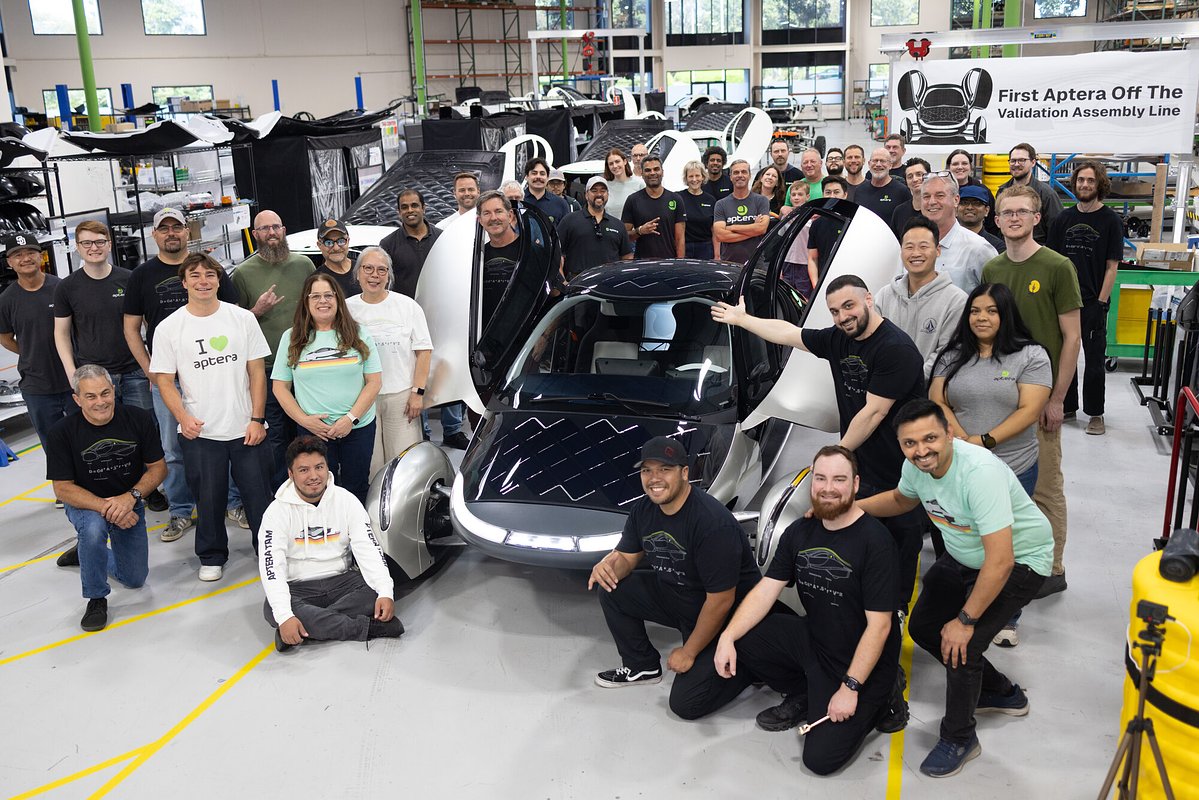
Aptera's Solar EV Rolls Off Line, Nearing Production Reality
CARLSBAD, CA – March 03, 2026 – Aptera Motors Corp. (NASDAQ: SEV) has achieved a critical operational milestone, completing the first vehicle off its new validation assembly line. The event marks a pivotal moment for the solar mobility company, signaling a transition from years of hand-built prototypes to a structured manufacturing process, and moving its futuristic, ultra-efficient vehicle one giant leap closer to regulatory approval and customer driveways.
For the nearly 50,000 reservation holders who have placed deposits on the distinctive three-wheeled electric vehicle, this is the most tangible sign of progress to date. The vehicle, with its radical teardrop shape and integrated solar panels, has long been a fixture in automotive news, but its journey from concept to production has been protracted. Now, with a physical car emerging from a repeatable assembly process, the company is finally on the cusp of validating its ambitious design for the real world.
From Hand-Built to Assembly Line
The completion of this first vehicle is more than a symbolic victory; it represents a fundamental shift in Aptera's operational strategy. The company is moving away from the one-off, artisan-style construction of its initial test models and into the disciplined world of series manufacturing. The low-volume validation assembly line, comprised of 14 dedicated stations, is the proving ground for this new chapter.
Here, teams of vehicle line technicians are meticulously assembling vehicles to verify and refine every step of the process. This structured environment allows Aptera to optimize build sequences, improve assembly procedures, and finalize station layouts. It is a dress rehearsal for the high-volume production required to satisfy a reservation list that represents over $2 billion in potential revenue.
“The completion of the first vehicle off our low-volume assembly line is a significant achievement for the entire company,” said Steve Fambro, Co-CEO of Aptera. “These first vehicles will be used to complete the key tests and optimization required to sell our first vehicles to customers.”
This methodical approach is essential for a vehicle built unlike any other. Aptera's unique Body-in-Carbon (BinC) structure, a lightweight and incredibly strong carbon-fiber monocoque, requires specialized manufacturing techniques. The validation line is where the theory of assembling this advanced composite body meets the practical reality of the factory floor, ensuring each vehicle can be built to the same exacting standards of quality and safety.
The Gauntlet of Validation and Financial Realities
The vehicles now rolling off this line are not destined for customers just yet. Instead, they form a critical fleet allocated to a battery of grueling tests. This includes thermal validation to test performance in extreme heat and cold, brake performance trials, and a series of destructive tests, including crash simulations. The data gathered is indispensable for achieving the necessary regulatory milestones, including self-certification under U.S. federal motor vehicle safety standards and obtaining final approval from the Environmental Protection Agency (EPA).
While this operational progress is promising, Aptera faces the concurrent challenge of navigating the high-stakes financial landscape of an EV startup. The company recently raised approximately $9 million in a public offering to support these validation builds and production preparations. However, industry analysis indicates the company is burning through cash quickly—a common but perilous phase for pre-revenue hardware companies. While its debt-to-equity ratio is low, the capital required to transition from low-volume validation to full-scale mass production is immense.
Success hinges on converting its nearly 50,000 non-binding reservations into firm sales. Unlike a traditional order, these reservations can be canceled at any time, making it crucial for Aptera to maintain momentum and build confidence. The company’s ability to successfully complete certification and stick to its target of initial deliveries later this year will be the ultimate test of its ability to turn market enthusiasm into sustainable revenue.
Redefining the Daily Commute
Should Aptera succeed, it could fundamentally alter personal transportation habits. The vehicle's primary competitive advantage is its radical commitment to efficiency. The lightweight, aerodynamic design is engineered to slip through the air with minimal resistance, allowing it to achieve a projected range of up to 400 miles on a single charge.
More revolutionary is its integrated solar technology. The vehicle's surface is embedded with solar cells capable of generating enough energy to power up to 40 miles of driving per day in sunny climates. For the average American commuter, this could mean rarely, if ever, needing to plug the vehicle in. This promise of energy independence and freedom from charging infrastructure is a powerful differentiator in a crowded EV market.
Of course, its unique design also defines its limitations. The two-passenger, three-wheeled configuration places it in a niche category, unlikely to replace the family SUV. Yet, for a significant segment of the population commuting alone or in pairs, the Aptera presents a compelling case for a new kind of daily driver—one that minimizes both environmental impact and energy costs.
As Aptera continues to expand its validation fleet in the coming weeks, all eyes will be on its progress through the final stages of testing and certification. The growth of its assembly and integration team into the company's largest functional department underscores its singular focus on execution. For a company that has been on a long and winding road since 2006, this milestone brings its solar-powered dream tantalizingly close to the pavement.
Topics & Related
Software & SaaS
ESG
Corporate Finance
Related Company Pulse