
- Price: $1,199 USD ($1,499 CAD)
- Power: Dual 500W motors with 2,000W peak power
- Range: Up to 32 miles (51 km) per charge
Experts would likely conclude that the Apollo Go Stellar represents a strong value proposition for urban commuters seeking high performance and practicality, though its real-world utility may be limited by varying local regulations.
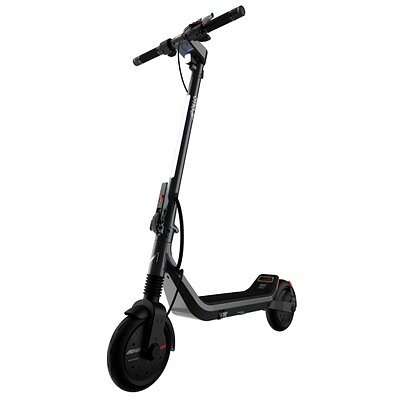
Apollo Go Stellar: Dual-Motor Power Meets Commuter Practicality
MONTREAL, QC – April 08, 2026 – Apollo Scooters, a prominent name in North America's personal mobility market, today launched the Apollo Go Stellar, an electric scooter engineered to blend high-octane performance with the daily-use demands of urban commuting. Priced at $1,199 USD ($1,499 CAD), the new model enters a bustling market with a clear proposition: delivering the power of a dual-motor setup in a compact, ride-ready package.
Following the success of its predecessor, the Apollo Go, the Go Stellar elevates the offering with significant upgrades. It aims to capture the attention of riders who crave more than what a basic, single-motor scooter can provide but are unwilling to sacrifice the portability essential for city life. The scooter is available now in the United States and Canada, with an Australian release planned for the near future.
A New Standard for Commuter Performance
At the heart of the Apollo Go Stellar are its dual 500W motors, which combine to produce a formidable 2,000W of peak power. This translates to brisk acceleration from a standstill and the torque needed to conquer steep city hills that would bog down lesser scooters. The company claims a top speed of 32 MPH (50 km/h), placing the Go Stellar in a performance category typically occupied by larger, more expensive models.
"The Apollo Go Stellar was built for riders who want a true commuter electric scooter that feels compact but performs far beyond its size," stated Eloi, CTO at Apollo Scooters, in the official press release. This statement underscores the company's strategy of targeting a specific gap in the market for a powerful yet manageable scooter.
Powering this performance is a 48V 13.45Ah battery, which Apollo claims provides up to 32 miles (51 km) of real-world range on a single charge. This capacity is designed to comfortably handle a round-trip commute or a full day of urban errands without inducing 'range anxiety,' a primary concern for many electric vehicle users.
Built for the Realities of the Urban Jungle
Beyond raw power, the Go Stellar is equipped with a suite of features designed to address the practical pain points of daily riding. Perhaps most notably, it comes standard with 9.5-inch front and rear self-healing tires. This technology, which automatically seals small punctures, is a direct response to one of the most common and frustrating maintenance issues for scooter owners, promising fewer rides cut short by a flat.
Further enhancing its commuter credentials is an IP66 water-resistance rating. This level of protection against dust and powerful water jets is a significant differentiator, positioning the Go Stellar as a reliable, all-weather vehicle. While many competitors caution against riding in the rain, Apollo's high IP rating, also seen on its premium Apollo City Pro model, suggests a build quality meant to withstand the unpredictable conditions of a daily commute.
Ride comfort is addressed by a dual spring suspension system, designed to absorb the bumps and cracks of imperfect city pavement. For stopping power, the scooter relies on a combination of a rear drum brake and regenerative braking. This hybrid system offers reliable stopping while also recapturing kinetic energy during deceleration to feed back into the battery, incrementally extending its range. Full integration with the Apollo App for iOS and Android also allows riders to track ride data, customize performance settings, and utilize GPS tracking from their smartphone.
Navigating a Crowded and Complex Market
The Go Stellar arrives as the global micromobility market is experiencing explosive growth, with projections showing a compound annual growth rate of nearly 13% through 2033. Consumers are increasingly drawn to electric scooters as a cost-effective, eco-friendly solution to urban congestion. However, the market is crowded, and brands must work hard to stand out.
Apollo's strategy appears to be carving out a niche for the 'pro-commuter'—a rider who has graduated from entry-level needs and now demands performance, durability, and convenience. By bundling dual-motor power with practical features like self-healing tires and a high water-resistance rating at a sub-$1,200 price point, the company is making a strong value proposition. It challenges both the less powerful single-motor scooters in the same price bracket and the heavier, more expensive dual-motor 'beast' scooters that sacrifice portability.
The Unseen Hurdle: Regulation
While the Apollo Go Stellar's specifications are impressive on paper, its real-world utility will be intrinsically linked to the patchwork of local laws governing electric scooters across North America. The scooter's 32 MPH top speed and 2,000W peak power push it beyond the typical legal definitions of a low-speed electric vehicle in many jurisdictions.
In the United States, regulations are a complex mosaic of state and city ordinances. Many states cap e-scooter speeds at 15 or 20 mph and motor power at 750W. A vehicle exceeding these limits, like the Go Stellar, could potentially be reclassified as a moped or motor vehicle, which may require a driver's license, registration, and insurance—a significant departure from the 'hop-on-and-go' appeal of a commuter scooter.
Similarly, in Canada, many provinces and municipalities operate under pilot programs with strict rules. For instance, common provincial frameworks cap motor power at 500W and speed at 24 km/h (15 mph) for a scooter to be treated like an e-bike. The Go Stellar's capabilities far exceed these limits, which could restrict its use to private property in some areas or subject it to more stringent motor vehicle laws. This regulatory friction places a significant burden on the consumer to research and comply with their local ordinances, as operating the scooter at its full potential may be illegal on public roads. This gap between a scooter's technical capabilities and its legally permissible use remains one of the greatest challenges for the high-performance segment of the micromobility market.