
- 34.5 million passengers: Amtrak carried 34.5 million passengers in fiscal year 2025, surpassing pre-pandemic figures.
- 900,000 minutes of delay: Freight train interference caused over 900,000 minutes of delay to Amtrak passengers in 2023.
- $18 billion investment: Amtrak plans to spend $18 billion on capital projects through 2026 to modernize infrastructure.
Experts agree that Amtrak's ability to handle the 2026 summer surge will be a critical test of its infrastructure and operational readiness, with reliability and capacity being key concerns.
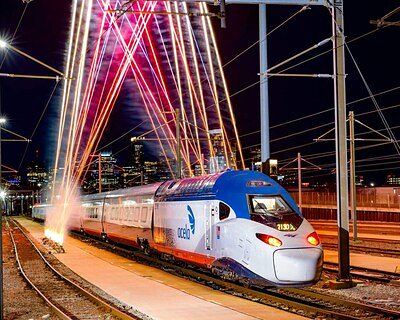
Amtrak's 2026 Gauntlet: Can Rail Handle a Historic Summer Surge?
WASHINGTON, DC – February 02, 2026 – With the nation gearing up for an unprecedented summer of celebration and sport, Amtrak is sounding the alarm for travelers: book now, or risk being left at the station. The summer of 2026 is poised to be one of the most consequential travel periods in recent American history, driven by the dual magnets of the FIFA World Cup 2026™ and the nationwide America250™ festivities. Anticipating a surge that could shatter its 55-year ridership records, the national passenger railroad is making a full-court press to prepare its aging infrastructure and expanding fleet for the ultimate stress test.
In a statement released today, Amtrak urged customers to secure their travel plans well in advance for what it expects to be an exceptionally busy season. The confluence of over 100 World Cup matches across North America and widespread celebrations for the 250th anniversary of the Declaration of Independence is projected to draw millions of domestic and international visitors, many of whom will look to the rails for city-to-city travel.
"Amtrak is excited to welcome soccer fans from North America and across the globe as they cheer on their home nation teams and travel between cities for matches," said Amtrak President Roger Harris. "With more than 300 daily trains, Amtrak is prepared to play a key role in delivering safe and reliable intercity travel this summer."
Officials see the moment as a unique opportunity to put American transportation on the world stage. "To see America is to love America," added U.S. Transportation Secretary Sean P. Duffy, emphasizing that rail will help thousands of fans from around the world reach stadiums across the country.
A System Already Under Pressure
Amtrak's warning comes as the rail operator navigates a period of significant growth and persistent challenges. The company has seen a remarkable post-pandemic rebound, carrying nearly 34.5 million passengers in fiscal year 2025, marking a second consecutive year of growth that surpasses pre-pandemic figures. Ridership on the vital Northeast Corridor (NEC) has been particularly robust, with a 7.6% gain in the first quarter of fiscal 2026 alone.
However, this rising demand is straining a system that already struggles with performance issues. On-time performance remains a critical concern, particularly outside the Amtrak-owned NEC. According to data from the Federal Railroad Administration (FRA), freight train interference is a primary culprit, causing over 900,000 minutes of delay to Amtrak passengers in 2023. While some routes have seen improvements, many national network services frequently fail to meet the 80% on-time performance standard.
This reality raises the stakes for 2026. With millions of fans and tourists operating on tight schedules to attend World Cup matches and anniversary events, the reliability of the rail network will be under intense scrutiny. A significant increase in passenger volume could amplify the impact of any delays, creating logistical headaches for travelers and a public relations nightmare for Amtrak and its host railroads.
Reinforcing the Rails for a Summer Spotlight
In anticipation of the surge, Amtrak is channeling unprecedented capital into its infrastructure, particularly along the critical Northeast Corridor connecting Boston, New York, Philadelphia, and Washington, D.C. In fiscal year 2023, the company made its largest-ever annual capital investment of nearly $3 billion, part of a projected $18 billion capital spend through 2026. This funding is aimed at modernizing a system where some tunnels, bridges, and signal systems are over a century old.
Key projects intended to bolster the network's reliability and capacity are underway. These include the Frederick Douglass Tunnel Program in Baltimore, the Portal North Bridge Project in New Jersey, and the massive Hudson Tunnel Project under the Gateway Program. While these long-term projects will not be complete by 2026, the ongoing work and targeted investments are designed to strengthen the core of the network ahead of the summer rush.
For the events themselves, Amtrak is planning more immediate tactical measures. On major gamedays, additional maintenance crews and rescue locomotives will be staged at strategic locations to mitigate service disruptions quickly. The railroad also plans to minimize maintenance-related track outages during the peak summer period to ensure maximum service availability for its own trains and its commuter rail partners.
New Trains, More Staff, and a Warning to Travelers
The strategy for 2026 extends beyond the tracks to the trains and stations. A central element of Amtrak’s plan is the continued rollout of its new NextGen Acela fleet on the Northeast Corridor. These new high-speed trainsets are designed to increase seating capacity and offer an upgraded passenger experience. However, the program has been hampered by delivery and reliability issues, raising questions about how much new capacity will be available in time for the summer peak.
To manage the expected crowds on the ground, Amtrak will deploy specially trained "Amtrak Ambassadors"—management staff tasked with assisting frontline employees and customers at major stations. The Amtrak Police Department will also increase patrols and coordinate closely with local, state, and federal law enforcement to ensure security across the network.
Amtrak's collaboration extends to the highest levels, with participation in the White House Task Force on the FIFA World Cup 2026 and the U.S. Department of Transportation's Major Events Working Group. This coordination is already bearing fruit, with cities like Kansas City planning for an extra daily run of the Amtrak River Runner service starting in April 2026 to accommodate World Cup traffic.
For prospective travelers, the message is unambiguous: the time to plan is now. While Amtrak has not detailed specific pricing strategies, the strong advisory to book early signals that dynamic pricing will almost certainly be in effect. As demand climbs, so will fares, and tickets for popular routes connecting host cities like Philadelphia, the New York/New Jersey area, and Boston are likely to sell out. The summer of 2026 will not only be a test of Amtrak's operational readiness but also a pivotal moment demonstrating the role of passenger rail in America's transportation future.