
- 20-year low: America's blood supply is at its lowest level in two decades.
- 40% drop: The number of blood donors has decreased by 40% over the last two decades.
- 10% increase: Blood use at hospitals with trauma centers has risen by 10% since 2019.
Experts warn that the severe blood shortage poses an immediate threat to patient care, particularly for vulnerable populations, and requires urgent action to stabilize the supply through increased donations and long-term solutions.
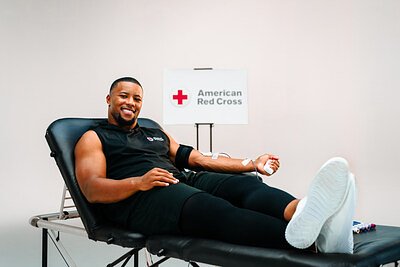
America's Blood Supply Hits 20-Year Low, Sparking Urgent Appeal
WASHINGTON, D.C. – January 05, 2026 – The American Red Cross has declared an emergency blood shortage, revealing that the nation's blood supply has dwindled to its lowest level in 20 years. Following a difficult holiday season marked by severe weather, widespread seasonal illness, and busy schedules, the organization is now distributing blood products to hospitals faster than donations are coming in. The crisis has become so acute that officials warn doctors may soon face the grim task of deciding which patients receive lifesaving transfusions and which must wait.
In an effort to avert this public health crisis during National Blood Donor Month, the Red Cross is launching an urgent appeal for donors. To galvanize the public, it has renewed its high-profile partnership with the National Football League (NFL). Anyone who donates blood or platelets between January 1 and January 25, 2026, will be automatically entered for a chance to win a trip for two to Super Bowl LX in Santa Clara, California. The campaign features Pro Football Champion Saquon Barkley, who is lending his voice to emphasize the critical need.
The Human Cost of a Critical Shortage
The current deficit is not just a statistic; it represents a clear and present danger to patient care across the country. According to recent data, some community blood centers are operating with less than a single day's supply on hand. This razor-thin margin leaves no room for error or unexpected demand, such as a multi-victim car accident, which can require as many as 100 units of blood.
Hospitals are already feeling the strain. A prolonged shortage forces them into contingency protocols that can include postponing non-urgent elective surgeries to conserve the limited supply for trauma cases and critical care. This creates a backlog of procedures and extends patient suffering. The most vulnerable are those who rely on a steady supply of blood products for survival, including cancer patients undergoing chemotherapy, individuals with sickle cell disease who require frequent transfusions, and premature infants.
The demand for blood has also been rising. Since 2019, there has been a 10% increase in blood use at hospitals with trauma centers. Rural hospitals are particularly susceptible during shortages, as they often have fewer local supply options and may be located hours from the nearest blood bank, making emergency replenishment a logistical nightmare.
A Systemic Crisis: The Two-Decade Donor Decline
While the post-holiday dip is a predictable seasonal challenge, it is superimposed on a much more alarming long-term trend. The Red Cross reports a staggering 40% drop in the number of people donating blood over the last two decades. Today, only about 3% of the eligible U.S. population donates annually, a small fraction of the 38% who could.
Demographic shifts paint a concerning picture of the future. The donor base is aging rapidly, with the average donor's age climbing from 44 to 51 in the last decade alone. While donations from adults over 25 have increased, there has been a catastrophic decline in younger donors. Between 2019 and 2021, donations from individuals aged 16-18 plummeted by over 60%, a decline largely attributed to the cancellation of high school and college blood drives during the COVID-19 pandemic. The rise of remote work has also dismantled another traditional pillar of blood collection: the workplace drive.
This generational gap in giving is creating a sustainability crisis. As a large portion of the most reliable donors ages out of eligibility over the next ten years, there is no guarantee that a new generation is ready to take their place, making the blood supply increasingly fragile and susceptible to disruptions.
The Super Bowl Play: Incentives and Influence
Faced with these systemic headwinds, organizations like the Red Cross are increasingly turning to sophisticated marketing strategies and high-value incentives to capture public attention. The seven-year partnership with the NFL, culminating in the Super Bowl LX giveaway, is a prime example of leveraging a massive cultural event to drive a public health initiative.
Research suggests these tactics are effective. Studies have shown that material incentives, from gift cards to lottery-style prizes, can significantly boost donation rates, particularly among first-time and younger donors who may need an extra push. Pro Football Champion Saquon Barkley's involvement aims to tap into the power of celebrity influence.
"I gave blood once in college and that was the only time I had ever been asked to give, until the Red Cross reached out," Barkley stated in the organization's release. "It was a no-brainer for me to give again. It only takes about an hour and once you realize in that short amount of time how much help it can bring – it's a beautiful thing."
Barkley's message addresses one of the most common reasons people don't donate: they were never asked. The campaign aims to make that direct ask on a national scale, using a trusted voice to transform a simple act of generosity into a lifesaving habit.
Beyond the Drive: The Search for a Sustainable Supply
While immediate donations are essential to navigate the current crisis, the recurring nature of these shortages is accelerating a search for long-term, technologically advanced solutions. Around the globe, biotech firms and researchers are working to solve the blood supply problem at its source.
Innovations in automation and robotics promise to make the donation process more efficient and less intimidating. Companies like Vitestro are developing autonomous devices that can perform venipuncture with robotic precision, potentially improving the donor experience and reducing staff workload. Other advancements focus on non-invasive collection methods and at-home testing kits.
The most transformative developments, however, may come from the lab. Several companies are in the advanced stages of developing artificial blood substitutes—synthetic oxygen carriers that could be universally compatible, free of disease, and stored for long periods. Israeli startup RedC Biotech and others are pioneering methods to mass-produce universal red blood cells from stem cells, a technology that could one day eliminate the reliance on human donors altogether.
For now, these solutions remain on the horizon. The blood currently needed to save a life can only come from another person. The Red Cross emphasizes that all blood types are needed, and a single donation can help save more than one life. To book a time to give, individuals can visit RedCrossBlood.org, use the Red Cross Blood Donor App, or call 1-800-RED CROSS.
Topics & Related
Digital Transformation
Revenue
Healthcare & Life Sciences
Software & SaaS
Related Company Pulse