
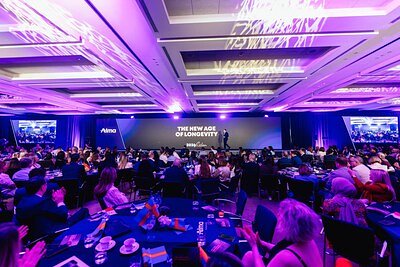
- 430 physicians from 45 countries attended the Alma Academy summit
- Alma's new model focuses on long-term skin health through regenerative healing and structural improvements
- The company's integrated ecosystem includes advanced diagnostics, personalized treatment planning, and interconnected technologies
Experts in the medical aesthetics field would likely conclude that Alma's 'longevity' care model represents a significant and necessary evolution in the industry, aligning with growing consumer demand for preventative, long-term skin health solutions.
Alma Redefines Aesthetics with New 'Longevity' Care Model
CAESAREA, Israel – April 28, 2026 – Global medical aesthetics leader Alma has unveiled a significant strategic pivot, introducing a “longevity approach” designed to shift the industry from episodic treatments to a continuous care model focused on long-term skin health. The new direction was announced by CEO Eyal Ben David at the company's global Alma Academy, an influential summit attended by 430 physicians from 45 countries.
The move repositions aesthetic medicine not as a series of interventions, but as a discipline of sustained performance, reflecting a profound change in both corporate strategy and the underlying philosophy of patient care. This new model aims to address evolving consumer demands for preventative care and measurable, lasting results.
Redefining Aesthetics as 'Performance Over Time'
At the heart of Alma’s announcement is a new vision for the future of skin health. The company is moving away from a paradigm centered on temporary fixes and toward one that prioritizes the skin's biological function and resilience over many years. In his address, CEO Eyal Ben David framed this evolution clearly.
"Longevity is redefining aesthetics as a discipline of performance over time," said Mr. Ben David. "The focus is on enhancing how skin functions, adapts, and maintains quality, through controlled biological responses that drive regeneration, resilience, and structural improvement."
This philosophy marks a departure from purely cosmetic enhancement. Instead, it emphasizes activating the skin's own regenerative capabilities to achieve structural improvements that last. The approach is grounded in the science of cellular health, targeting the underlying mechanisms of aging, such as fibroblast activity, collagen and elastin production, and immune system regulation. By stimulating these natural processes, the goal is to foster regenerative healing rather than simply masking symptoms or inducing temporary changes. This allows practitioners to offer outcomes that are not only visible but are also indicative of healthier, better-functioning skin at a biological level.
An Integrated Ecosystem for Continuous Care
To execute this vision, Alma is rolling out what it calls "the operating system of modern aesthetics." This is not a single device but an integrated, end-to-end system designed to manage the entire patient journey. It suggests a platform-based approach that combines advanced diagnostics, personalized treatment planning, a suite of interconnected technologies, and ongoing patient management.
This ecosystem leverages Alma's extensive portfolio of clinically proven technologies, which includes energy-based lasers, injectables, and advanced skincare. For example, the Alma Hybrid fractional laser system, which combines ablative CO2 and non-ablative 1570 nm wavelengths, is a key component of this strategy. It is designed to facilitate deep structural renewal and long-term dermal remodeling by addressing the intrinsic and extrinsic factors of aging. The technology's ability to modulate the skin's immune response and stimulate regenerative pathways aligns perfectly with the new longevity philosophy.
This integrated approach enables practitioners to create highly personalized, long-term care plans. By starting treatments earlier in a patient's life and extending engagement over time, the model is built to deliver sustained, measurable outcomes. The concept of an "operating system" implies a more structured and potentially software-driven framework for managing these complex, multi-stage treatment plans, ensuring consistency and optimizing results throughout a patient's life.
Aligning with a New Era of Patient Expectations
Alma's strategic shift is not occurring in a vacuum. It is a direct response to a well-documented evolution in consumer behavior. Today's patients are more informed and proactive about their health, seeking solutions that offer more than just a quick fix. The demand for preventative care, often termed "prejuvenation," is rising, particularly among younger demographics who wish to slow the aging process before it becomes pronounced.
This new generation of aesthetic consumers prioritizes long-term results, personalized experiences, and a holistic approach to wellness. They are less interested in one-off procedures and more invested in comprehensive plans that maintain and improve their skin health over time. Alma's longevity model is explicitly designed to meet these expectations, empowering patients by involving them in a continuous journey toward sustained skin performance.
By focusing on prevention and long-term management, the company is tapping into a significant market trend that values authenticity and lasting wellness over temporary cosmetic changes. This patient-centric model builds trust and fosters a collaborative relationship between the practitioner and the patient, transforming the dynamic from a simple service provider to a long-term health partner.
A Strategic Blueprint for Practice Transformation
Beyond the philosophical and clinical innovations, Alma's longevity approach represents a sophisticated business strategy aimed at securing long-term growth and market leadership. By creating a framework for continuous care, the company provides a pathway for aesthetic practices to evolve their own business models. This shift can lead to more predictable, recurring revenue streams through subscription-style programs or packaged long-term treatment plans, moving away from the financial uncertainty of single-procedure sales.
This model promises to build deeper patient loyalty. When patients are engaged in a long-term plan with measurable progress, they are more likely to remain with a single practice, creating a stable and growing client base. For practitioners, this means building a reputation for delivering consistent, high-quality results and differentiating their clinic in a competitive market.
However, adopting this model is not without its challenges. It will require practitioners to invest in training and potentially restructure their practice management to handle ongoing patient journeys effectively. Educating patients on the value proposition of a continuous care plan—which may involve a different financial commitment than they are used to—will be crucial for successful implementation. Alma's commitment to education, as demonstrated by the global Alma Academy, will be a critical factor in helping its partners navigate this transformation and fully realize the potential of this new standard in aesthetic care.