
- 30-45% of orthodontic patients globally are affected by Class II malocclusion (overbite).
- 42.5% of digitally planned overjet correction was achieved in a 2024 study of Invisalign's mandibular advancement appliance.
- 20% of patients in the same study finished treatment with a larger overjet than they started with.
Experts acknowledge the potential of Align Tech's new Teen Aligner for improved patient comfort and compliance but caution that real-world outcomes may not yet match the promises of digital precision, particularly for complex skeletal corrections.
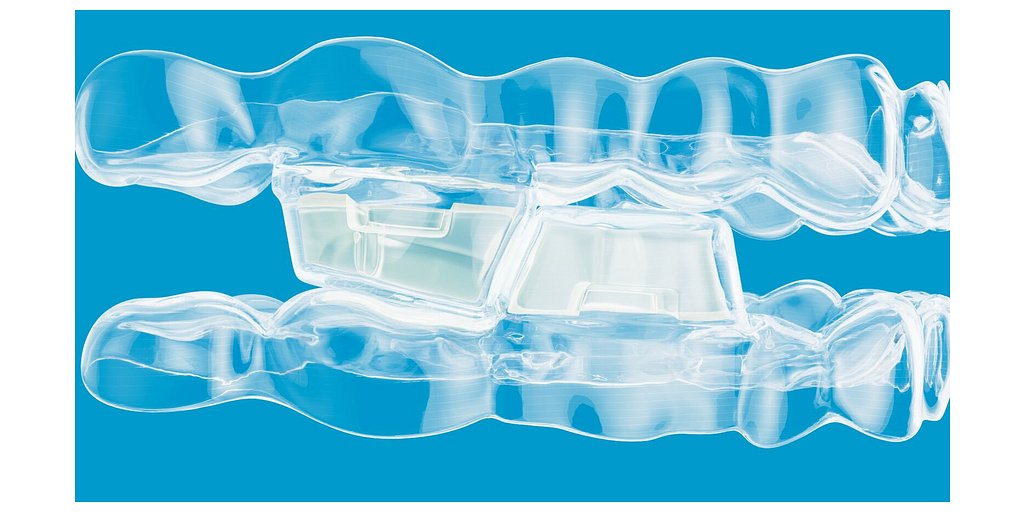
Align Tech's New Teen Aligner: A Smile Revolution or Digital Overpromise?
MANILA, Philippines – November 24, 2025
For generations, correcting a significant overbite during the teenage years often meant a rite of passage involving cumbersome, highly visible hardware. Bulky headgear or interlocking plastic blocks, known as functional appliances, have long been the orthodontic standard for guiding jaw growth. Now, Align Technology, the company behind the ubiquitous Invisalign clear aligners, is making a bold move to relegate those devices to history. With the recent commercial launch of its Invisalign System with mandibular advancement featuring occlusal blocks across the Asia-Pacific region, the company is promising a sleeker, more comfortable path to a perfect smile for one of orthodontics' most common and complex challenges.
The new system integrates solid blocks directly into its clear aligners, designed to gently guide a teenager's growing lower jaw forward while simultaneously straightening their teeth. It's a single, integrated solution targeting Class II malocclusion—the clinical term for an overbite where the lower jaw is set too far back—a condition that affects an estimated 30-45% of orthodontic patients globally. The pitch is compelling: replace a multi-stage, often socially awkward process with one discreet, removable appliance. But beyond the launch, the critical question is whether this high-tech evolution can deliver on its ambitious promises of clinical superiority.
The Patient Revolution: A New Smile Without the Metal?
The core appeal of Align Technology's innovation lies in its potential to transform the patient experience. Traditional functional appliances, like the Twin Block and the fixed Herbst appliance, are effective but come with significant trade-offs. Studies and anecdotal reports have long highlighted issues with patient compliance, comfort, and self-esteem. One study found that patients using the removable Twin Block appliance were more likely to feel embarrassed, with a treatment failure rate as high as 37.5% in some cohorts due to patients discontinuing use.
“The enhanced comfort of the Invisalign occlusal blocks increases predictability—because comfort leads to patient compliance–and compliance leads to better outcomes,” said Dr. Ronald Sluiter, a New Zealand-based orthodontist quoted in the company’s announcement.
Align’s system, made from its patented, flexible SmartTrack™ material, aims to sidestep these issues. It's removable for eating and cleaning, and its transparent design makes it far less conspicuous than its predecessors. However, the pursuit of comfort is not without its own challenges. A 2021 survey comparing Invisalign's mandibular advancement feature to the Twin Block appliance found that while Invisalign users felt less noticeable, they also reported more consistent tooth and soft tissue soreness. This is likely because the appliance is performing two jobs at once: shifting the jaw and moving individual teeth. Nonetheless, for many families, the prospect of avoiding the social stigma and breakages associated with traditional hardware may be a powerful draw.
A Strategic Bite into the Youth Market
This product launch is far more than an incremental update; it represents a calculated strategic offensive to capture the lucrative adolescent orthodontics market. The Asia-Pacific region, a key focus for this rollout, is a hotbed of growth. The APAC orthodontic supplies market was valued at nearly $2 billion in 2024 and is projected to more than double by 2032. The clear aligner segment is expanding at an even more blistering pace, with a projected compound annual growth rate of nearly 29% through 2030.
By developing a solution for complex skeletal issues in teens, Align is moving its technology beyond simple cosmetic straightening and positioning it as a direct competitor to the foundational treatments that orthodontists have relied on for decades. The goal is to establish the company's digital workflow—from iTero intraoral scans to the final aligner—as the definitive standard of care for patients of all ages. Success here would not only secure a new revenue stream but also embed the Invisalign system into orthodontic practices for the entire patient lifecycle, from early intervention to adult touch-ups.
This battlefield is not empty. Competitors are racing to offer similar solutions. Ormco's Spark™ Aligners, for example, feature a system designed for Class II correction, and 3M's Clarity™ Aligners are also marketed for treating complex overbites. Align's innovation with integrated, solid occlusal blocks is its attempt to differentiate itself by claiming superior durability and efficiency, particularly for deep bite cases where treatment can now allegedly begin sooner.
The Clinical Divide: Predictable Breakthrough or Digital Hype?
While the marketing presents a seamless digital journey to a perfect smile, a more complex picture emerges from independent clinical analysis. The central claim of “predictable tooth movement” is facing significant scrutiny from the orthodontic community.
A revealing 2024 retrospective study published in the prestigious American Journal of Orthodontics and Dentofacial Orthopedics delivered a sobering assessment of a previous iteration of Invisalign's mandibular advancement appliance. Analyzing 195 patients, researchers found that, on average, only 42.5% of the digitally planned overjet correction was actually achieved. Furthermore, less than a third of the planned molar correction materialized, and in a startling outcome, nearly 20% of patients finished treatment with an even larger overjet than they started with.
This discrepancy between the digital plan and the physical result fuels skepticism among some practitioners. “There is a tendency to fall for the 'cookie-cutter mentality' that these systems can promote,” commented one academic orthodontist not affiliated with the company. “True Class II correction is complex. It requires a deep understanding of a patient's unique growth patterns, something that can't always be pre-programmed by a technician.” Professional bodies like the Australian Society of Orthodontists have echoed these concerns, cautioning that while aligners are a valuable tool, case selection is critical, and clinicians must understand the system's limitations.
Align Technology and its affiliated doctors maintain that the system is a breakthrough. The press release highlights orthodontists who report that outcomes are “on par with traditional Clark Twin Blocks” and that the new solid block design has eliminated issues with crushing and damage. Dr. Mitra Derakhshan, Align's Chief Clinical Officer, stated that the integrated blocks make the system a “versatile solution” for various types of overbites.
Ultimately, the impact of this innovation will be decided not in press releases, but in clinics across the globe. The technology presents a compelling proposition: a more humane and aesthetically pleasing journey through a difficult phase of adolescent orthodontics. Yet, its success hinges on its ability to consistently and predictably deliver the same skeletal and dental corrections that traditional, albeit cumbersome, appliances have provided for decades. As orthodontists weigh the promise of digital efficiency against the evidence of real-world outcomes, they will determine whether this new system truly marks a new standard of care or simply a more comfortable, but potentially less certain, alternative.