
- 11-gigawatt private energy campus being built in Texas to power AI industry
- 80% reduction in water consumption with hybrid cooling system compared to conventional methods
- 99-year land lease with Texas Tech University System for Project Matador
Experts would likely conclude that Fermi America's adoption of hybrid cooling technology represents a critical step in balancing the energy demands of AI with the need for water conservation in resource-constrained regions like West Texas.
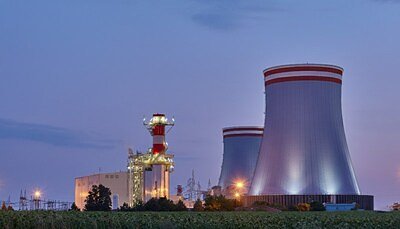
AI's Thirst: How Hybrid Cooling Unlocks a Texas Energy Megaproject
AMARILLO, TX – December 01, 2025 – In the arid plains of West Texas, where the future of the vital Ogallala Aquifer is a constant concern, a project of unprecedented scale is taking shape. Fermi America, a company with ambitions as vast as the Texas sky, is building an 11-gigawatt private energy campus to quench the insatiable thirst of the artificial intelligence industry. But the most critical resource for this energy behemoth isn't uranium or natural gas; it's water. A new agreement, however, signals a strategic pivot that could redefine how large-scale digital infrastructure is built in resource-constrained environments.
Fermi America has signed a Memorandum of Understanding (MOU) with MVM EGI, a Hungarian engineering firm, to develop a next-generation hybrid cooling system for its "Project Matador." This isn't just a technical add-on; it's a foundational decision that directly confronts the project's most significant environmental and social risk. By committing to a technology that promises to reduce water consumption by over 80% compared to conventional systems, Fermi is attempting to strike a delicate balance between its goal of powering the AI revolution and its pledge to be a responsible steward of West Texas's most precious natural resource.
An Oasis of Innovation
The core of the agreement lies in the deployment of MVM EGI's indirect hybrid dry–wet cooling towers. This technology represents a crucial departure from the massive, steam-belching towers traditionally associated with large power plants. Instead of relying primarily on evaporating vast quantities of water to dissipate heat, the hybrid system prioritizes air-based cooling. Water is used as a supplement during peak temperature periods, circulated within a closed-loop system to minimize evaporative loss.
MVM EGI is no newcomer to this field. The company's expertise is built upon the legacy of the "Heller System," a pioneering indirect dry cooling technology developed by its founders over 70 years ago. With a portfolio of over 800 projects worldwide, MVM EGI has a proven track record, including providing cooling solutions for the world's only dry-cooled nuclear power plant in Bilibino, Russia, which has operated for decades. This history provides a crucial layer of validation for a technology that will be essential to Project Matador's viability.
Under the MOU, the two companies will adapt this proven platform for the specific climate challenges of West Texas. The phased engineering work, set to begin with a first tower in January 2026, will involve detailed modeling to optimize performance, define cooling requirements for both the 6 gigawatts of natural gas and four AP1000 nuclear units, and assess site constraints. The collaboration also extends to evaluating the use of recycled water and innovative storage solutions like underground reservoirs and solar-covered retention ponds, demonstrating a multi-pronged strategy to protect the aquifer.
"MVM EGI has been on the cutting-edge of power cooling for more than half a century," stated MVM EGI CEO Péter Kárpáti, reinforcing the partnership's focus. "We are pleased to partner with Fermi America... to ensure efficient and responsible cooling... in line with our motto: Less water, more power."
The West Texas Grand Bargain
The stakes for the region are immense. Project Matador represents a monumental economic investment, promising jobs and anchoring Texas as a hub for the physical infrastructure that underpins the digital economy. Yet this promise is set against the backdrop of the Ogallala Aquifer's steady decline. As the primary source of water for agriculture and communities across the High Plains, any new, large-scale industrial consumer is met with intense scrutiny.
Fermi America's leadership appears keenly aware of this dynamic. By making water conservation a central pillar of the project from its inception, the company is proactively addressing what would inevitably become a major point of local opposition. The message is clear: economic development and environmental stewardship are not mutually exclusive. This is less a concession and more a strategic necessity.
"Fermi isn't some out-of-town operation parachuting in," stated Co-Founder and CEO Toby Neugebauer, a West Texas native. "Our leadership is from West Texas — we grew up on this dirt, and we care about the land and its resources. As promised, we're working with global innovators like MVM to ensure Project Matador complements the long-term water needs of the region, building something big, but doing it the right way."
The partnership with the Texas Tech University System, which involves a 99-year land lease, further embeds the project within the local fabric. This long-term commitment ties Fermi America's financial success directly to the sustained health of the region's ecosystem and economy, creating a powerful incentive for responsible operation.
A Private Grid to Power the AI Data Center Boom
Beyond its environmental implications, Project Matador represents a paradigm shift in the energy sector. It is a leading example of the move toward private, vertically integrated energy grids built for a single, massive purpose. The traditional model of relying solely on the public utility grid is proving insufficient for the hyperscale data centers that power modern AI, which demand unprecedented amounts of reliable, redundant power.
By developing an 11-gigawatt campus that integrates combined-cycle natural gas, advanced nuclear, solar, and battery storage, Fermi America aims to offer "behind-the-meter" power directly to its AI clients. This model provides energy independence, cost certainty, and the high level of reliability that is non-negotiable for AI workloads. The involvement of high-profile founders like former U.S. Energy Secretary Rick Perry lends significant political and industrial credibility to this ambitious strategy.
This project is a physical manifestation of digital risk management. As AI becomes more critical to global business and security, the stability of its underlying power infrastructure becomes a paramount concern. A private grid like Project Matador is a direct response to that risk, designed to insulate power-hungry AI operations from the vulnerabilities of an aging public grid. The decision to secure its water supply with advanced technology is an extension of that same risk-mitigation strategy, addressing a critical physical dependency that could otherwise halt progress. How Fermi America navigates this complex interplay of technology, resources, and community trust will not only determine the success of Project Matador but could also write the playbook for the next generation of digital infrastructure development worldwide.