
- Seat pitch increased: From 31 inches to 33 inches in economy class
- Seats removed: 18 seats per Boeing 787-9 Dreamliner, reducing capacity from 344 to 326
- Ancillary revenue goal: Aiming to grow from 6.2% to 10% of total income
Experts would likely conclude that Air Premia's strategy of prioritizing passenger comfort over seat density is a calculated risk that could redefine long-haul travel by blending cost efficiency with premium amenities.
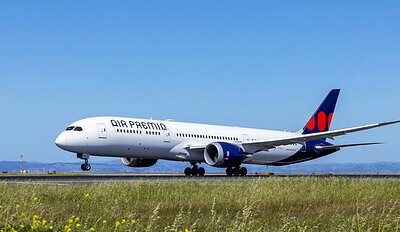
Air Premia's Legroom Gamble: More Comfort, Fewer Seats on Long Haul
SEOUL, South Korea – March 16, 2026 – In an airline industry often defined by shrinking personal space, South Korea's hybrid carrier Air Premia is making a decidedly contrarian move. The airline has begun reconfiguring its aircraft to offer passengers more legroom in economy class, a decision achieved by physically removing seats—a strategy that directly challenges the prevailing wisdom of maximizing seat density to boost revenue.
Air Premia announced that its Boeing 787-9 Dreamliner, registered as HL8701, has re-entered service with a newly spacious economy cabin. The seat pitch—the distance from a point on one seat to the same point on the seat in front—has been increased from a standard 31 inches to a generous 33 inches. This enhancement came at the cost of 18 seats, reducing the aircraft's total capacity from 344 to 326. This isn't a one-off adjustment; it's part of a fleet-wide initiative that signals a bold bet on a simple premise: for long-haul travel, comfort is not a luxury, but a commodity worth investing in.
A Contrarian Bet on Profitability
The standard playbook for low-cost and hybrid airlines, particularly on competitive long-haul routes, involves maximizing the number of passengers per flight. More seats traditionally mean more potential revenue, a straightforward calculation that has led to the industry-wide trend of 'densification'. Air Premia is deliberately flying against this current, wagering that a superior passenger experience will create a more sustainable business model in the long run.
By removing seats, the airline is sacrificing potential ticket sales on every flight operated by the reconfigured aircraft. However, this move is a calculated risk. The airline appears to be banking on the belief that a more comfortable cabin will translate into higher load factors, increased customer loyalty, and a greater willingness from passengers to choose Air Premia over its competitors. Furthermore, a more spacious 'standard' economy seat can serve as a powerful marketing tool, attracting travelers who might otherwise pay a premium for extra-legroom seats or premium economy on other carriers.
This strategy also aligns with the airline's focus on ancillary revenue, which it aims to grow from 6.2% to 10% of total income. While offering a better base product, the airline can still strategically price desirable seats and other add-ons, potentially offsetting the revenue from the removed seats. It’s a sophisticated play that repositions the value equation from pure price competition to a blend of cost and comfort.
Setting a New Standard in the Sky
With its commitment to a 33-inch seat pitch, Air Premia is not just improving its own service; it's positioning its economy class to compete directly with full-service legacy carriers. For context, the standard economy pitch on many international airlines ranges from a tight 30 to 32 inches. Air Premia's new configuration places it on par with, or even ahead of, some of the world's most recognized airlines.
Major full-service competitors like Korean Air and Asiana Airlines typically offer between 32 and 34 inches of pitch in their long-haul economy cabins. By offering 33 inches as a standard, Air Premia effectively erases a key comfort differentiator between itself and these premium carriers, while maintaining its hybrid cost structure. This makes its offering particularly compelling when compared to other long-haul, low-cost operators, which often provide the bare minimum of 30-31 inches.
This move elevates Air Premia’s economy product into the territory of airlines frequently lauded for comfort, such as Japan Airlines, which often features a 33- to 34-inch pitch and has been awarded for its economy class seating. For passengers, this means a near-premium level of comfort is now available at a potentially more accessible price point, blurring the lines between airline categories.
Beyond Legroom: A Greener, Branded Cabin
Air Premia's cabin refresh extends beyond just seating space. The airline has also installed new cabin carpets that serve a dual purpose: enhancing brand identity and improving operational efficiency. Produced using digital printing technology, the new carpets subtly incorporate the airline's branding into the cabin's interior design.
More significantly, these new carpets are lighter than their predecessors. In aviation, every kilogram counts. Reducing an aircraft's weight leads directly to lower fuel consumption and, consequently, reduced carbon emissions. According to industry data, even a minor weight reduction can result in substantial annual fuel savings. A 1% reduction in aircraft weight can decrease fuel burn by approximately 0.75%.
This focus on lightweight materials is part of a larger industry trend towards sustainability. Airlines worldwide are investing in lighter seats, carts, and cabin materials to improve fuel efficiency. By integrating this eco-friendly measure into its comfort-focused upgrade, Air Premia demonstrates a holistic approach to modernizing its fleet, aligning the passenger experience with environmental responsibility.
The Long-Haul Strategy
This cabin reconfiguration is not an isolated event but a cornerstone of Air Premia's long-term vision. The airline began this process in 2024, when it similarly reduced seat counts on two other aircraft to expand legroom. The company has stated its intention to upgrade its remaining high-density aircraft within the year, standardizing the 33-inch pitch across its fleet. Of its nine-strong fleet, only two aircraft are now awaiting the upgrade.
This strategic consistency is crucial as the airline pursues ambitious growth, with plans to expand its fleet to 15 aircraft by 2027 and launch an IPO by 2028. By creating a standardized, high-comfort product, Air Premia is building a strong brand identity aimed at a specific market: discerning long-haul travelers, including business passengers, millennials, and the large Korean diaspora, who seek value but are not willing to compromise on comfort for 10-plus hour flights.
"Air Premia is committed to continuously improving seat space and the cabin environment so that passengers traveling on long-haul routes can enjoy a more comfortable journey," an Air Premia official stated. "We will continue to introduce various service enhancements to further elevate the customer experience." This commitment to space and comfort may prove to be the key differentiator that allows the hybrid carrier to successfully carve out its niche in the competitive skies.