
- 178,000 women in Africa die annually from preventable pregnancy-related complications (WHO).
- Half of pregnant women in low-resource settings receive no ultrasound scans due to cost and lack of trained sonographers.
- The EDAN Nano OB Assist received CE marking, certifying compliance with EU safety and performance standards.
Experts view AI-powered ultrasound devices like the EDAN Nano OB Assist as a promising tool to bridge critical gaps in maternal care, particularly in underserved communities, by enabling minimally trained healthcare workers to perform essential prenatal assessments with accuracy comparable to traditional methods.
AI Ultrasound in Africa Offers Lifeline for Maternal Care
NAIROBI, Kenya – March 30, 2026 – A new pocket-sized, AI-powered ultrasound device launched in Kenya aims to confront one of Africa's most persistent public health crises: maternal mortality. The technology promises to place life-saving diagnostic capabilities into the hands of frontline healthcare workers, potentially transforming prenatal care for millions in underserved communities.
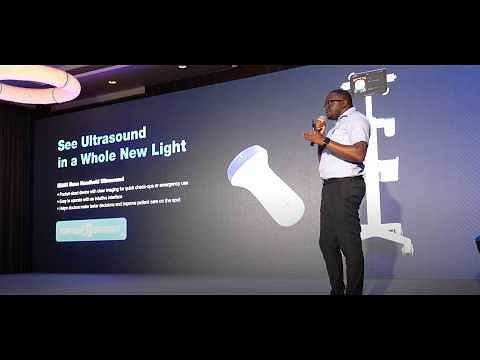
Edan Instruments, Inc., a global medical device company, unveiled its EDAN Nano OB Assist system at a launch event in Nairobi on March 23. The handheld device, which connects to a smartphone or tablet, uses artificial intelligence to simplify the complex process of obstetric ultrasound, a critical tool for identifying high-risk pregnancies.
A Tech-Driven Response to a Health Crisis
The need for such innovation is stark. According to the World Health Organization, approximately 178,000 women in Africa die each year from complications related to pregnancy and childbirth, many of which are preventable with early detection. While the WHO recommends at least one ultrasound scan before 24 weeks of gestation, access remains a significant barrier. In many low-resource settings, nearly half of all pregnant women receive no scans at all, largely due to the high cost of traditional equipment and a severe shortage of trained sonographers.
The EDAN Nano OB Assist is engineered to directly address these gaps. Its core innovation is an "AI-enabled blind sweep technology." This allows a caregiver, such as a nurse or midwife with minimal training, to perform a scan of the abdomen. The AI then automatically analyzes the images to identify key clinical measurements, including gestational age, the baby's position (fetal presentation), and the estimated delivery date.
"Access to ultrasound remains a critical gap in many parts of the world," said Lucas Lau, Product Manager of Ultrasound Imaging at EDAN, in a statement. "EDAN Nano OB Assist was developed to address this challenge by combining AI with a simplified scanning workflow, allowing more caregivers to perform essential prenatal assessments and helping extend care to communities where it is needed most."
From Shenzhen to Nairobi: A Strategic Push
The launch is more than a product release; it represents a significant strategic move by the Shenzhen-based company and reflects a broader trend of leveraging technology to address healthcare disparities in emerging markets. EDAN has been methodically building its presence on the continent, establishing its African operational hub in Kenya in 2022.
This local office provides warehousing, service, and training, a crucial component for ensuring the long-term sustainability of medical technology in regions where maintenance and support can be challenging. The company's equipment is already installed in many of Kenya's major Level 4-6 hospitals, including the Kenyatta University Teaching, Referral & Research Hospital (KUTRRH). This established footprint provides a foundation for the successful rollout of new, community-focused technologies like the Nano OB Assist.
By introducing an affordable, portable device, EDAN is positioning itself within a competitive but vital market. Other global health technology players, often with the backing of philanthropic organizations, are also developing similar portable ultrasound solutions, signaling a collective push toward democratizing medical imaging.
The Promise of AI-Powered Accessibility
The clinical potential of the technology hinges on its accuracy and ease of use. The EDAN Nano OB Assist recently received CE marking, a key certification that demonstrates its compliance with the European Union's stringent safety and performance requirements. This regulatory milestone underscores its readiness for clinical use.
While independent, peer-reviewed studies on this specific device are forthcoming due to its recent launch, the underlying concept of AI-assisted ultrasound for novices is supported by a growing body of research. Studies on similar technologies have shown that minimally trained users can estimate gestational age with an accuracy comparable to that of expert sonographers using high-end machines.
This ability to "flatten the learning curve" is what excites local healthcare professionals. At the Nairobi launch, the device's simplified workflow was demonstrated in a side-by-side comparison with a conventional ultrasound system, highlighting its potential for use in primary and community care settings where specialists are unavailable.
"In many settings, access to ultrasound remains limited, particularly at the primary and community care level," said Dr. Philip Ilara, a study coordinator at Jaramogi Oginga Odinga Teaching and Referral Hospital. "Technologies like Nano OB Assist, which simplify the scanning process and provide guided support, have the potential to help more healthcare providers perform essential assessments and improve early detection in maternal care."
Building an Ecosystem for Sustainable Impact
Deploying advanced technology in low-resource settings involves more than just an innovative device. Success requires an ecosystem of support that addresses challenges like inconsistent power, limited connectivity, and the need for continuous training. The Nano OB Assist is designed with these realities in mind, featuring low power consumption and quick charging via a standard Type-C cable.
Significantly, the launch event was attended by representatives from the Gates Foundation, one of the most influential forces in global health. The foundation has invested hundreds of millions of dollars to accelerate the development and adoption of AI-powered, portable ultrasound technology for maternal health. While the foundation's direct financial involvement with the EDAN device was not specified, its presence signals a strong alignment of goals. This places the Nano OB Assist within a well-supported global movement to ensure that a woman's access to life-saving care does not depend on her proximity to a major hospital.
This broader effort includes robust training initiatives. In Kenya, programs are already in place to build capacity, with institutions like the Kenya Medical Training College (KMTC) offering specialized courses in point-of-care ultrasound for midwives. By combining accessible technology with a commitment to local training and support, EDAN and its partners hope to create a sustainable model for improving maternal health outcomes across the continent.