
- 6.75 billion gallons: U.S. water systems lose this amount of treated drinking water daily, equating to 19.5% of all treated water.
- $6.4 billion: Annual cost of uncaptured revenue due to water loss.
- $625 billion: Estimated investment needed by 2041 to maintain the nation's clean drinking water supply.
Experts agree that AI-powered platforms like MizuWatch offer a critical, proactive solution to managing aging water infrastructure, reducing losses, and improving operational efficiency through real-time data analysis.
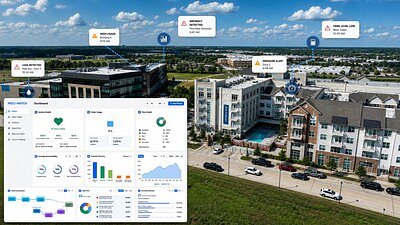
AI to Stem the Tide: How MizuWatch Plans to Plug America's Leaky Pipes
HOUSTON, TX – May 14, 2026 – In a move that blends real estate development with cutting-edge technology, Houston's McCord Development today launched MizuWatch®, an AI-powered intelligence platform aimed at tackling one of the nation's most pressing and costly infrastructure problems: water loss.
The platform, developed and tested within McCord's own 4,300-acre Generation Park, is designed to give water districts, operators, and municipalities the tools to detect leaks and system failures in near real-time, a significant departure from the industry's traditional, often delayed, review processes.
The Multi-Billion Gallon Problem
The challenge MizuWatch aims to solve is staggering in scale. While the press release cites an American Water Works Association (AWWA) estimate of nearly 6 billion gallons of treated water lost daily in the U.S., independent market analysis suggests the reality may be even more severe. Data from Bluefield Research, a leading water market insights firm, indicates that U.S. water systems lose approximately 6.75 billion gallons of treated drinking water every single day.
This equates to nearly one-fifth (19.5%) of all treated water being lost before it ever reaches a consumer's tap or gets properly billed. The financial toll of this non-revenue water (NRW) is immense, costing utilities an estimated $6.4 billion in uncaptured revenue annually. The vast majority of this loss, around 87%, is attributed to "real losses" like leaks and catastrophic pipe bursts, which often go undetected for weeks or months.
At the core of the issue is America's aging infrastructure. A sprawling network of over 2.2 million miles of distribution pipes, much of it decades old, is failing at an alarming rate, leading to an estimated water main break every two minutes. The U.S. Environmental Protection Agency (EPA) has highlighted the gravity of the situation, determining in its 2023 assessment that a colossal $625 billion investment is required by 2041 just to maintain the nation's clean drinking water supply. MizuWatch enters this landscape not as a replacement for physical infrastructure, but as a digital tool to manage it more intelligently.
From Real Estate to Water Tech
Perhaps the most unique aspect of this new platform is its origin. MizuWatch was not born in a Silicon Valley incubator but within a master-planned commercial development in Houston. McCord Development, known for its large-scale real estate projects, found itself managing a complex water system at Generation Park and facing a common, modern problem.
"We invested in MizuWatch because we needed better visibility. Resilient infrastructure is a key factor for the companies choosing Generation Park," said Ryan McCord, CEO of McCord Development and now also Founder & CEO of MizuWatch. "We made the decision to deploy smart meters, but no one knew how to use the data they generate. This is an opportunity across all infrastructure where sensors are deployed."
This journey from internal need to commercial product positions Generation Park as a real-world laboratory. By developing and piloting the platform on its own extensive, active water system, McCord was able to refine MizuWatch under live conditions. "What started as an internal solution has become a platform we believe can help stakeholders everywhere be more efficient in their operations, investment, and compliance," McCord added.
This move marks a significant strategic pivot, showcasing how a company in a traditional industry like real estate can leverage its own assets to innovate and diversify into the technology sector, addressing a critical market need it first identified in its own backyard.
How MizuWatch Turns Data into Action
For years, utilities have been installing smart meters and sensors, generating a deluge of data. The problem, as MizuWatch's creators see it, isn't a lack of data, but a delay in its analysis. Monthly or quarterly reconciliations mean that by the time an anomaly is spotted, significant water and revenue have already been lost.
"Our stakeholders don't have a data problem—they have a timing problem," explained Jerzy Wielgus, Chief Product Officer for MizuWatch. "When information is reviewed weeks after the fact, the opportunity to act has often passed. MizuWatch brings the right data together daily, so teams can see what's happening now, intervene earlier and focus their resources where they have the greatest impact."
The platform works by integrating disparate data sources—including smart meters, supply pumps, historical usage patterns, and even maintenance records—into a single, unified dashboard. It then employs a suite of advanced technologies to make sense of it all. Using a digital twin—a virtual model of the physical water system—combined with AI and machine learning algorithms, MizuWatch continuously monitors the network for anomalies.
Instead of presenting raw data, the system uses visual mapping to highlight areas of concern, prioritizing risks and flagging potential leaks or inefficiencies that warrant investigation. This allows maintenance crews to move from a reactive stance, responding only to catastrophic failures, to a proactive one, identifying and fixing small issues before they become major, costly problems.
A New Wave in Smart Infrastructure
MizuWatch is part of a growing trend of applying smart technology to legacy infrastructure. As municipalities grapple with the dual pressures of climate change-induced water scarcity and tightening budgets, the appeal of solutions that maximize efficiency is growing. By offering a platform that integrates with existing infrastructure rather than requiring a complete overhaul, MizuWatch aims to provide an accessible on-ramp to modernization for utilities of all sizes.
The platform's scalability is a key feature, designed to function across different geographies and system complexities. By closing the gap between data collection and actionable intelligence, it promises not only to save water but also to reduce the costly damage and operational disruptions associated with undetected leaks.
As cities and utilities across the country face a future of increasing operational complexity, the shift from reactive crisis management to proactive, data-driven stewardship is becoming a necessity. The introduction of tools like MizuWatch signals a pivotal change in how vital resources are managed, offering a practical approach to making water systems more effective, resilient, and sustainable by delivering the right information early enough to make a difference.