
- 2026 Car Design Event (CDE) attendance expected to double, surpassing 200 executives after attracting over 100 in 2025. - AI-driven design iterations generate thousands of viable options in fractions of the time compared to human teams. - Geneva International Motor Show (GIMS) canceled future Swiss editions, moving 2025 event to Doha, Qatar.
Experts agree that the shift from traditional auto shows to focused, AI-driven design events like CDE reflects the industry's evolution toward technology and exclusivity, signaling a new era in automotive innovation.
AI Takes the Wheel in Auto Design as New Event Eclipses Geneva
MUNICH, GERMANY – December 04, 2025
A significant shift is underway in the European automotive landscape, and it’s not happening on the factory floor, but on the event calendar. The announcement that Munich's exclusive Car Design Event (CDE) will move its 2026 gathering to early March—a slot long held by the venerable Geneva International Motor Show (GIMS)—is more than a scheduling change. It signals a deeper industry transformation, where curated, high-impact forums focused on technology and design are displacing the sprawling public auto shows of yesteryear. As the industry grapples with its most profound evolution yet, driven by electrification and artificial intelligence, the real innovation is happening in more focused, exclusive settings.
A Changing of the Guard
For decades, the Geneva International Motor Show was the undisputed titan of the auto show circuit, a place where global automakers revealed their most important new models to massive crowds and over 10,000 journalists. However, the post-pandemic era has been unkind to the institution. Following several cancellations, the show's 2024 return was a shadow of its former self, and organizers have since made the difficult decision to cancel future editions in Switzerland, moving the 2025 event to Doha, Qatar. This has left a power vacuum in the critical early-year European calendar.
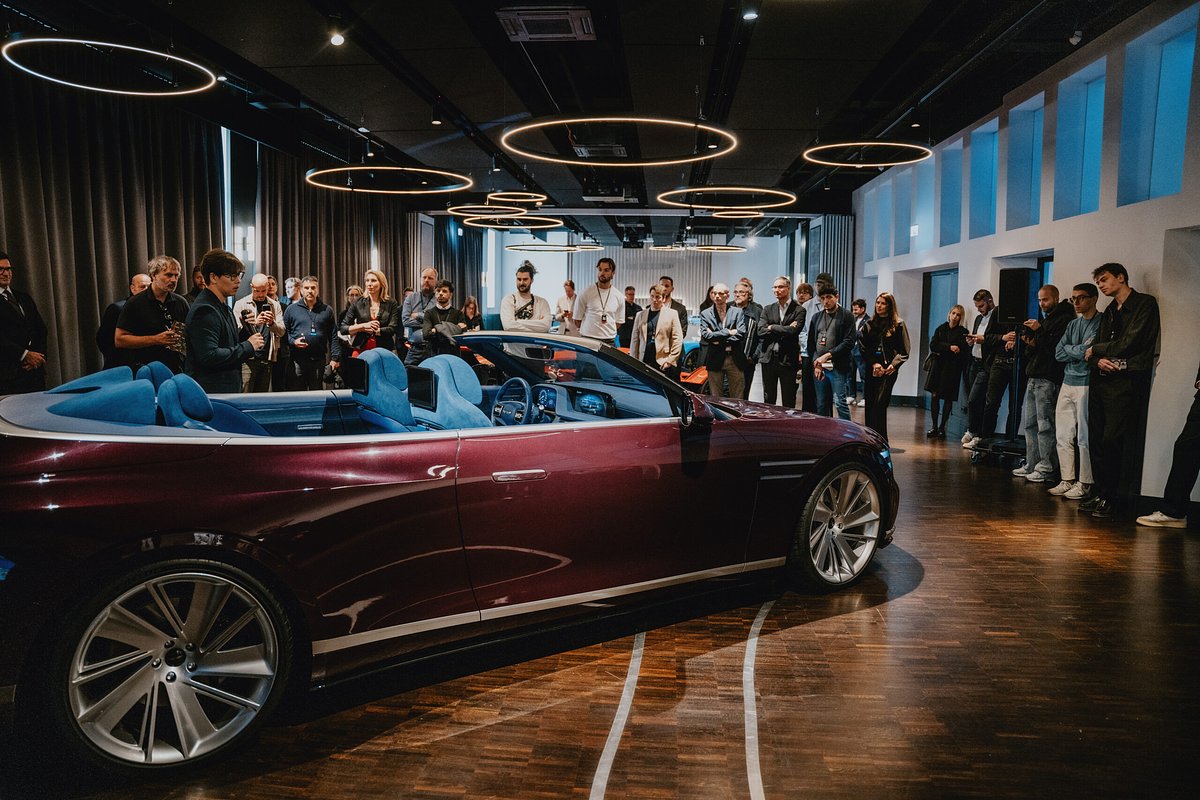
Stepping into that void is Car Design Event, a by-invitation gathering that prioritizes substance over scale. While GIMS courted the public, CDE targets the very people who shape the industry: design executives, engineering leads, top-tier media, and the brightest students from Europe’s leading design schools. After attracting over 100 executives in 2025, organizers expect attendance to more than double for the 2026 edition at Munich’s impressive Motorworld complex.
The event’s co-founder, veteran automotive journalist Jens Meiners, highlighted this strategic focus in a recent statement. "The leading lights of global automotive design will come together in this uniquely private setting to present their latest creations, share ideas and discuss the latest auto-industry developments," he said. The goal is not just to display cars, but to foster "lively debate" on critical topics, including the future of mobility, emerging design trends, and, most tellingly, the use of AI in automotive design.
AI as the New Co-Pilot in Automotive Design
The inclusion of Artificial Intelligence as a core topic at CDE is no accident. It reflects the technology's rapid integration into the very fabric of vehicle creation, moving from a back-office tool to a creative partner in the design studio. For businesses, harnessing AI is no longer an option but a critical path to maintaining a competitive edge.
Generative AI, for example, is revolutionizing the early stages of design. Designers can feed algorithms a complex set of constraints—aerodynamic targets, material properties, weight limitations, and safety standards—and receive thousands of viable design iterations in a fraction of the time it would take a human team. This process doesn't replace the designer; it supercharges their creativity, allowing for the exploration of novel forms and structures that are both aesthetically compelling and highly optimized for performance and efficiency.
This AI-driven optimization extends to aerodynamics and material science. Algorithms can run complex fluid dynamics simulations in near real-time, refining a vehicle's shape for minimal drag and maximum range. This capability is crucial for electric vehicles, where every percentage point of efficiency gained translates directly to more miles on a single charge. AI also helps engineers identify and test novel, lightweight, and sustainable materials, balancing the competing demands of performance, cost, and environmental impact.
Inside the car, AI is fundamentally reshaping the user experience. By analyzing vast datasets on driver behavior and ergonomic principles, AI helps create interiors that are not only more comfortable but also more intuitive. This goes beyond screen layouts to encompass predictive systems that learn a driver's habits, adaptive voice assistants, and gesture controls that feel like a natural extension of the user's intent. The result is a more personalized and seamless connection between driver and machine.
The Concepts of Tomorrow: A Glimpse from Munich
The tangible results of this technological ferment are most visible in the concept cars that serve as the centerpiece of CDE. The 2025 event offered a compelling preview of where the industry is headed, showcasing a diverse and innovative slate of vehicles. The American startup Slate, for instance, made its European debut with a modular electric vehicle that can transform from a pickup into an SUV, promising a new level of customization. Kia presented its EV2 concept, a compact EV with a highly flexible interior, while Hyundai’s Initium concept offered a look at its next-generation hydrogen fuel-cell technology.
Even established luxury and performance brands are using the platform to push boundaries. Lamborghini displayed its wild V12 Vision Gran Turismo concept, while Pagani presented its latest hypercar, the Utopia. This mix of established players and disruptive newcomers is what makes CDE a vital bellwether for industry trends. The presence of Volkswagen's ID. EVERY1 concept, a preview of an affordable entry-level EV, alongside a revived Yugo brand, underscores the industry-wide push to solve challenges across all market segments.
Hosting this confluence of ideas is Motorworld Munich, a venue that is itself a testament to automotive passion. Housed in a restored historic locomotive hall, the facility provides a stunning backdrop for these futuristic designs, with glass boxes displaying rare collector cars alongside the latest concepts. Its capacity to host thousands of guests while maintaining an atmosphere of exclusivity makes it the ideal location for an event of CDE's ambition.
Munich's Ascent as a Design and Innovation Hub
The expansion of the Car Design Event further cements Munich's position as a critical hub in the global automotive ecosystem. Already home to major players and a deep well of engineering talent, the city is now strengthening its claim as the epicenter for forward-looking automotive design and technology discourse. Events like CDE attract international talent, investment, and media attention, creating a virtuous cycle of innovation that benefits the entire region.
As the automotive industry continues its seismic shift away from purely mechanical engineering towards a future defined by software, data, and artificial intelligence, the platforms for showcasing progress must also evolve. The decline of the traditional, all-encompassing motor show and the rise of focused, expert-driven events like CDE is a clear indicator of this new reality. The most important conversations are no longer just about what a car looks like, but how it thinks, adapts, and integrates into our lives. It is in these curated settings, away from the public glare, that the blueprints for the next era of mobility are truly being drawn.