
- 11 million deaths globally each year from sepsis, nearly one in every five deaths worldwide.
- 5,361 registrations from 3,714 teams across 50 colleges in India for the Ingenium competition.
- INR 2,00,000 prize awarded to the winning 'Sepsis AI' team, along with an international exposure opportunity.
Experts would likely conclude that the 'Sepsis AI' system represents a significant advancement in early sepsis detection, particularly for resource-constrained hospitals, and highlights the potential of AI to address critical healthcare challenges when integrated with practical, real-world applications.
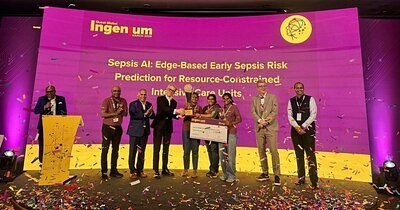
AI Sepsis Detector Wins Big at India's Premier Engineering Contest
BENGALURU, India – March 18, 2026 – A team of student engineers from Bengaluru has developed a groundbreaking artificial intelligence system designed to predict sepsis in intensive care units, earning them the top prize at one of India's most prestigious engineering competitions. The 14th edition of Ingenium, the flagship contest hosted by global engineering services giant Quest Global, concluded this week, showcasing a new generation of innovators creating tangible solutions for critical challenges in healthcare, transportation, and beyond.
An AI Lifeline for a Critical Medical Challenge
The grand prize-winning project from Nitte Meenakshi Institute of Technology, Bengaluru, titled 'Sepsis AI,' directly addresses a dire global health crisis. Sepsis, a life-threatening condition where the body's response to infection damages its own tissues, is responsible for an estimated 11 million deaths globally each year—nearly one in every five deaths worldwide. The burden in India is particularly severe, with studies indicating that over half of all patients admitted to Indian ICUs may develop the condition.
The challenge with sepsis lies in its stealthy onset. Its symptoms often mimic other illnesses, and by the time it is clinically diagnosed, irreversible organ damage may have already begun. The 'Sepsis AI' solution tackles this problem head-on. It functions as an edge-based early warning system that analyzes real-time vital signs from existing bedside monitors. By using AI to identify subtle physiological patterns that precede a crisis, the system generates risk scores hours before a patient's condition deteriorates critically.
Crucially, the system is designed for the very environments where it is needed most: resource-constrained hospitals. By operating on a local hospital server—a concept known as 'edge AI'—it processes sensitive patient data securely on-site, eliminating the need for expensive, high-end cloud infrastructure and reducing data transmission delays. For their innovation, the winning team received a prize of INR 2,00,000 and an invaluable opportunity for international exposure with a visit to the offices of Drees & Sommer, a leading European consulting firm, in Germany.
Forging the Next Generation of Innovators
Beyond the specific innovations, Ingenium serves a broader purpose: cultivating India's next generation of engineering leaders. This year's competition saw an overwhelming response, with 5,361 registrations from 3,714 teams representing 50 colleges across the country. This enthusiasm highlights the immense pool of talent in India, but it also exists within a landscape facing a significant digital skills gap. Industry reports from NASSCOM indicate that while demand for AI and data science talent is soaring, the supply of qualified professionals struggles to keep pace.
Initiatives like Ingenium are crucial bridges between academic potential and industry needs. By providing a structured platform for students to tackle real-world problems, the competition fosters the exact skills that are in high demand.
"At Quest Global, we believe that empowering young engineers to think creatively and solve complex challenges is key to building a better future," said Lux Ramalingam, Chief Operating Officer at Quest Global, in a statement. "Ingenium continues to provide a powerful platform where students can transform ideas into practical solutions while learning from industry experts. We are truly inspired by the level of innovation and passion demonstrated by participants this year and remain committed to nurturing the next generation of engineering leaders."
From Theory to Prototype: A Blueprint for Practical Excellence
What distinguishes Ingenium from many academic competitions is its unwavering focus on practical application and prototype development. Participants don't just submit papers; they build, test, and refine working models of their ideas. Throughout the process, they receive dedicated mentorship from seasoned Quest Global engineers, gaining insights into industry best practices, project management, and teamwork.
The diversity of this year's finalists underscores the competition's wide-ranging impact. The first runner-up, a team from PSG Institute of Technology and Applied Research in Tamil Nadu, developed a 'Low-Cost Edge AI Driver Fatigue and Collision Prevention System for Heavy Vehicles,' addressing a major cause of road accidents. The second runner-up from New Horizon College of Engineering, Bengaluru, created a 'Deprescribing Clinical Decision Support System' aimed at safely reducing unnecessary medications for patients.
These projects demonstrate a shared theme of leveraging technology to create affordable, accessible solutions. The prize trip to Germany to visit Drees & Sommer, a firm specializing in digital solutions for construction and real estate, further reinforces this ethos by exposing the winners to applied innovation in a different industrial context, broadening their professional horizons.
A Platform for Real-World Impact
As a company consistently ranked by industry analysts like Zinnov as a leader in Engineering R&D services, Quest Global lends significant weight to the competition. The firm, which operates as a 'pure-play' engineering services company, has built its reputation over 25 years by solving complex engineering problems for industries ranging from aerospace and automotive to MedTech and semiconductors. Ingenium is a direct extension of this problem-solving DNA.
The competition has successfully carved a niche as a vital link between the theoretical knowledge imparted in classrooms and the practical, multidisciplinary skills required in the modern workforce. By challenging students to think like professional engineers, Ingenium not only identifies top talent but actively helps shape it. As the finalist projects show, the focus is squarely on creating solutions that can one day be deployed in the real world to improve lives and enhance safety. As the 14th edition concludes, Ingenium stands not just as a contest, but as a critical catalyst for India's future engineering leaders.
Topics & Related
Diagnostics
Medical Devices
AI & Machine Learning
Cloud & Infrastructure
Artificial Intelligence
Edge Computing
ESG
Revenue
Related Company Pulse