
- 3% to 10% reduction in glycol consumption per deicing season
- 140 hours of AOG time saved annually at Montreal-Trudeau International Airport (YUL)
- $1.2 million in yearly savings estimated for airlines at YUL
Experts in aviation and AI agree that Aeromag's GestOp AI represents a significant advancement in aircraft deicing, offering measurable efficiency gains, cost savings, and environmental benefits through predictive analytics and optimized logistics.
AI on the Tarmac: Aeromag's Software Revolutionizes Aircraft Deicing
ST-LAURENT, QC – April 20, 2026 – As winter weather presents perennial challenges to the aviation industry, Quebec-based Aeromag has unveiled an artificial intelligence solution designed to bring predictive precision and new levels of efficiency to the critical process of aircraft deicing. The company today launched GestOp AI, a patent-pending software that promises to reduce costs, cut down on chemical usage, and get planes back in the air faster.
The new system represents a significant technological leap for a procedure that is vital for flight safety but often a source of delays and operational expenses. Aeromag, a global leader in deicing and glycol recycling, aims to transform this complex ground operation into a data-driven, optimized process.
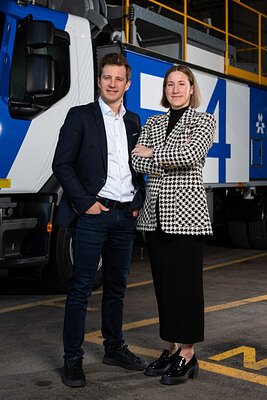
"With GestOp AI, our ambition is clear: to deliver a predictive, efficient, and innovative solution that will save time, reduce costs, glycol and fuel consumption," said Gabriel Lépine, Co-CEO of Aeromag, in a statement accompanying the launch.
The Brains Behind the Operation: A Leap in Deicing Technology
At its core, GestOp AI is an advanced upgrade to Aeromag's proprietary management software, GestOp, which has been the backbone of its operations since 1996. Developed in close collaboration with AI specialists at Vooban, the new platform integrates sophisticated machine learning models that have been trained on over a decade of Aeromag's operational data.
The system employs two primary AI models. The first is a predictive analytics tool that calculates the precise amount of glycol—the primary deicing fluid—needed for a specific aircraft under real-time weather conditions. By analyzing variables like aircraft type, ambient temperature, and precipitation, the AI aims to eliminate the guesswork that can lead to overuse of the chemical.
The second AI model functions as a logistics optimizer, described by developers as a "Waze for deicing trucks." It analyzes the entire airfield, including aircraft ground times and deicing truck locations, to create the most efficient schedule and route for servicing aircraft. This real-time guidance system directs operators on the tarmac, streamlining the queue and minimizing wait times for departing flights. This patent-pending approach moves deicing from a reactive task to a predictive and highly coordinated operation.
Greener Skies Ahead: AI Tackles Aviation's Environmental Footprint
The launch of GestOp AI is not just an operational upgrade; it's a strategic move aligned with the aviation industry's growing focus on sustainability. By optimizing the use of glycol, Aeromag projects the software can reduce consumption by 3% to 10% per deicing season. This reduction has a dual benefit: it lowers costs for airlines and lessens the environmental impact of deicing operations, where runoff of used glycol is a significant concern.
This initiative is a key component of Aeromag's ambitious goal to achieve carbon neutrality by 2035. The company has a history of environmental innovation, having launched Canada's first glycol recycling facility in 2014 and the first in the United States in 2023. These facilities recover used deicing fluid and recycle it into a certified product for reuse, creating a circular economy for the chemical.
Furthermore, the company introduced the world's first hybrid deicing truck in 2020, demonstrating a long-term commitment to reducing the carbon footprint of its ground operations. GestOp AI complements these hardware innovations by tackling the software and process side, promising to reduce not only glycol use but also the fuel consumed by both idling aircraft and deicing vehicles.
The Business Case: Optimizing Costs and Ground Time
For airlines and airports, the economic implications of GestOp AI are profound. Delays on the ground cascade through the entire air travel network, leading to missed connections, crew scheduling problems, and significant costs. The primary economic benefit of the new software lies in its ability to reduce Aircraft-on-Ground (AOG) time.
Internal tests conducted by Aeromag during the software's development phase showed an average reduction of one minute per deicing operation. While seemingly small, this efficiency gain scales up dramatically. At Montreal-Trudeau International Airport (YUL) alone, the company estimates this could save approximately 140 hours of AOG time annually, translating into an estimated $1.2 million in yearly savings for airlines operating at that hub.
These savings stem from reduced fuel burn while aircraft wait, more efficient crew and asset utilization, and a lower likelihood of incurring delay-related penalties. By providing a more predictable and streamlined deicing process, GestOp AI offers airports and their airline partners a powerful tool to enhance operational performance and improve their bottom line.
Market Adoption and the Road Ahead
Aeromag has confirmed that several Canadian airlines and airports are already using the new software, marking the first phase of its commercial rollout. Following initial trials in Montreal and Edmonton, the company plans to deploy GestOp AI across its entire network, which spans 17 airports in Canada, the United States, and the United Kingdom.
The introduction of such a disruptive technology is not without its challenges. The system must integrate seamlessly with diverse airport infrastructures and prove its reliability under the most extreme weather conditions. Moreover, there may be some skepticism to overcome among traditional operators accustomed to manual processes.
However, with over three decades of specialized expertise, Aeromag is well-positioned to manage this transition. By building its AI on a foundation of its own historical data and operational knowledge, the company has created a tool that is not just technologically advanced but also deeply rooted in the practical realities of the tarmac. For an industry navigating the dual demands of economic recovery and environmental responsibility, this intelligent approach to a long-standing operational bottleneck may prove to be a critical advancement.