
- Only 12% of SMB finance teams actively use AI tools daily, while 63% are still evaluating or planning adoption. - 84% of finance leaders report their teams spend at least 25% of time on manual, repetitive tasks. - AI in Accounting market projected to grow from $1.5B (2024) to $6.62B (2029).
Experts agree that while AI holds transformative potential for accounting, SMBs face significant implementation barriers including data integration challenges and security concerns, requiring strategic, phased adoption approaches.
AI in Accounting: SMBs Face a Stark Reality Check
COLUMBIA, MD – February 18, 2026 – Amid a constant drumbeat of hype surrounding artificial intelligence, a new report reveals a stark disconnect between the promise of AI and its practical application within the finance departments of small to medium-sized businesses (SMBs). A comprehensive survey released today by Accounting Seed, a Salesforce-native accounting platform, shows that while AI dominates industry conversations, its actual adoption remains surprisingly low, hampered by significant and persistent challenges.
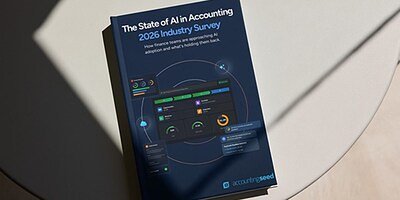
The report, titled The State of AI in Accounting 2026, surveyed over 100 finance and IT leaders, finding that a mere 12% of their finance teams are actively using AI tools in their daily operations. In contrast, a vast majority—63%—are still in the preliminary evaluation or planning phases, caught between the allure of transformative technology and the complex reality of implementation. This data paints a more nuanced picture of AI's current role in accounting, suggesting the revolution is progressing far more slowly on the ground than in marketing materials.
"Finance leaders are caught between the promise of AI and actual results," said Nasser Chanda, CEO at Accounting Seed, in the report's announcement. "While AI adoption in finance is still early, it's accelerating. And the already stretched accounting teams are under real pressure to get tangible value from it."
The Crushing Weight of Manual Work
The intense interest in AI is not unfounded. The survey highlights a critical pain point that AI is perfectly positioned to solve: the overwhelming burden of manual, repetitive tasks. A staggering 84% of finance leaders reported that their teams spend at least a quarter of their time on such work. This finding resonates with broader industry studies, including one from Forrester that found SMBs waste an average of 120 hours per employee annually on manual data entry alone.
This mountain of manual work—from data entry and transaction matching to invoice processing—not only stifles productivity but also introduces a higher risk of human error and diverts skilled professionals from more strategic, high-value activities. The potential for AI to automate these processes is immense. Industry analyses from firms like Deloitte have suggested that up to 92% of repetitive accounting tasks could be automated, making the appeal of AI solutions almost irresistible for overburdened finance departments.
The market is responding to this demand, with projections showing the AI in Accounting sector growing from just over $1.5 billion in 2024 to an expected $6.62 billion by 2029. This growth reflects a clear understanding that automation is no longer a luxury but a necessity for efficiency and scalability.
The Implementation Wall: Data, Integration, and Fear
If the need is so clear and the technology so promising, why the lag in adoption? The survey pinpoints the primary obstacles that form an "implementation wall" for many SMBs. The leading barrier is not a lack of will but a lack of readiness, primarily centered on data and integration struggles. Many organizations operate on a patchwork of legacy systems and spreadsheets that are ill-equipped for modern AI, creating data silos that prevent the seamless flow of information necessary for machine learning algorithms to function effectively.
Following closely behind integration issues are deep-seated security concerns and a fundamental fear of errors. Handing over critical financial processes to an algorithm requires a significant leap of faith, and leaders are rightfully cautious about data privacy, security vulnerabilities, and the potential for costly mistakes.
Further complicating the path to AI is the fact that nearly a third (29%) of organizations surveyed have not yet automated even their core accounting work. This foundational gap in automation limits the practical impact any advanced AI tool could have, as there is no streamlined process for the AI to plug into. Without first establishing a solid, automated foundation, implementing AI is like trying to build a skyscraper on sand.
Charting a Path Forward: Lessons from Early Adopters
Despite the challenges, the path to successful AI implementation is becoming clearer, illuminated by the 12% of firms that have moved beyond planning. According to the report and insights from industry leaders, success hinges on a few common characteristics.
"The most successful AI implementations we're seeing share common characteristics: clear use cases, strong data foundations, and organizations willing to rethink traditional processes," noted Ryan Sieve, CTO at Accounting Seed. This sentiment is echoed across the tech industry, where the mantra has shifted from "AI for everything" to "AI for the right thing." Successful firms start with specific, high-impact problems, such as automated invoice capture or anomaly detection, rather than attempting a complete overhaul at once.
A move toward a single, unified platform is also emerging as a critical success factor. When accounting, CRM, and other operational data reside in one system, the integration barriers that plague many SMBs are dramatically lowered. Major accounting software providers are leaning into this strategy. Competitors like NetSuite are embedding AI capabilities for bill capture and exception management directly into their unified suite. Sage is deploying its "Sage Copilot," an AI assistant designed to work within its ecosystem, while Xero uses AI to automate bank reconciliation and expense coding seamlessly within its platform. These integrated solutions reduce friction and provide a more accessible on-ramp to AI for businesses.
Redefining the Accountant's Role in the AI Era
Perhaps the most significant long-term implication of AI in accounting is its impact on the professionals themselves. The narrative is shifting away from a fear of replacement and toward a vision of augmentation. AI is increasingly seen as a powerful collaborator that handles the tedious, transactional work, thereby elevating the role of the accountant.
By automating tasks like data entry, reconciliation, and compliance checks, AI frees up finance professionals to focus on strategic analysis, financial forecasting, and advisory services—work that requires critical thinking, business acumen, and human judgment. Research supports this evolution, with one study indicating that 79% of accountants expect their advisory roles to expand as a direct result of AI and automation.
Early use cases demonstrate this collaborative potential. AI tools can scan millions of transactions to flag potential fraud with a speed and accuracy no human could match, but it is the accountant who investigates the anomaly, assesses the risk, and develops a mitigation strategy. Similarly, AI can generate complex cash flow forecasts, but it is the finance leader who interprets the data, provides context, and advises the C-suite on a course of action. This human-AI partnership allows accounting teams to accomplish more with less friction and deliver greater strategic value to their organizations. The wave of AI is indeed coming, and for those who prepare, it promises not to wash them away but to lift them to new heights of efficiency and influence.