
- 25% to 30% reduction in household electricity consumption claimed by Tuya’s Home Energy Management System (HEMS) in France.
- 1.5 million registered developer accounts across over 200 countries using Tuya’s open platform.
- 3,000+ product categories connected through Tuya’s AIoT ecosystem.
Experts agree that Tuya’s AIoT platform offers scalable solutions for energy efficiency and climate action, but caution that the security and privacy risks of a globally connected ecosystem require rigorous governance and standardization to mitigate systemic vulnerabilities.
AI for Earth: Tuya’s Climate Push and the Hidden Risks of a Connected Planet
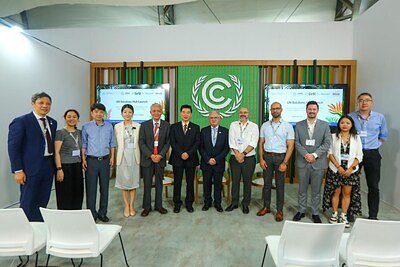
BELÉM, Brazil – November 25, 2025 – As the world’s leaders convened for COP30, the dialogue was dominated not just by policy and finance, but by the tangible role of technology in averting climate catastrophe. Amid the flurry of commitments, the official launch of the United Nations Solutions Hub (UNSH) signaled a strategic pivot towards implementation. It was here that AI and Internet of Things (AIoT) platform provider Tuya Smart stepped into the spotlight, showcasing a vision where billions of connected devices work in concert to build a more sustainable world.
Partnering with the UNFCCC, GeSI, and Tencent, the UNSH aims to be a digital bridge connecting climate solutions with real-world needs. Tuya’s participation underscores a critical trend: the private sector, armed with scalable digital platforms, is becoming an indispensable force in global sustainability efforts. The company’s pitch is compelling—leveraging its vast AIoT ecosystem to turn abstract climate goals into quantifiable energy savings. But as we embed this intelligence into our homes, cities, and infrastructure, we must also confront the profound security and privacy challenges that accompany a globally connected planet.
The Digital Blueprint for Decarbonization
Tuya’s message at COP30 centered on moving AI from a conceptual buzzword to a practical tool for carbon reduction. Renan Antoniolli, the company's Regional Director for Latin America, emphasized the goal is to create "quantifiable and replicable carbon reduction tools to eliminate 'invisible waste'." This isn't just theory; the company presented several real-world deployments powered by its platform.
In France, Tuya's partners, including Xanlite, Mazda, and Thaleos, have adopted its Home Energy Management System (HEMS). The system claims to reduce household electricity consumption by 25% to 30% by using AI algorithms to monitor energy use in real time and intelligently schedule device operation. Similarly, partnerships with WEG in Brazil and Hometree aim to deliver comprehensive smart home solutions that optimize energy consumption through features like motion-activated lighting and remote appliance control.
While independent verification of these specific claims remains pending, the figures align with the potential demonstrated across the smart infrastructure industry. Giants like Siemens and Schneider Electric report similar, and sometimes greater, energy savings through their own smart building and IoT solutions. The common thread is the use of real-time data and intelligent automation to make energy consumption visible, manageable, and efficient. Beyond the home, Tuya is applying its AIoT platform to municipal street lighting projects, enabling cities to centrally manage and dynamically adjust lighting, promising significant cuts in public energy consumption.
These examples illustrate a powerful shift. Instead of relying solely on large-scale grid overhauls, the strategy now includes a distributed, device-level approach to efficiency. The intelligence embedded in a thermostat, a light bulb, or an electrical panel becomes a node in a larger network dedicated to reducing our collective carbon footprint.
Ecosystems vs. Silos: A New Model for Climate Action
The launch of the UN Solutions Hub and Tuya’s role within it highlight a strategic preference for collaborative, ecosystem-driven approaches over closed, proprietary systems. Tuya champions its identity as an "open and neutral platform," a model that distinguishes it from more vertically integrated competitors. With a reported 1.5 million registered developer accounts across over 200 countries, its business model is not to sell a single product, but to provide the foundational cloud infrastructure and AI tools for thousands of other companies to build their own smart, sustainable solutions.
This platform-centric strategy offers distinct advantages for accelerating climate action. It lowers the barrier to entry for brands and OEMs, allowing them to rapidly integrate smart capabilities and energy management features into their products without building a complex AIoT backend from scratch. The result is a sprawling ecosystem connecting over 3,000 product categories, fostering innovation and competition. This approach is fundamental to the UNSH's mission of creating a marketplace where climate solutions can be discovered, adapted, and deployed at scale.
However, this model also presents its own set of challenges. While a vertically integrated provider can enforce uniform security and quality standards across its entire product line, an open ecosystem relies on the diligence of countless independent developers. The resilience of the entire network is contingent on the security posture of its weakest link, making governance and standardization paramount.
The Double-Edged Sword of Connected Sustainability
For any organization operating in the cybersecurity space, a platform of Tuya's scale is both an impressive feat of engineering and a source of significant concern. The promise of global sustainability through AIoT is inextricably linked to the risk posed by a massively expanded digital attack surface. Each of the millions of devices connected to the platform—from smart plugs in a Parisian apartment to streetlights in a Brazilian city—is a potential entry point for malicious actors.
The challenges are well-documented within the IoT industry. Weak or default credentials, unpatched firmware, and insecure data transmission protocols have plagued connected devices for years. When these vulnerabilities are aggregated onto a single, globally distributed platform, the potential for cascading failures or large-scale data breaches becomes a systemic risk. The very data that enables energy optimization—real-time usage patterns, occupancy data, and device status—is also intensely personal and, if compromised, could be used for surveillance or other nefarious purposes.
Tuya, for its part, asserts a strong commitment to security and privacy. The company highlights its use of global data centers that allow for regional data residency, adherence to regulations like GDPR and CCPA, and a "privacy by design" philosophy. It states that it employs end-to-end encryption for data communication and maintains strict internal access controls. Yet, the nature of its open platform model means that ultimate responsibility is shared. The security of the ecosystem depends not only on Tuya's core infrastructure but also on the security practices of every developer building upon it.
The challenge is therefore twofold. First is the technical task of securing a diverse and rapidly growing network of devices manufactured by different vendors with varying levels of security maturity. Second is the governance challenge of enforcing security standards across a decentralized global developer community. The success of AIoT as a tool for planetary health will depend as much on mastering these cybersecurity complexities as it does on the sophistication of its energy-saving algorithms. As we connect our world to save it, we must ensure the digital infrastructure we build is resilient, trustworthy, and secure by design.