
- 80 million people worldwide suffer from autoimmune diseases, facing complex and often ineffective treatments.
- 300 highly sophisticated disease models in the HKEY-AIDMD 3.0 platform simulate human patient diversity.
- AI-driven predictions aim to reduce the cost and failure rate of drug development, potentially saving billions of dollars in R&D.
Experts agree that the HKEY-AIDMD 3.0 platform represents a transformative leap in autoimmune disease research, offering unprecedented precision in drug combination predictions and a more efficient path to personalized medicine.
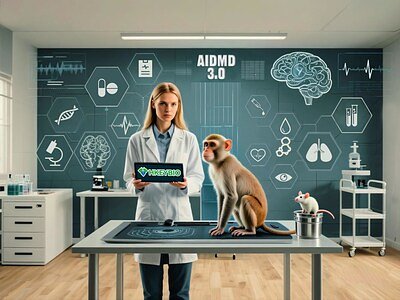
AI Drug Platform Unlocks Hope for Autoimmune Disease Sufferers
BOSTON, MA – November 24, 2025 – For the more than 80 million people worldwide battling autoimmune diseases, the journey is often one of frustration. Conditions like lupus, rheumatoid arthritis, and inflammatory bowel disease are notoriously complex, driven by a rebellion of the very immune system designed to protect us. Treatments can be a grueling process of trial and error, with single-target drugs that work for some failing others, often accompanied by debilitating side effects. But a new technological leap in preclinical research aims to change that narrative, promising to accelerate the development of more precise and effective therapies.
HKeyBio, a contract research organization (CRO) specializing in immunology, has launched its HKEY-AIDMD 3.0 platform. While the name is technical, its purpose is profoundly human: to solve one of the most formidable puzzles in modern medicine. By integrating advanced disease models with artificial intelligence, the platform offers a new way to predict which combination of drugs will be most effective, potentially ushering in a new era of personalized treatment for these chronic conditions.
Cracking the Code of Immune Complexity
Autoimmune and allergic diseases are not caused by a single faulty switch. They are the result of a system-wide failure, a complex web of dysregulated cells, rogue cytokines, and haywire signaling pathways. This biological intricacy is why the "one drug, one target" approach, the cornerstone of pharmaceutical development for decades, often falls short. It’s like trying to fix a traffic jam by closing a single side street while ignoring the main highway.
Recognizing this, researchers have turned their focus to multi-target combination therapies—using multiple drugs to modulate different parts of the pathological network simultaneously. The potential is immense: synergistic effects, higher efficacy, and the ability to overcome drug resistance. The challenge, however, is equally staggering. With countless potential targets, dosages, and mechanisms, the number of possible drug combinations increases exponentially. For pharmaceutical companies with limited resources, choosing which combinations to pursue in costly clinical trials is a high-stakes gamble.
"The bottleneck has always been our inability to see the whole picture in a dynamic way before entering human trials," explains a senior analyst at a leading biotech investment firm. "You can test a thousand combinations in a petri dish, but that tells you very little about how they will interact within the complex ecosystem of a living organism. It’s this gap between the lab and the patient that leads to so many late-stage failures." This is precisely the gap HKeyBio's new platform is designed to bridge.
A Four-Dimensional View of Disease
At the heart of the HKEY-AIDMD 3.0 platform is a library of nearly 300 highly sophisticated disease models. These aren't the static models of the past. HKeyBio has developed what it calls "four-dimensional (4D) model pools" that simulate the vast diversity, or heterogeneity, seen in human patients. By using different species, genetic strains, and induction methods, these models can replicate various disease subtypes and progression patterns over time—the crucial fourth dimension.
It’s the difference between looking at a single photograph of a storm and watching a time-lapse satellite video of its formation, movement, and dissipation. This dynamic view allows researchers to observe how multi-target drug combinations perform not just at a single point, but throughout the course of a disease, revealing complex interactions and feedback loops that would otherwise remain hidden.
This 4D model library is coupled with a massive omics database. Using cutting-edge spatiotemporal single-cell and spatial omics, the platform captures a high-resolution snapshot of what’s happening at the genetic, molecular, and cellular level within specific tissues at different moments in time. This technology provides an unprecedented level of detail, uncovering subtle but critical differences that distinguish one disease subtype from another and revealing exactly how a potential therapy is altering the cellular landscape.
The Power of Prediction: AI Meets Biology
Amassing this colossal amount of data is only half the battle. The true innovation of the HKEY-AIDMD 3.0 platform lies in its ability to make sense of it. Here, systems biology and artificial intelligence take center stage. The platform employs machine learning algorithms to sift through the multi-layered data, identifying the key nodes and bottlenecks in the disease network.
By analyzing gene regulatory networks, protein interactions, and signaling pathways, the AI can predict the outcomes of different drug combinations with a much higher degree of accuracy than previously possible. It can identify which combinations are likely to be synergistic, which might cause adverse effects, and, crucially, which biomarkers—such as a specific gene signature or immune cell profile—can predict a patient's response to treatment.
This predictive power fundamentally changes the economics of drug development. Instead of betting on dozens of potential combinations, pharmaceutical companies can use the platform to prioritize the few most promising candidates. This not only saves immense time and money but also significantly increases the probability of success in human trials. For a field where the cost of bringing a single drug to market can exceed a billion dollars, such efficiency gains are transformative, solidifying the role of specialized CROs as indispensable engines of R&D innovation.
Redefining the Path to Personalized Medicine
Ultimately, the impact of this technology extends far beyond the laboratory and into the lives of patients. By enabling the development of optimized multi-target therapies, platforms like HKEY-AIDMD 3.0 are paving the way for true precision medicine in immunology. For someone with severe atopic dermatitis or Crohn's disease, this could mean moving away from broad immunosuppressants to a tailored cocktail of drugs that precisely targets the underlying drivers of their specific condition.
This approach promises not only greater efficacy but also improved safety, minimizing the off-target effects that plague many current treatments. The ability to identify predictive biomarkers means that in the future, a simple blood test or tissue sample could tell doctors which combination therapy is most likely to work for a particular patient, ending the painful and costly cycle of treatment guesswork.
As this technology matures and its insights are translated into the clinic, it represents a profound shift in how we confront chronic illness. It moves the battle from one of reaction—managing symptoms as they arise—to one of preemption, armed with a deep, data-driven understanding of the disease itself. For the millions waiting for a breakthrough, this convergence of advanced biology and artificial intelligence represents more than just innovation; it represents tangible hope for a healthier future.