
- 37.3% YoY surge in digital ad conversions for car dealerships in April 2026
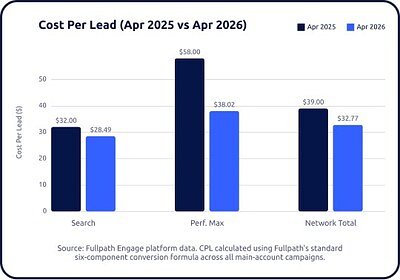
- 14.8% drop in cost to acquire each lead, lowest in 12 months
- 119% YoY increase in conversions for Google's Performance Max (PMAX) campaigns
Experts agree that AI-driven automation is revolutionizing automotive retail by enabling dealerships to optimize ad spending with unprecedented efficiency, shifting focus from sheer budget increases to data-informed, high-velocity marketing strategies.
AI Drives Auto Ad Boom: Conversions Soar as Dealer Costs Plummet
TEL AVIV, Israel – May 21, 2026 – The automotive retail industry is experiencing a seismic shift, as new data reveals artificial intelligence is dramatically reshaping how dealerships attract customers and sell cars. A landmark report released today by AI and Customer Data Platform (CDP) provider Fullpath shows that digital ad conversions for car dealerships surged an astonishing 37.3% year-over-year in April, while the cost to acquire each lead plummeted 14.8% to its lowest point in 12 months.
These figures, detailed in the April 2026 Auto Intelligence Index, signal a pivotal moment for the industry. Dealerships are moving beyond simply increasing their ad budgets and are now achieving unprecedented efficiency by using AI-powered automation to optimize spending in real-time. This technology allows them to pivot marketing dollars toward their most in-demand vehicles and profitable service channels with surgical precision.
"The April Fullpath Auto Intelligence Index results confirm that we are entering a new era of 'high-velocity' automotive retail," said Aharon Horwitz, CEO and Co-Founder of Fullpath, in the report's release. He noted that as the market tightens, the room for inefficient spending has vanished. "Dealers are winning not by simply spending more, but by spending smarter and launching intelligent campaigns with the power of AI."
The AI Engine Behind the Efficiency
The report's data provides a granular look at this new landscape of advertising efficiency. While traditional Google Search campaigns still represent the lion's share of dealer ad investment at 64%, it's the more advanced, AI-driven tools that are showing explosive growth. Investment in Google's Performance Max (PMAX) campaigns, which use machine learning to find customers across all of Google's channels, climbed approximately 47% from April 2025 to April 2026.
The return on that investment has been staggering. Dealers saw PMAX conversions more than double, increasing 119% year-over-year, while the cost per lead through this channel dropped by over 33%. This demonstrates a clear trend: as dealers entrust more of their strategy to AI, their marketing dollars work significantly harder.
This newfound efficiency is also fueling a strategic diversification of ad budgets. While new cars still command the largest share of spending, investment in certified pre-owned (CPO) vehicle advertising skyrocketed by 69% year-over-year. At the same time, spending on fixed operations and service departments jumped 57.4%, indicating a more holistic, data-informed approach to driving revenue across the entire dealership. Conversely, ad spend on trade-in campaigns saw a sharp 17% decline, suggesting dealers are shifting focus from actively soliciting trades to marketing the inventory they already have.
A New Front Door for Car Shopping
Beyond ad placement, AI is fundamentally changing the initial interaction between car shoppers and dealerships. The report identifies a fascinating phenomenon it calls the "six-message threshold." When a potential buyer sends their sixth message to an AI-powered chatbot on a dealership website, their likelihood of converting into a solid lead increases sixfold, reaching a 45.6% probability.
This finding challenges the long-held belief that a quick hand-off to a human salesperson is always the best strategy. Instead, it suggests that modern consumers, empowered by technology, prioritize in-depth information gathering and value the ability to get detailed answers on their own terms. AI chatbots, once seen as simple greeters, are now acting as sophisticated, 24/7 research assistants for buyers.
This shift is reflected in website traffic patterns. Dealerships saw a 34.5% surge in traffic originating from AI-chat sources in March 2026 alone. While ChatGPT remains the dominant force, Google's Gemini is rapidly gaining ground, growing from a 1.5% share of this traffic in late 2025 to 8.5% as of April 2026. However, the role of AI has its nuances. A separate May 2026 survey from Urban Science and The Harris Poll found that while consumers embrace AI for initial research, an overwhelming 9 out of 10 still prefer to complete their final purchase at a traditional dealership, highlighting the enduring importance of human connection in the final stages of the sale.
Navigating a High-Velocity Market
The urgent need for AI-driven efficiency is being amplified by rapidly changing market conditions. Fullpath's index shows that the average days supply of vehicles on dealer lots has contracted by nearly 14%, dropping from 95 days in late 2025 to just 82 days in early 2026. This indicates a high-velocity sales environment where vehicles are moving off lots at an accelerated pace.
The inventory squeeze is particularly pronounced for certain brands, with Acura seeing a 31.4% decline in inventory levels and Stellantis reducing its supply by 25%. This tightening supply, coupled with external factors like rising gas prices that spurred a 5.1% surge in EV market share in March, creates a complex and fast-moving landscape. In this environment, the ability to target the right buyer with the right message for the right car is no longer a luxury—it's a necessity for survival.
The Industry's Data-Driven Future
The trends highlighted in the Fullpath report are not occurring in a vacuum. They are indicative of a broader industry-wide consolidation around data and AI. In a move that underscores this trend, Cox Automotive, a titan of the industry that owns Kelley Blue Book and Autotrader, announced a definitive agreement to acquire Fullpath in late April 2026. This strategic acquisition is set to integrate Fullpath's AI platform with Cox's vast network of over 40,000 dealer relationships, creating an unprecedented data ecosystem.
The potential is enormous, but challenges remain. Industry data has previously shown a gap between technology ownership and its active use, with one 2025 report finding that while 84% of dealerships owned digital retail tools, only 30% were actively using them. The dealers who can bridge this gap—fully embracing and implementing AI-driven platforms to unify their data and automate their marketing—will be the ones to thrive. As inventory moves faster and buyers become more digitally savvy, spending smarter through technology is proving to be the ultimate competitive advantage.