
- 2-3x increase in output: Cafe Spice achieved a 2-3x boost in production speed, reaching 30 trays per minute from a previous 10-15 trays per minute.
- 60% boost in labor productivity: Automation allowed reallocation of workers to higher-value roles, reducing manual oversight significantly.
- 67% reduction in food giveaway: AI-powered precision minimized excess product portioned into meals, improving cost control.
Experts in food manufacturing and automation likely conclude that this AI-driven robotic assembly line represents a transformative leap forward, addressing critical industry challenges like labor shortages, inefficiency, and quality control through scalable, flexible automation.
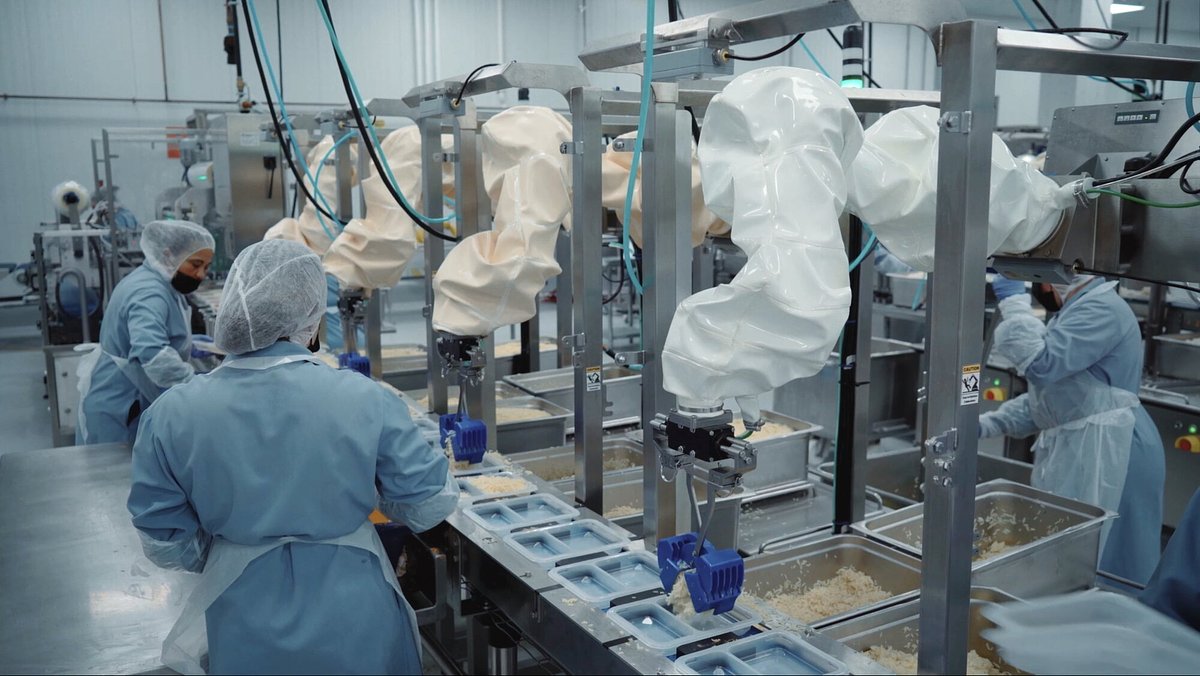
AI Chefs and Robot Packers Transform the Ready Meal Industry
SAN FRANCISCO and RANCHO CUCAMONGA, CA – January 13, 2026 – A strategic partnership announced today is set to redefine the landscape of prepared meal production, combining artificial intelligence with advanced packaging to create a seamless, end-to-end automated assembly line. Chef Robotics, a pioneer in AI-driven robotic food assembly, and Packline Solutions Group, a specialist in packaging equipment, have joined forces to tackle some of the most persistent challenges plaguing the food manufacturing industry.
For years, high-mix food producers—companies that create dozens of different meal varieties daily—have been caught between inefficient manual labor and inflexible traditional automation. The demands of assembling meals with varying ingredients, portion sizes, and tray layouts in cold, physically taxing environments have led to persistent staffing shortages and operational bottlenecks. These constraints often force factories to run below capacity or incur significant overtime costs. The new collaboration between Chef Robotics and Packline promises a powerful, integrated solution designed to break this cycle.
The AI-Powered Assembly Line
At the heart of this manufacturing revolution is Chef Robotics' sophisticated AI platform, ChefOS. This system gives robots the ability to see, understand, and handle a vast array of food ingredients, overcoming the variability in size, shape, and texture that has long stumped fixed automation. Using advanced computer vision, the robots dynamically track trays on a moving conveyor, adjusting their movements in real time to deposit ingredients with remarkable precision. This capability virtually eliminates the food spillage and waste common in both manual and older automated processes.
This partnership introduces a wireless integration that allows Chef's robotic assemblers to communicate seamlessly with Packline's packaging machinery. The process begins with a Packline system automatically de-nesting empty meal trays onto a conveyor. As the trays move down the line, Chef's robots pick and place ingredients—from scoops of rice to delicate garnishes—into the correct compartments. The system's flexibility is a key differentiator; changeovers between hundreds of different Stock Keeping Units (SKUs) can be executed in less than a minute, a feat unattainable with traditional depositors that require lengthy mechanical adjustments.
"Food manufacturers need to reduce costs and increase output while staying flexible," said Rajat Bhageria, Founder and CEO of Chef Robotics, in the announcement. "This partnership delivers exactly that."
Once assembled, the meals proceed to Packline's equipment, which automatically seals the trays with the appropriate food-grade film, preparing them for shipping and retail. This fully integrated workflow transforms a complex, labor-intensive process into a streamlined, highly efficient operation.
From Theory to Throughput: A Recipe for Success
The tangible benefits of this integrated system are already being realized on factory floors. Cafe Spice, a producer of globally inspired ready-to-eat meals, has implemented the joint solution across two of its production lines. The results have been transformative. The company reports a staggering 2-3x increase in output, with line speeds jumping from a previous average of 10-15 trays per minute to a consistent 30 trays per minute.
This surge in production was achieved alongside a 60% boost in labor productivity. By automating the repetitive assembly tasks, Cafe Spice was able to reallocate 5-6 workers per line from the cold assembly room to other critical, higher-value roles within the plant. According to Bhageria, the automated line can run effectively with just "one QA person and a line manager," highlighting the dramatic reduction in manual oversight required.
Beyond speed and labor efficiency, the precision of the AI-powered robots has delivered significant improvements in quality and cost control. Detailed case study data shows Cafe Spice reduced its food giveaway—the excess product portioned into meals to ensure compliance with weight labels—by an impressive 67%. Furthermore, the acceptance rate for robot-assembled trays climbed from 75% to 91%, a direct result of the robots' consistent and accurate ingredient placement, which improves both product quality and visual appeal.
Reshaping the Factory Floor and the Future of Labor
The Chef-Packline partnership arrives at a critical moment for the food industry. The global food automation market is projected to grow at a compound annual growth rate (CAGR) of over 10%, driven by unrelenting consumer demand for convenience foods and severe, ongoing labor shortages. This technology directly addresses the challenge of finding and retaining workers for physically demanding roles in refrigerated environments.
Rather than simply displacing workers, this new wave of automation is fundamentally transforming the nature of factory work. It shifts human capital away from monotonous, injury-prone tasks and toward more complex responsibilities like quality control, machine maintenance, and managing the automated systems. This creates a pathway for upskilling the existing workforce and improves overall workplace safety and ergonomics.
"Chef brings a next-generation approach to food automation with their AI and vision-based robots," noted Amir Tamshe, Founder of Packline Solutions Group. "Combined with our expertise in food packaging, we knew there was tremendous potential for a joint solution focusing on both speed and flexibility. This partnership made sense right away."
A New Standard for Safety, Scalability, and Accessibility
Making this advanced technology accessible is Chef Robotics' Robotics-as-a-Service (RaaS) model. Instead of a prohibitive upfront capital investment, food manufacturers can subscribe to the service for a recurring fee that includes the hardware, software, maintenance, and support. This model, backed by over $65 million in funding for Chef Robotics, lowers the barrier to entry and allows companies like Cafe Spice to scale their automation efforts incrementally.
Food safety and regulatory compliance are also central to the solution's design. Chef's robotic modules are NSF-certified, meeting stringent standards for food safety and cleanability. The system's ability to minimize human contact with food enhances hygiene and aligns with the goals of regulatory bodies like the U.S. Food and Drug Administration (FDA), which is actively promoting technology as part of its "New Era of Smarter Food Safety" initiative.
With the joint solution now available to manufacturers across the U.S., Canada, and the UK, the partnership between Chef Robotics and Packline Solutions Group is poised to set a new industry standard. By integrating intelligent robotics with expert packaging, they are offering a scalable and efficient blueprint for the future of food production.