
- AI-driven Mission Contingency Management (AI/MCM) system demonstrated real-time problem-solving for a UAV facing a critical fuel shortage.
- AI system managed both airborne drones in Texas and an Unmanned Ground Vehicle (UGV) in Kansas from a single command node.
- Lockheed Martin's STAR.OS™ ecosystem enables seamless communication between autonomous systems from different developers.
Experts agree that AI co-pilots like Lockheed Martin's AI/MCM system enhance mission effectiveness and warfighter safety by offloading complex, time-sensitive replanning tasks, while maintaining human oversight for ethical and strategic decisions.
AI as a Co-Pilot: Redefining Safety for the Modern Warfighter
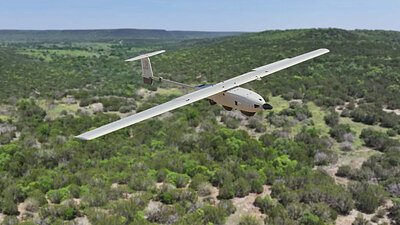
FORT WORTH, TX – December 04, 2025 – On a test field in Texas, a simulated mission took an unexpected turn. A Stalker XE unmanned aerial vehicle (UAV), flying a critical reconnaissance pattern, suddenly faced a critical fuel shortage. In the high-stakes world of military operations, such a contingency could spiral into mission failure, the loss of a valuable asset, or worse, a distraction that pulls a human operator’s focus from other imminent threats. But this time, something different happened. Within seconds, a new plan was on the operator's screen, a solution not just devised, but ready for execution. This wasn't the work of a human analyst scrambling against the clock; it was the work of an artificial intelligence co-pilot.
Lockheed Martin Skunk Works®, the company's legendary advanced development division, recently showcased this powerful capability in a live demonstration of its AI-driven Mission Contingency Management (AI/MCM) system. The test proved that AI can move beyond the lab and serve as a dynamic, problem-solving partner for service members, fundamentally shifting the paradigm from simple automation to intelligent autonomy. This innovation isn't just about smarter machines; it's about building a more resilient and safer operational environment for the warfighters who depend on them.
Beyond Human Reflexes: A Digital Guardian Angel
In the heat of a mission, a service member's cognitive load can be immense. They are often tasked with monitoring multiple data streams, communicating with team members, and making split-second, life-or-death decisions. When an unexpected equipment failure occurs, that burden multiplies exponentially. The recent Skunk Works demonstration tackled this exact challenge head-on.
During the test, the AI system, integrated into the ground command-and-control (C2) station, detected the simulated fuel contingency on the Stalker UAV. Instantly, it analyzed the drone's status, its remaining flight time, the location of other friendly assets, and the overall mission objectives. It then generated a set of viable re-plan options and presented them to the human operator through a simple, intuitive interface. The operator, freed from the frantic mental calculus of crisis management, could calmly assess the AI-generated solutions. With a single selection, the operator confirmed the plan: the AI automatically reassigned the Stalker's remaining tasks to a nearby Alta X drone, commanded the compromised Stalker to safely return to base, and seamlessly integrated the change into the ongoing mission.
This demonstration highlights a critical evolution in human-machine teaming. The AI isn't taking over; it's serving as an incredibly fast and capable assistant. By offloading the complex, time-sensitive replanning process, the system allows the operator to maintain situational awareness and focus on higher-level strategic duties. This partnership enhances mission effectiveness while directly contributing to warfighter wellbeing, reducing the potential for human error born from stress and information overload.
The Connected Battlefield: More Than Just Drones
The impact of this technology extends far beyond a single UAV. The demonstration also proved the system's ability to conduct unmanned-air-and-ground (UxV) control from a single mobile command node. This C2 system simultaneously managed the airborne drones in Texas while also directing an Unmanned Ground Vehicle (UGV) located hundreds of miles away in Kansas. This showcases a future where disparate autonomous systems form a cohesive, self-supporting network.
This level of interoperability is made possible by Lockheed Martin's STAR.OS™ ecosystem. Functioning like an operating system for military AI, STAR.OS provides a common framework that allows different systems, built by different developers, to communicate and collaborate seamlessly. Its Service Development Kit, STAR.SDK™, empowers engineers to create and deploy new AI capabilities rapidly, without having to reinvent the underlying architecture each time. This open-architecture strategy is a crucial innovation, as it breaks down the proprietary silos that have historically hindered technological integration in defense. For the service member on the ground, this means that new tools and capabilities—like the AI/MCM—can be developed and fielded faster, ensuring they have the most advanced support available.
"This demonstration proves AI can move from the lab to the battlefield, delivering a multitude of capabilities ranging from autonomous decision-making to rapid data flow between unmanned vehicles across air, ground and synthetic environments," said OJ Sanchez, vice president and general manager of Lockheed Martin Skunk Works. "By fusing AI‑enabled UAV replanning with UGV capabilities, we give warfighters the safety, speed and confidence they need to act first in contested environments."
Navigating the New Frontier: Trust and Ethics in Autonomy
The prospect of AI making decisions on the battlefield rightly brings significant ethical and regulatory questions to the forefront. Global discussions at the United Nations and internal policies like the Department of Defense's Directive 3000.09 emphasize the non-negotiable need for meaningful human control over autonomous systems, especially those involving lethal force. The fear of a "black box" AI making choices without oversight or accountability is a primary concern for military leaders and the public alike.
Lockheed Martin's approach with AI/MCM directly addresses this concern by championing a "human-in-the-loop" model. The AI analyzes and recommends, but the human operator commands and confirms. This model builds trust and ensures that human judgment, with its unique capacity for ethical reasoning and understanding context, remains central to the decision-making process. By positioning the AI as a trusted advisor rather than an autonomous commander, the system leverages the strengths of both machine and human: the AI's speed and data-processing power combined with the operator's experience and moral intuition.
As the defense landscape, populated by competitors like Boeing, Northrop Grumman, and Anduril, continues its rapid push toward greater autonomy, this focus on building trust will be paramount. The successful adoption of these technologies hinges not just on their technical performance, but on the confidence that service members have in them as reliable and responsible partners.
From Lab to Lifeline: The Path to Deployment
The journey from a successful demonstration to widespread operational deployment is complex, filled with challenges ranging from cybersecurity hardening to rigorous testing across countless real-world scenarios. The AI/MCM system must prove its robustness not just with fuel issues, but with sensor failures, communication disruptions, and unforeseen environmental challenges. However, the foundational architecture provided by platforms like STAR.OS is designed to accelerate this journey.
By creating a standardized, open ecosystem, Lockheed Martin is paving the way for scalable and adaptable AI integration across air, land, sea, and space. This strategy promises to deliver advanced capabilities to the warfighter faster and more efficiently. The ultimate goal is to create an interconnected, resilient force where intelligent systems can anticipate problems, adapt to threats, and actively work to protect human lives. This fusion of human oversight and AI efficiency isn't just about mission success; it's about ensuring that those we ask to stand in harm's way are supported by the most resilient and intelligent tools we can provide.