
- 15% less biofertilizer used compared to conventional soil application
- $8 billion vertical farming market in 2024, projected to reach $50 billion by 2033
- 1 cm-by-1 cm microneedle patch dissolves in about a minute to deliver microbes directly into plants
Experts view this microneedle technology as a groundbreaking advancement in precision agriculture, offering significant efficiency gains and sustainability benefits, particularly for high-value controlled environment farming.
Agritech's Micro-Revolution: The Needle Boosting Luxury Produce
SINGAPORE – December 09, 2025
In the world of luxury, the next frontier is often found not in grander designs or more exotic materials, but in the microscopic innovations that redefine quality, sustainability, and exclusivity. While investors have long focused on opulent real estate and rare collectibles, a groundbreaking development from Singapore is pointing toward an entirely new asset class: the very DNA of high-end agriculture. Scientists at the National University of Singapore (NUS) have created a technology that sounds like science fiction—a dissolving microneedle patch that injects life-boosting microbes directly into plants, promising a future of hyper-efficient, sustainable farming that could transform the supply chains of the world's finest restaurants and freshest markets.
This isn't just about growing vegetables faster; it's about pioneering a new standard of precision and control in an industry ripe for disruption. For the discerning investor, it represents a compelling opportunity to get in on the ground floor of a technology that intersects with the growing demand for premium, traceable, and environmentally conscious products.
A New Paradigm in Precision Delivery
The current methods of nourishing crops, even with advanced organic biofertilizers, are surprisingly inefficient. When beneficial bacteria and fungi are added to soil, they face a battle for survival against native microbes and harsh environmental conditions. A significant portion is often lost, never reaching the plant's roots, resulting in waste and potential environmental runoff.
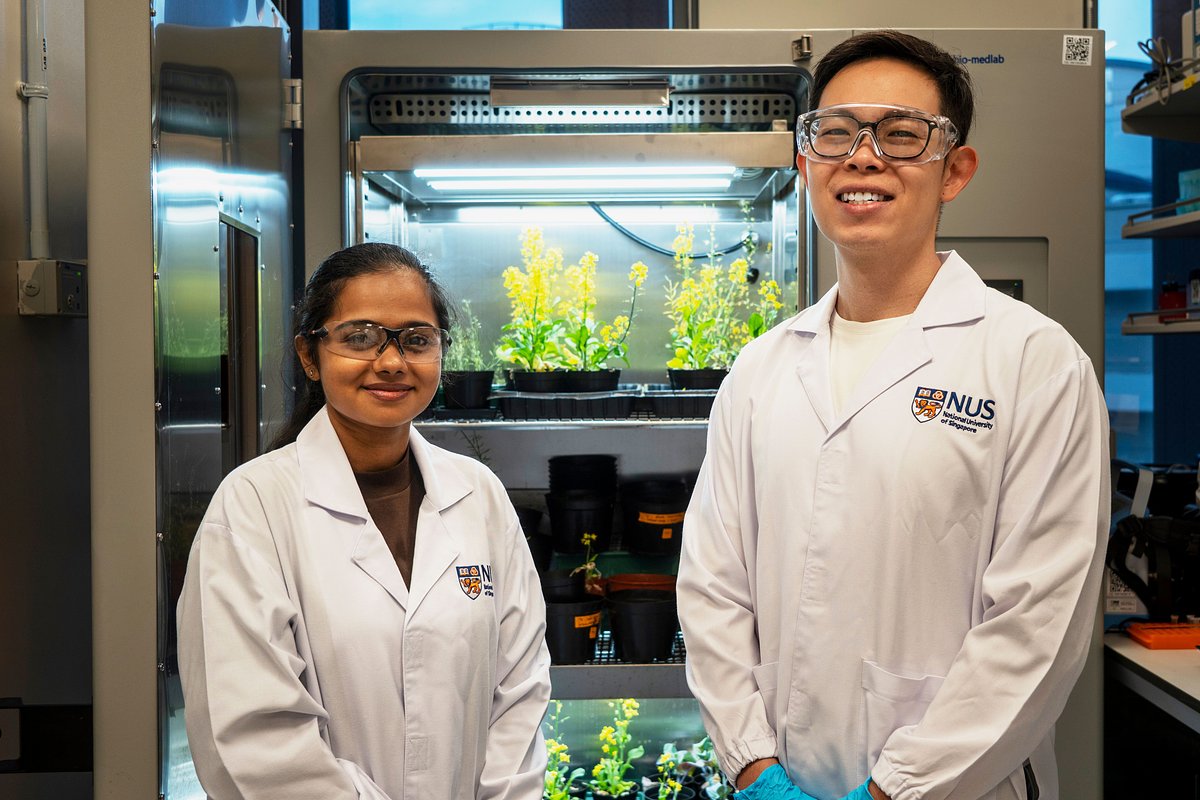
The NUS team, led by Assistant Professor Andy Tay, has engineered an elegant solution to bypass this problem entirely. "Inspired by how microbes can migrate within the human body, we hypothesised that by delivering beneficial microbes directly into the plant's tissues... they could travel to the roots and still perform their function, but much more effectively," Tay explained.
The result is a small, 1 cm-by-1 cm patch made from polyvinyl alcohol (PVA), a low-cost, biodegradable polymer. Embedded in this patch is a microscopic forest of tiny pyramids, each one a needle designed to painlessly pierce a plant's leaf or stem. These needles are loaded with a payload of living biofertilizer—beneficial microbes like Streptomyces and Agromyces-Bacillus. When pressed onto a plant, the needles dissolve in about a minute, releasing their cargo directly into the plant's vascular system.
The results from greenhouse trials are striking. Choy Sum and Kale treated with the microneedle system showed significantly faster growth in terms of weight, leaf area, and height. More importantly, this acceleration was achieved using over 15 percent less biofertilizer than conventional soil application. The technology also allows for unprecedented precision. The microbial load can be controlled, enabling growers to identify the lowest effective dose, minimizing waste and maximizing cost-efficiency—a key factor for any high-margin agricultural enterprise.
The Investment Case for Controlled Environments
While the image of a farmer applying tiny patches to endless fields of wheat seems impractical, the researchers have a much more strategic, high-value market in their sights: controlled environment agriculture (CEA), encompassing the rapidly expanding sectors of urban and vertical farming. These indoor farms, which are already revolutionizing food production in cities, are the perfect ecosystem for such a precise technology.
The vertical farming market alone, valued at over $8 billion in 2024, is projected to soar to as much as $50 billion by 2033, driven by a demand for local, pesticide-free produce available year-round. In these settings, every input is meticulously controlled, from light and water to nutrients. The microneedle system offers a new level of optimization, promising higher yields and faster crop cycles within the same expensive real estate footprint. This is where the technology moves from a scientific curiosity to a powerful business tool.
For the luxury market, the implications are profound. High-end restaurants and premium grocers place immense value on the quality, consistency, and story behind their ingredients. A vertical farm in downtown Manhattan or Tokyo using microneedle technology to grow perfectly calibrated, nutrient-dense basil or strawberries isn't just selling produce; it's selling a narrative of cutting-edge sustainability and unparalleled freshness. This technology enables the creation of a new tier of ultra-premium produce, grown with minimal waste and maximum biological efficiency, commanding a price point to match.
Balancing Sustainability with Scalability
The environmental credentials of the microneedle system are a core part of its appeal. By delivering biofertilizers directly into the plant, the technology drastically reduces the risk of nutrient runoff, a major contributor to water pollution from industrial agriculture. The patch itself is designed to disappear. Fabricated from PVA, the material is biodegradable, breaking down into harmless components and avoiding the plastic waste that plagues modern farming.
However, informed investors know that the environmental benefits of PVA can be complex. While biodegradable under ideal conditions with specific microorganisms, its complete breakdown in all real-world scenarios, such as wastewater treatment plants, is still a subject of scientific debate. Ensuring the material's lifecycle is genuinely circular will be a critical step in its journey to market.
The most significant hurdle, as with any novel hardware technology, is scalability. Asst. Prof. Tay acknowledges this directly: "A major focus is scalability. We plan to explore integrating our microneedle technology with agricultural robotics and automated systems to make it feasible for large-scale farms." The team has already developed a 3D-printed applicator to ensure uniform insertion, a clear proof-of-concept for a robotic end-effector. The vision is one where automated arms glide through vertical farms, precisely applying these patches to thousands of plants in a seamless, data-driven operation. This fusion of biotech and robotics represents the true frontier.
The Future Harvest: From Lab to Luxury
This innovation marks a significant milestone. "This work is the first to demonstrate that root-associated biofertiliser can be directly delivered into a plant's leaves or stems to enhance growth," Tay noted, underscoring the novelty of what his team calls the "microneedle biofertiliser."
The path forward involves expanding the application to a wider variety of high-value crops, with strawberries and medicinal herbs already on the roadmap. These are markets where precise dosing and enhanced growth can yield substantial financial returns, justifying the initial investment in a new system. For investors in the luxury space, this technology is not just about a single product but about a platform for innovation. It opens the door to creating bespoke nutrient cocktails for specific plants, enhancing not just growth but also flavor, aroma, and nutritional content.
The journey from a university lab to a global agricultural standard is long, requiring extensive field trials, regulatory navigation, and strategic commercial partnerships. Yet, the NUS microneedle system offers a tantalizing glimpse into a future where the high life is sustained by high tech, and where the most valuable luxuries are not just owned, but grown with unprecedented intelligence and care.