
- 540 slides: The Agilent S540MD Slide Scanner System can hold up to 540 slides, enabling high-volume digitization in clinical labs.
- 9 countries: Initial launch targets Germany, France, Belgium, Spain, Austria, Luxembourg, Italy, the UK, and Switzerland.
- 2026 expansion: Agilent plans to expand availability to additional European countries later in 2026.
Experts in digital pathology and healthcare technology view Agilent's AI-powered scanner as a critical tool for improving diagnostic efficiency and addressing workforce shortages in European labs, aligning with broader EU initiatives for digital health transformation.
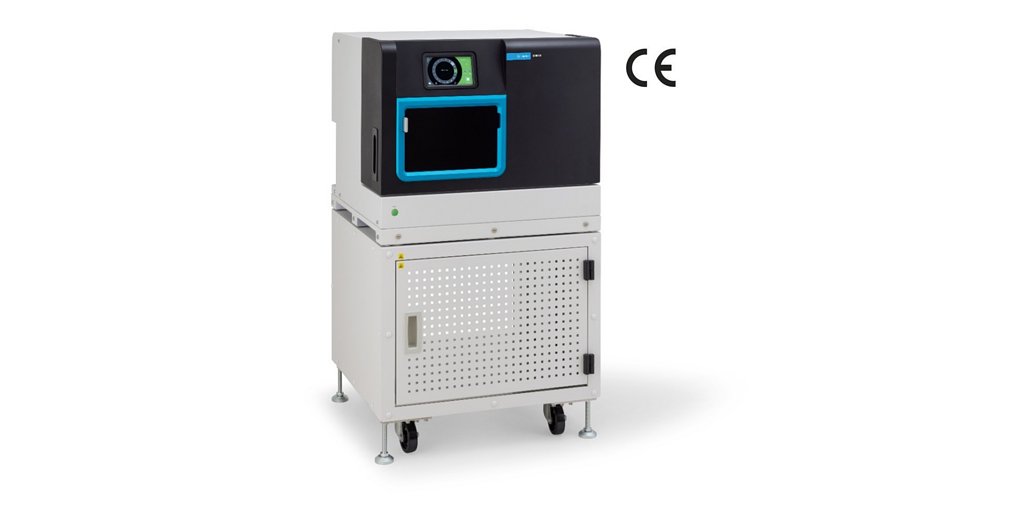
Agilent Launches AI Scanner to Digitize Europe's Pathology Labs
SANTA CLARA, CA – January 23, 2026 – Agilent Technologies Inc. has announced a significant move to accelerate the adoption of digital pathology across Europe with the launch of the Agilent S540MD Slide Scanner System. The high-throughput whole slide imaging (WSI) scanner, now available in key European markets, is designed to help clinical laboratories combat mounting pressures of rising caseloads and a shrinking workforce by digitizing the traditional, century-old process of examining glass slides under a microscope.
This launch represents a major expansion of Agilent's digital pathology portfolio and is the result of a strategic partnership with Hamamatsu, with the new system being an Agilent-branded version of the established Hamamatsu NanoZoomer S540MD. By integrating this advanced hardware, Agilent is positioning itself as an end-to-end provider, offering solutions that span from tissue staining to AI-driven diagnostic support.
Addressing a Growing Crisis in the Lab
The introduction of the S540MD comes at a critical time for European healthcare. Pathology laboratories, the bedrock of modern diagnostics, are facing a perfect storm of challenges. An aging population and advances in medicine are leading to an ever-increasing volume and complexity of diagnostic tests. Simultaneously, the industry is grappling with a severe shortage of qualified pathologists and lab technicians in countries like Germany and the United Kingdom, placing immense strain on existing staff and creating significant diagnostic bottlenecks.
Traditional workflows, which rely on the physical transport and manual review of glass slides, are inherently slow and inefficient. This analog process can lead to delayed turnaround times, which are particularly dangerous in time-sensitive fields like oncology. The European Society of Pathology (ESP) has been a vocal advocate for the digital transformation of pathology departments, recognizing its potential to dramatically improve efficiency and patient care. The COVID-19 pandemic further underscored this need, highlighting the value of remote access to digital slides, which allows pathologists to diagnose cases from anywhere, collaborate more easily, and better distribute workloads.
Digital pathology directly addresses these pain points. By converting glass slides into high-resolution digital images, laboratories can create streamlined, scalable workflows. Cases can be organized, accessed, and reviewed instantly, eliminating the risk of lost or broken slides and enabling faster, more efficient diagnostic processes. Agilent’s new system is engineered specifically for this high-pressure environment.
The Power of Automation and Intelligent Imaging
At the heart of the Agilent S540MD's value proposition is its combination of speed, capacity, and intelligence. Engineered for high-volume clinical labs, the scanner boasts a capacity of up to 540 slides and features continuous loading capabilities. This allows laboratories to digitize hundreds of slides without constant manual intervention, a crucial feature for maintaining throughput during peak hours.
Beyond sheer volume, the system incorporates intelligent automation to enhance workflow efficiency. It features automated scanning modes and, most notably, AI-assisted tissue detection. This AI-driven feature can automatically identify the relevant tissue areas on a slide, ensuring the scanner focuses only on diagnostically important regions. This not only speeds up the scanning process but also reduces the size of the resulting digital files, making them easier to store and transfer.
The integration of AI and automation promises measurable benefits. In a field where precision is paramount, these tools help reduce the potential for human error associated with repetitive manual tasks. Studies on laboratory automation have demonstrated significant reductions in transcription and processing errors. For pathologists, this means less time spent on administrative and preparatory work and more time dedicated to complex diagnostic interpretation, ultimately improving both the quality and speed of their diagnoses.
A Strategic Play in a Complex European Market
Agilent's launch of the S540MD is a calculated strategic move into the competitive European digital health landscape. The initial rollout targets Germany, France, Belgium, Spain, Austria, Luxembourg, Italy, the UK, and Switzerland. This is not just a product launch; it is a complex navigation of Europe's stringent and fragmented regulatory environment.
The scanner is being introduced as an In Vitro Diagnostic (IVD) device, complying with the EU's rigorous In Vitro Diagnostic Regulation (IVDR), the UK's MDR2002, and Switzerland's IvDO. Achieving compliance with the IVDR, which came into full effect in 2022, is a significant undertaking that requires extensive clinical evidence and post-market surveillance. By meeting these high standards, Agilent sends a strong signal of quality and reliability to a market where diagnostic accuracy is non-negotiable.
This move places Agilent in direct competition with established players like Philips, Leica Biosystems, and Roche. The OEM partnership with Hamamatsu is a key pillar of this strategy, allowing Agilent to leverage proven, best-in-class scanning technology and rapidly enter the market with a competitive high-throughput offering. This enables the company to focus on integrating the scanner into its broader ecosystem of software and AI analytics.
Nina Green, vice president and general manager of the clinical diagnostics division at Agilent, highlighted the strategic importance of this initiative. “The introduction of the Agilent S540MD Slide Scanner System marks an important advancement in our commitment to equip pathology laboratories with advanced digital technologies,” she stated. “This initiative facilitates the acceleration of diagnostic workflows and supports improved patient outcomes.”
Looking ahead, Agilent plans to expand the scanner's availability to additional European countries, with further milestones scheduled for 2026. This expansion aligns with broader European Union initiatives like the European Health Data Space (EHDS) and the recently enacted AI Act, which are creating a unified framework for the secure use of health data and the responsible deployment of artificial intelligence in healthcare. As these frameworks mature, they will likely further accelerate the adoption of digital pathology, creating a fertile ground for technologies that can deliver faster, more precise, and more efficient patient diagnostics.
Topics & Related
Corporate Finance
Artificial Intelligence
Machine Learning
Automation
Revenue
Software & SaaS
AI & Machine Learning
Related Company Pulse